
Stepping Stones Blog
October 15 , 2026
Fruit of the Spirit (1) Kindness

You probably knew it was coming! God the gardener, Fruit for life and now a good few days, one by one, on the fruit of the Spirit with kindness as our starter. What fruit do you think it would be? I would goo for a banana – a really soft fruit, but full of flavour and providing a burst of energy and, so smooth when mashed up that the US used tons of them instead of grease to launch warships! It certainly was all of those things for me today.
I was one of those days. I went to get petrol on my way to visit someone in hospital. First off – couldn’t find by bank card – no worries, I had £20 cash in my bag. Off to the petrol station. Car in front of me there didn’t drive away, but stopped for some reason so I had to park a bit away from the pump and sprayed petrol over myself (just a bit!)
In my frustration, I forgot I only had £20 cash, went into autopilot and filled the tank right up (£56!) Phoned a friend to help. Friend at hairdresser. Lady in the petrol station said I could fill in and sign a form and go and get the money, but I didn’t need to hurry. I did hurry (because I wanted it sorted!) I struggle with mobility and the said lady came to the door so I didn’t need to go to the counter, got me a seat while I filled in the form. When I got back to the petrol station with the card which had been in a different part of the drawer from where I’d first looked (how dare it?) the lady reiterated that I shouldn’t have rushed and then – she hugged me, with an outpouring of sympathy. I paid for the petrol, bought some pepsi and some sweets (pepsi – me; sweets – lady). ‘You don’t need to do that, she said.’ ‘No, I don’t, but you don’t know what a difference kindness makes.’ (More hugs) Did I tell you about the other customer who went to my car to get my bag with my mobile phone in it so I could phone my ‘at-the-hairdesser’ friend? Well, I have now. (No hugs – I’m fine with that!)
And off I went to the hospital and had a fine time visiting. A very tricky, stressful situation not just solved through kindness, but turned into a ‘spirit-lifting’ experience.
In our harsh, hard world, kindness can seem so namby-pamby, so insignificant, so incapable of really changing anything. It changed my situation today and I believe even in situations much, much more difficult, kindness makes a difference. It smooths out the bumpy places, it dissolves indifference and aggression. Sometimes you need to apply more kindness. But, in the end it will win out. It will change things – even if it only changes you.
My brain was fried when I got home so – nice supper with re-heated leftovers, Hetty Wainthrop Investigates on the i-player and an early night. You also, I believe, have to be kind to yourself.
Thinking of kindness (and many other ‘-esses) reminded me of a poem I wrote about the NH-ess, written when my mum was taken into hospital.
NH – ess
Kindness pulled back the covers and gently placed the sensors so the score of heart music could be written, its time signature known.
Calm but intense concern softly asked questions and sent for the green-clad cavalry.
Cheerfulness and his chum steered the lady downstairs and whisked her away to be met by faithfulness, who’d probably been on shift for hours, still making you feel as if all of this was there just for you.
Through the doors and more doors, patience was waiting and never stopped, endlessly falling into step with the lady’s pace. And the lady’s needs.
Attentiveness, who finally would give us a diagnosis, also organised some sandwiches and soup which came, courtesy of cheerfulness once more.
And there they were, busy with their work, making it look easy, nothing a problem, bantering away.
Yes, there they were, swift moving in and out, to and fro, like graceful dancers, choreographing care.
And what is this, this kindness, gentleness, attentiveness, faithfulness, cheerfulness and more?
I would call it, (and not for nothing) the NH-ess.
At its best.

October 14 , 2026
Fruit for Life

Photo: Jon Hosgood/Flickr
I remember at primary school hearing the story of sailors who had scurvy, a disease which causes all kinds of health problems including fatigue, bleeding gums, slow-healing wounds and potentially even fatal heart problems. It was an Edinburgh naval doctor – James Lind – who noticed that eating oranges and lemons cured the disease and eventually lemon juice was given to all sailors in the Royal Navy.
A very clear-cut example of the health problems caused by lack of vitamins in fruit. Lack of vitamin B12 can cause low energy, mouth ulcers, mood changes, memory and concentration problems. Lack of vitamin A can cause night vision problems and brittle nails and hair.
And, of course, many of these vitamins are found in fruits – like the vitamin C in oranges and lemons.
When we talk of the fruit of the Spirit, we usually think of their positive nature or effects. But I think it is helpful to stop and think of the negative effects, the poor spiritual (and societal) health we suffer when we don’t ‘eat our fruit’. Lack of kindness produces a hard-hearted, hurtful person/society; lack of patience can lead to poor decisions or conflict; lack of peace can lead to worry, difficult relationships, an inability to deal well with problems. And, of course, all of these ‘spiritual’ problems caused by lack of ‘good fruit’ can also lead to physical and mental health problems.
We certainly need the ‘spiritual vitamins’ that the fruit of the Spirit provides, and our world is unhealthy and even dying without them.
It’s good, I think, as Dr Lind did, to notice the ‘spiritual vitamin’ deficiencies in our lives. Those times when we know we’re missing the mark in terms of displaying the Christians character God wants us to have. Most times, I believe, such thinking, through prayer, can lead us to identify the ‘vitamin’ we’re missing and encourage us to add the ‘spiritual vitamins’ of kindness, patience, self-control, faithfulness, peace, love and more to our ‘daily diet’ of living for God.
Fruit for life – apples, oranges, grapes – our bodies need them.
Fruit for life – kindness, patience, love, joy – our souls, our Churches and our world needs them.
.
October 13 , 2026
How does God’s garden grow?
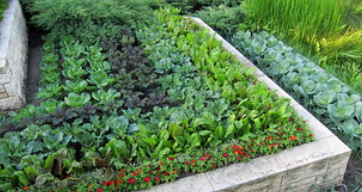
Photo: Cultivar413/Flickr
I’ve always loved gardening from childhood days of gathering in the nasturtium seeds and tying paper on string to keep the birds off the newly sown grass seed and, joy of joys – eventually being old enough to cut the grass!
Later, I had a fair go at growing flowers and vegetables and was usually pleased with the results. To be honest, plants grow themselves as long as you give them some basic care – water, a bit of feeding and weeding and pruning when appropriate.
My ‘Uncle Rubert’, an elderly patriarch of the family, however, was light years ahead of me, his garden full to overflowing with the largest onions, carrots, leeks and the most beautiful dahlias, sweet peas, carnations etc you ever saw. Needless to say, Uncle Rubert was a frequent winner in many categories at his local flower show. My efforts paled into insignificance beside his annual harvest.
What made the difference? For me gardening was one of many hobbies, I had no ambition to grow ‘the best’, and sometimes, to be honest, some of the gardening tasks (like weeding!) weren’t always to priority for my free time!
In John 15, Jesus calls God ‘the gardener’ (John 15.1) talking in that chapter about the Father tending the vine and the branches – Christ and his followers. We also often hear of the ‘fruit’ of the Spirit. (Galatians 5.22-23, for example)So how does God’s garden grow? First of all, we need to say that God’s garden – is us! And God’s gardening skills?
His Holy Spirit first sows the seed of God’s love, patience, peace, kindness in our hearts and in our life together. God waters it with his power and presence, through his word and prayer and the fellowship of the Church, he removes the weeds of anger, worry, doubt, pride, jealousy lack of commitment that stop the fruit from growing.
And God, I believe, is an ‘Uncle Rubert’ kind of gardener. He puts everything into tending the garden of each of our lives, does everything he can to produce the best crop of love, patience, peace, kindness and more in us. And just as a good gardener delights in what he produces, God delights when the garden of our lives blooms and blossoms, and is filled with the good fruit of the Spirit he longs to see there.
There’s a verse in the letter of Jude that says God is able to: keep you from stumbling and to present you before his glorious presence without fault and with great joy. (Jude 1.24) When the ‘flower show’ of heaven comes, we have this promise that God is able, the gardener is able to present us there ‘without fault’ – fine plants, strong, without any signs of damage, mature, a good and rich harvest. God does that in us and for us, for those around us and for his glory. And his joy. Let us not fear, but let us find our joy in the tending hand of the gardener.
October 12 , 2026
The Madness of Kings
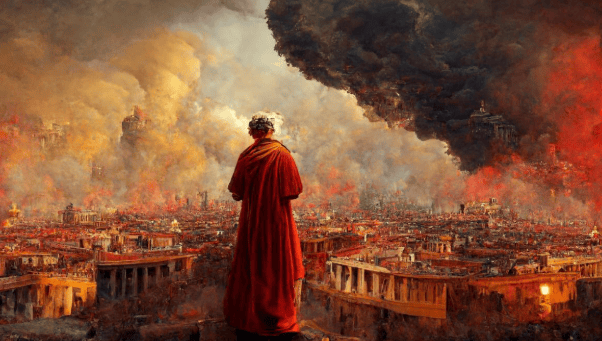
Nero and the great fire of Rome
The Madness of King George – or Nebuchadnezzar or Nero, or Idi Amin or Gadaffi or ……… ‘Power corrupts, absolute power corrupts absolutely’. We often think of areas like finance or the laws of the land when we think of corruption. But sadly, I believe, corruption can go deeper than that into a person’s heart and mind and soul poisoning the deep wells of morality, human sensibility and, ultimately sanity, spiralling out of all control.
Daniel 4 has the story of Nebuchadnezzar’s ‘absolute power’, his descent into madness and his way out of the pit of deep despair. God, we read, was gracious to Nebuchadnezzar and when the King finally acknowledged that God was God and the ultimate King of the World, he was given back his kingdom and all was well.
What did it take? I suppose Nebuchadnezzar had a similiar experience to the Prodigal Son in Luke’s Gospel at the moment where he ‘came to himself’ or ‘came to his senses’ – realised he was on the wrong track and turned his life round. For both, humility was involved – for the Prodigal – going back home, tail bewteen his legs; for Nebuchadnezzar – repenting, doing the right thing instead of his own thing, helping the poor which meant acknowledging their existence (a does of good old-fashioned empathy)
There is, it would seem, in the madness of our days, the madness of not just one but many of our world leaders, hope. But choices have to be made, coming back from the brink of madness is not automatic. Self-destruction, too, sadly, is a possibility and when leaders are involved, it is not only they themselves who are destroyed. May they make that turnaround soon.

Nebuchadnezzar II
October 11 , 2026
Fun with words

Where would we be without words! Whatever language we speak, whether we communicate with spoken words or sign language, how difficult life would be if we had no words. Words are essential for life. Even God uses words to speak to us (though he also speaks to us in other ways like through nature, through human experience for example)
Apart from all the serious and crucial aspects of words, they are also fun! Not simply in telling funny stories or jokes, but in themselves, they are like toys and some words are just funny to use.
Many of these ‘fun words’ or phrases have some kind of strangeness to them, or have some kind of poetic quality (remember from school – alliteration = repeated sounds; onomatopoeia = the word sounding like its meaning = tick tock or purr. Near rhyming or repeated words are also fun = topsy turvy, helter skelter. Then there are ridiculous words or names – Boaty McBoatface or simply nonsense words which vary from ‘decipherable’ – like saying I’m very sleepified in stead of sleep, to the completely seemingly random which bear no resemblance to any relevant word, like Lewis Carroll’s poem Jaberwocky, the first lines of which are:
Twas brillig, and the slithy toves
Did gyre and gimble in the wabe:
You really haven’t a clue what each word means exactly, but you do get a sense of it – such is the human capacity for making meaning where there is really very little meaning!
Going beyond single words, we also have tongue twisters with repeated but similar sounds that it’s hard not to get mixed up = Sally sells sea shells by the sea shore – which end up with a great many she shores!
I love language and especially the fun aspect of it. It’s a great gift from God a testimony to the fact that God wants us to have fun and enjoy every part of his creation. The Bible itself is full of ‘fun words’ and phrases which are often lost in translation! (In Genesis 1.2, the phrase – formless and empty describing the earth before creation is the Hebrew phrase – tohu-wa-bohu – a ‘fun word’ you might say in the same category as helter-skelter topsy turvy. In fact topsy-turvy might be a better translation that ‘formless and empty’ since, to my mind, the translation ‘irons out’ the playfulness and descriptiveness of the original Hebrew phrase – tohu-wa-bohu,
Right through the Bible, God has ‘fun with words’. For example when Jesus says,’If your son asks you for bread will you give him a stone> (Matthew 7.9) We consider the meaning of that verse with great seriousness and Jesus is making a serious point, but I would imagine his listeners would be falling about laughing at the ridiculousness of the suggestion. Fun words and fun with words, lighten the moment, smooth the communication are like yeast in flour. It’s good to know that God is a ‘laughing God’ and it’s good that we can have so much fun with words – maybe God’s way of encouraging us to have fun – and not take ourselves too seriously!

October 10 , 2026
Jesus loves me
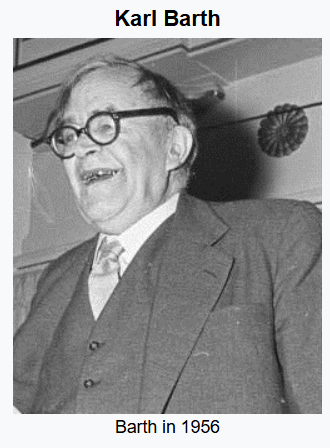
Karl Barth was a famous Swiss theologian. He worked at a number of Universities including the University of Bonn in the 1930’s. He was required during Nazi rule to take an he Oath of Loyalty to Adolf Hitler. He refused to do so and was told to leave the country, returning to Switzerland to teach there.
Unfortunately, Nazi ideas and beliefs had infiltrated much of the German Church and Karl Barth wrote most of a ‘declaration’ called the Barmen Declaration against what he and others saw as giving up their faith in Christ to be subservient to the state. One of the statements, for example says: ‘The only source of revelation is the Word of God — Jesus Christ. Any other possible sources (earthly powers, for example) will not be accepted.’
Along with Barth, a number of theologians and pastors met in the German town of Barmen to sign the Declaration and found the ‘Confessing Church’ in Germany which refused to follow the orders of the German government, It was a great act of courage and a number of them were put in prison for standing firm in their faith.
A great man, an influential man, a man of courage, of great intellect and learning, a man of many words in his sermons and teaching and the crafting of the Barmen Declaration, his letters, speeches, his great work on his commentary to the Book of Romans.
Towards the end of his life, he was interviewed and asked, given all of the things he had read and studied, how would he sum up his faith to which Barth replied, ‘Jesus loves me, this I know for the Bible tells me so.’ All of his great knowledge and learning aside, Karl Barth had the strong trusting faith of the child in him that would have sung that hymn in Sunday School. Of all the truths he had learned and written about, one was supreme – the love that Jesus had for him.
And so for us all. However much we know or don’t know, have or don’t have, whatever we experience or don’t experience, not matter what happens to us, the bedrock of our faith, of our being is – that Jesus loves us. It’s the most important truth to grasp and to keep holding on to and yet, it is often the most difficult thing – to accept that we are loved and accepted by God – just as we are. It is, I believe that acceptance of Christ’s love for us (and sometimes we have to ‘re-accept’ it when life knocks us off course or makes us doubt our ‘loveableness’ and tells us how ‘unworthy’ we are of such love.) – it is that love of Christ for us that is the ‘engine that drives the train’ of all and any act or word of love we offer to other and to God.
‘We love,‘ said John,‘because He first loved us‘(1 John 4.19). May we take time today to remember how much we are loved by God.

October 9 , 2026
Listen, Listen, Talk
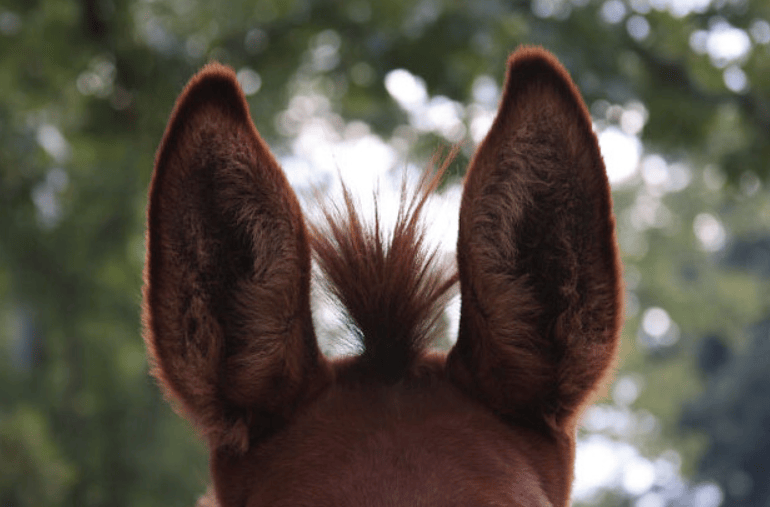
Someone once said (you know, the someone who says all the clever things and whose name you’ve forgotten!) – God gave us two ears and one mouth because he meant us to listen more than we talk!
Wise words indeed. I wonder why? And I wonder how, how good we are at listening more than we speak.
I still remember a time, probably about 50 years ago now (yes, I’m that old!) when I was in a Church meeting that was going to be addressed by a guest speaker. Before the meeting started, I was sitting next to the speaker. I started making small talk, asking him a few questions. Although he was a ‘public speaker’, he seemed quite shy and quiet. Then he started asking me questions. About me. Every answer I gave, he would follow up with another question until I was in ‘free flow’ almost giving him my complete unedited life story, sharing with him things that were important to me. It was, as I said, 50 years ago, but I still remember how deeply listened to I was, how deeply and sincerely listened to I felt and the sense of worth and wellbeing and positivity I experienced. It was powerful. Being listened to. Really listened to – in quality of attention and focus and in quantity of time – not just a few minutes’ greeting/small talk. That ‘speaker’ was a natural listener!
I enjoy conversations – I like to talk and sometimes I talk when I should be listening. Another memory of maybe 30 years ago was of a friend sharing some problem she had. I listened for a wee while then gave my tuppence-worth as to what she should do. With a pained expression she looked at me and said,’I don’t want your advice, I just want you to listen to me,’ then got up and walked away. Ouch!
We are all different with different personalities. We live in a world where we are often encouraged to ‘be ourselves’, yet in terms of ‘good listening’, I think those of us who are ‘talk-more-than-listen’ need to be our better selves and make a deliberate effort to stop, listen, ask questions, nod, encourage, let the other person do the talking.
Listening can often lead to great blessing. I remember visiting an elderly man that I’d often passed the time of day with. He was quite quiet and I felt I had to ‘make the conversation’, but we enjoyed each other’s company. He became ill and I visited him in hospital. After a few visits I ran out of ‘things to say’, so I asked some questions and out came the most amazing life story, filled with adventures and challenges you would never have imagined that this ‘wee quiet man’ would have had. I don’t know if he enjoyed talking and being listened to – he seemed quite happy. I do know that I enjoyed listening to him and thought about what I had missed and what I would have missed if I hadn’t ‘stopped talking’ and listened.
Jesus says – ‘Do for others what you would want them to do for you.’ (Matthew 7.12) and Paul said,’… look out for one another’s interests, not just for your own.(Good News Bible) which is also translated in the New Living Translation as ‘Don’t look out only for your own interests, but take an interest in others, too.
Who among us doesn’t like and often need to be listened to, to have our experience, our thoughts, our joys, our dreams, our worries heard and affirmed.
It’s good to talk. It’s even better to talk and be truly listened to. And It’s better still to listen and be amazed and humbled and sometimes entertained by the stories and words and lives of others.
We often talk about ‘speaking in Jesus’ Name’. And that’s a good thing. It’s also good, as we go about our day – to listening in Jesus’ Name.

October 8, 2026
Ayrshire Blankets – (2)
The land where we live
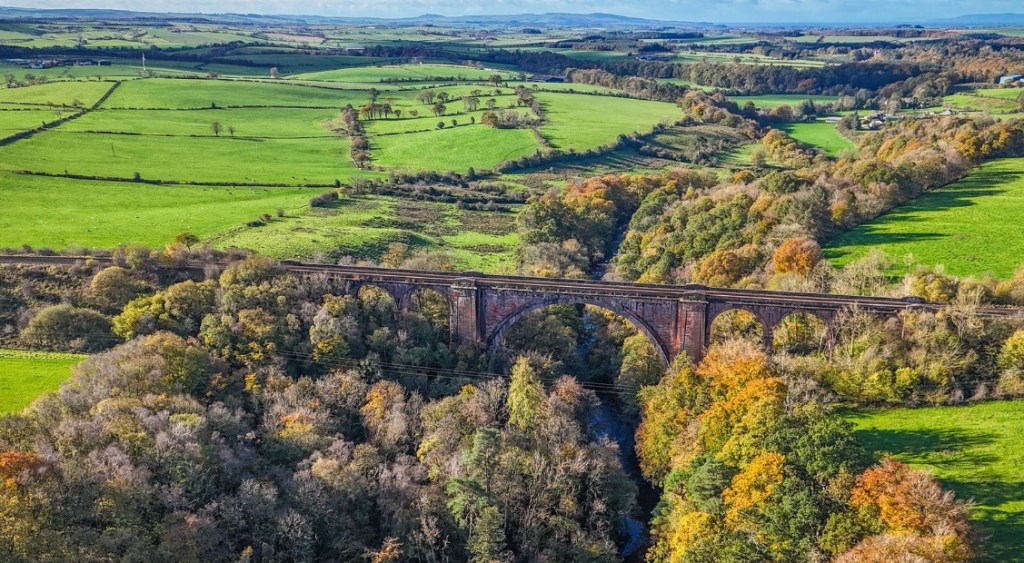
The River Ayr, Ayrshire Photo: Jim Johnstone
Yes, God wraps us up in his love through the Holy Spirit. But in so many other ways, he showers his love on us – through people, provision of food, clothing, homes, education etc and also, I believe through the place on the planet we call home. (We may have more than one of these!)
Paul writes:
From one man he made all the nations, that they should inhabit the whole earth; and he marked out their appointed times in history and the boundaries of their lands. God did this so that they would seek him and perhaps reach out for him and find him, though he is not far from any one of us. (Acts 17.26-27)
Home – the boundaries of our land however and wherever we make these boundaries.
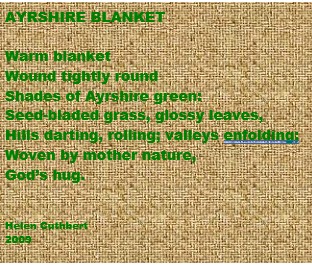
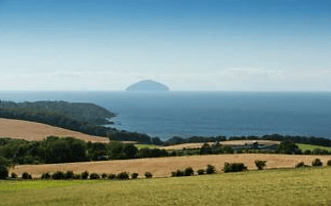
For me, ‘home’ is Ayrshire – an amazingly varied county in the West of Scotland with a lot of woodland, farmland, hills, sea sky. An eternally undulating landscape coming into its own, I believe when the green of the fields contrasts with the rich brown earth after ploughing.
For those who live there, the very land itself is our Ayrshire blanket.
October 7 , 2026
Ayrshire Blankets (1)
‘Cooried in’ to God’s love
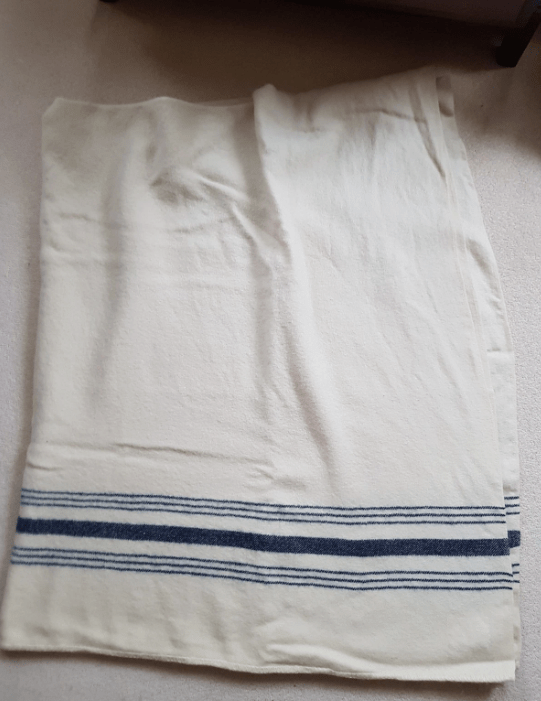
A blast from the past! These woollen blankets with their distinctive stripes (black and white or navy and white, usually) were made in the Scottish Cooperative Wholesale Society Mills in Galston, Ayrshire in the 1940s and 50’s mainly. They were toasty warm, though in the winter, you probably needed at least two plus a winceyette sheet, an eiderdown and a candlewick plus, of course, a hot water bottle!
People would be always on the lookout for weather that was ‘a guid day fur blankets’ because of their weight and the extra time it took to dry them!
I loved the warmth and the weight and felt safe and happy and warm inside my multi-layered cocoon.
Safe and warm like an Ayrshire blanket. That’s a good description, I think of God’s amazing love for us. John says: See what love the Father has lavished on us in letting us be called God’s children! For that is what we are. (1 John 3.1) Love that’s lavished, piled on, wrapped round and round. Love that is strong because of the strong bond between us and God – we are his children. He is not going to get up and leave us. He is eternally committed to us in the deepest of ways.
When it was bed time in the winter and we were maybe a bit cold leaving the fire in the living room, going upstairs, my mother would often shout – ‘come on and coorrie in’ – get right under the blankets, wrap them right round you, snuggle in.
God wants us to do that with him and his love. He wants us to live, even in the coldest of climates and harshest of circumstances to ‘coorie in’ and know his love lavished on us. What’s not to like.
October 6, 2026
Fruit
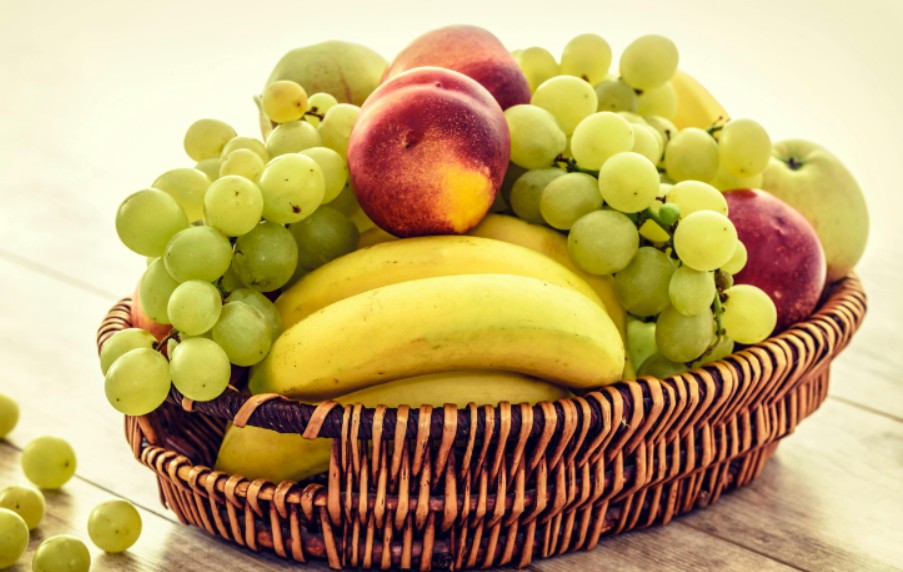
Photo: Pexels: AS Photography
We live very much in a ‘5-a-day’ world, with the fruit and vegetable for health message impressed upon us at every turn. And it’s a good message. I remember in school learning about sailors (and probably others) who, on long sea journeys where food was neither varied nor plentiful, often developed scurvy – a disease that affects the skin and gums. Eventually a doctor linked the disease with a lack of vitamin C. The sailors were given ample supplies of lemons/lemon juice and became healthy again.
And so with many fruits – they are medicine chests of vitamins, minerals, essential oils, water that keep our bodies in good shape.
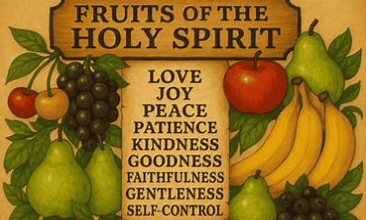
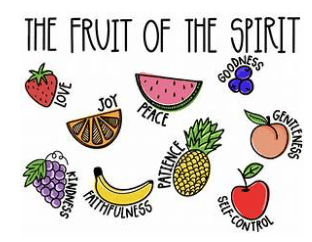
Paul talks about the fruits of the Spirit -‘ But the fruit of the Spirit is love, joy, peace, patience, kindness, goodness, faithfulness, gentleness and self-control.’ (Galatians 5.22-23)
Fruit that keeps our minds and hearts and souls healthy and our relationships in good order. Don’t forget your daily dose!
October 5, 2026
Days (2) Like suitcases

Someone once said ‘ Days are like suitcases – some people pack more into them than others!’ As a ‘retired person’ I’m often so aware of how much I used to be able to (had to?) pack into the suitcase of each day and how I revelled in it. Now, the suitcase is a lot lighter! And that’s fine. I’m older, less fit and healthy, I don’t have a ‘full-time’ working life. I enjoy an emptier suitcase!
The thing about days and suitcases – you have to be able to carry them! If they weigh you down, you can’t travel very far or very happily. Maybe you need another hand to carry your case. Maybe (like when you’ve exceed your Ryanair carry-on allowance!) you need to take some of the contents out. Maybe your suitcase has become a bit too lightweight and there is room for more.
Maybe a wee craft/reflective activity for the day – draw a picture of a suitcase – lid open then either draw or write in what you fill it with most days or during a week. Is it too full? Is it too empty? Is just right? For the journey you’re on at the moment.

October 4, 2026
Days (1) Savouring the moment

When I was young, our main evening meals (we called it ‘tea’!)each day of the week were quite regimented: Monday, Omelette; Tuesday – macaroni cheese; Wednesday; Mince and Tatties; Thursday – a fry-up; Friday – Fish; Saturday – ‘High Tea’ – some kind of main course (maybe even cheese pudding) with LOTS of tea bread – scones, pancakes, cream buns/cream rounds, sugar buns and something called ‘Cat’s faces’ which were sugar buns but with coconut through the icing! Sunday – something a wee bit special – pork chops or gammon steak and pineapple.
Each day was ‘marked’ by the meal!
In other ways, too, each day of the week can be ‘marked ‘ by something – work, no work, some leisure activity (our own or someone we give a lift to!). Each day, too, can often have its own particular ‘feel’ to it: the Monday morning blues; the ‘hump’ of Wednesdays when three working days are finally over. The peace/silence/ worshipfulness (and sometimes the loneliness) of Sundays. Different feelings, different days for different people.
The Psalmist tells us to ‘count our days’ (Psalm 90.12) – ‘mark’, count, number, take account of each one. Savour their difference – enjoy the ones you love, make the most and try to inject more and find peace in those that you perhaps dread, or find tiring for each day is a gift from God – as if he writes a ‘cheque of time’, just for that day, to spend as we will, and spend best as He wills.

Photo: JoannP 2011/Flickr
October 3, 2026
Making your way back (5) – coming home

Photo: Lisa Parks/Flickr
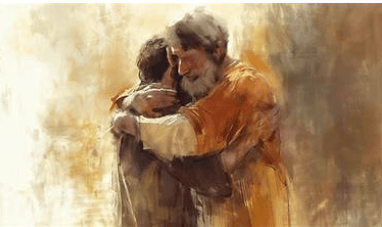
The story of the ‘Lost son’ (commonly known as ‘Prodigal’ son) Luke 15.11-32 is full of meaning. It begins with a younger son leaving home with his inheritance in search of ‘the good life’ and he has some good times – until his money runs out. He’s desperate and desolate and ends up taking a job looking after pigs. His misery is summed up when he reaches the place where: ‘He longed to fill his belly with the pods the pigs were eating, but no one would give him a thing.'(Luke 15.16)
He was at his lowest point – hungry and alone. It was at that point Luke tells us: ‘… he came to his senses’ (Luke 15.17) and then makes a plan to go back to his father’s house. These 5 words are so important in making your way back. We have to reach the point where we know it makes no sense, will get us nowhere, where there is no solution if we simply keep on going or stay where we are. Coming to our senses. It sometimes takes a long time. We are often our own worst enemy thinking ‘things aren’t that bad’ or things will get better soon’. We come to our senses when we face the reality of the situation and pull back the curtain of our illusions and delusions. It is usually difficult but always necessary.
I remember being on a skiing holiday in France with a couple of friends. I was really enjoying it until after a few days, in order to get further up the mountain we had to take, not on cable cars as we had done, but using a ski lift. A ski lift is simply a ‘conveyor belt’ of seats on a high wire that go round and round. They don’t stop and you have to ‘jump on’. Well, round and round they did go, but jump on I did not. I’ll admit it, I was scared. What did I do? Unbuckled my skis, went back to our hotel and spent the rest of the holiday exploring the scenery. My ‘reasoning’ was, that, if it were a matter of life and death, or something I had to for work or to help family, I would do it. But to ‘enjoy myself’? No thanks. I ‘came to my senses’ and made my way to, for me, a safer place.
The lost son, too, has a conversation with himself, and hatches a plan to go back to his father – not as a ‘son’, but a hired help. (He obviously feels unworthy to claim the benefits of being a son.)So back home he goes – propelled from his disastrous situation by that moment of realisation. When he arrives home he gets an overwhelming welcome from his father who rejoices that his ‘lost son’ has been found.
There is more to the story, but these two points are, I believe, most important – with God, there is always a welcome waiting for us. And He will graciously wait until we ‘come to our senses’ and make our way back. The only thing stopping us – is ourselves.
October 2, 2026
Making your way back (3) when you think there’s no way back

Photo: Gareth Williams/Flickr
Peter is a huge figure in the Gospels and the early Church. The one of whom Jesus said,’on this rock I will build my Church.’ (Matthew 16.18). He was one of the three disciples closest to Jesus and was seen very much as the ‘leader’ of the 12 men who followed Jesus.
On the Thursday before Jesus was crucified, Peter promised allegiance to Jesus, “Lord, I am ready to go with you to prison and to death.”, (Luke 22.33) But Jesus responded with this hard truth “I tell you, Peter, before the rooster crows today, you will deny three times that you know me.” (Luke 22.24) And Peter did deny Jesus three times. The final time, when he was asked if he knew Jesus, Peter said: ‘…. I don’t know what you’re talking about!” Just as he was speaking, the rooster crowed. 61 The Lord turned and looked straight at Peter. Then Peter remembered the word the Lord had spoken to him: “Before the rooster crows today, you will disown me three times.” 62 And he went outside and wept bitterly. (Luke 22.60 – 62) After Jesus’ resurrection, Peter, along with the other disciples meets the risen Lord. Peter seems to have come back to Jesus following his betrayal, but there is a story at the end of John’s Gospel where the disciples are on the shore, at a loss for what to do. Surely Peter would take the lead? But instead, Peter says: “I’m going out to fish,” (John 21.3) Perhaps the guilt of his betrayal left Peter at a loose end, robbed him of his courage and passion for the Lord, his faith and sense of direction. So here we see Peter not making his way back to following Jesus, but bypassing that road and returning to his old life before he ever met Jesus.
Making our way back takes courage, the courage to blot out the voices in our head (from ourselves ) and in our ears (from others) that say – ‘There is no way back’; you’ve blown it completely, cut your losses and settle for less. Do what you know you can do. Give up your dream. Who would want you as a follower anyway?
So, Peter and the disciples fish and, long story short, Jesus appears and makes and eats breakfast with them. He take Peter aside and asks him three times if Peter loves him. The is upsetting for Peter, but he says yes and Jesus calls him all over again to be his disciple and ‘feed his sheep’.
Peter didn’t make his way back. He thought there was no possibility of a way back. So he returned to the place and life he had had before he knew Jesus. He didn’t have a moment of light and realisation like the Psalmist Asaph when he suddenly, in the sanctuary saw his life from God’s perspective. He didn’t have a moment of repentance leading to restoration that David had after he had sinned. For Peter, it seems, there was no going back. And that can be our experience, too. We’re stuck. Nowhere to turn. Might as well forget about faith.
It’s at that point, when we think there’s no back, that Jesus makes his way to us. The circumstances, the conversation, the challenge Jesus gives will be different for each of us. But it will be based on the relationship we have with him. He know us. He knows what we need to bring us back to himself – knows exactly the right words and time and place. As the hymn says, ‘Where I see no way to go, he’ll be showing me the way, I know.’ We simply need to put our hand in his. And walk.
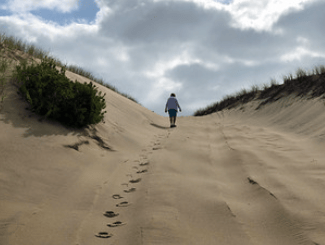
Photo: KathyCat102/Flickr
October 1, 2026
Making your way back (2)
From doing wrong to being right

Photo: Jenny Kaczorowski/Flickr
If ever there was a ‘turning point’ moment in the Bible, it was the story of David and God’s prophet Nathan. David had ‘done wrong’ in the sight of God by committing adultery and then arranging for his mistress to be murdered. That’s a lot of ‘doing wrong’!
Long story short (If you want to read the long story, it’s in 2 Samuel 11.1 to 12.20) – The prophet Nathan confronts David with his wrongdoing, and David owns up to what he has done – ‘I have sinned against the Lord.’ (2 Samuel 12.13)
After his meeting with Nathan, David writes a Psalms (Psalm 51) where we have a more detailed picture of him ‘making his way back’ to God after his sin and wrong-doing. The Psalm helps David (and those in a similar position who read it and take to heart), to make that journey from ‘doing wrong’ before God to being right again with God.
He begins by addressing God directly and with honesty:
Have mercy on me, O God,
according to your unfailing love;
according to your great compassion
blot out my transgressions.
2 Wash away all my iniquity
and cleanse me from my sin.
But it is not only David’s honesty, but primarily God’s nature – who God is – that makes it possible for David to even consider making his way back. God’s is merciful, compassionate, supremely loving. And as well as this deeply loving divine nature, God has power – the power to blot out David’s wrongdoing, wash clean his sin and failings.
David is already probably more than half-way on his journey from wrongdoing to being right again with God, having his relationship with God restored. The next steps are in verse 10 – Create in me a clean heart, O God, and put a new and right (steadfast) spirit within me. (New Revised Standard Version)
Again, David knows in his heart of hearts that he himself cannot make himself right with God. He can only, again, throw himself on God’s mercy and love and ask for the gift of a pure heart, made clean again from sin and, into that freshly clean heart put a ‘new and right’ spirit. It’s not enough simply to be forgiven and made clean. The final step in the journey to ‘being right’ is for God to give David what he cannot give himself – that ‘new and right spirit.’ Many translations use the ‘renew’ talking about the spirit David asks God for. David knows that he has ‘grown old’, wandered away, grown apart from the spirit and ways of God and he needs to be ‘made new’. And the spirit David seeks is one that is ‘right’ or, as many translations say – ‘steadfast’. David doesn’t want to risk going astray again. He wants always to be right with God. To do this, he knows that he needs a spirit that is dedicated, resolute, faithful, true, devoted, unswerving so that he will not take the wrong path again. David knows himself. He knows that, on his own, no matter how ‘determined’ he is, he is human, there will be times of weakness and temptation and he therefore needs God to make him faithful and constant. (I think David would really appreciate Jesus’ words in the Lord’s Prayer – ‘lead me not into temptation’ (Matthew 6.13) And David then follows up with promises to God to teach others his ways, to praise His God, to bring sacrifices to him. (Psalm 51.12-19)
David’s awareness and confession of his great failure, has led, through God’s mercy and forgiveness to a more committed, vibrant faith.
I remember many years ago watching Kilmarnock Football Club play Motherwell. One of their star players (and my favourite!) missed an absolute sitter of a goal. He really blew it – and he knew it. But that failure transformed him. For the rest of the game he showed a skill and determination right the way to the final whistle, stirred on to being better by playing at his worst.
That, I believe, is similar to David’s experience. Consciousness of sin can lead to renewed faith. How gracious is God that he allows us to travel that path.
SEPTEMBER 30, 2026
Making your way back (1)
from anger to acceptance

Photo: Flickr
The most famous ‘making your way back’ story in the Bible is the story of the Prodigal son (Luke 15.11-32) who left his father’s house, got into all kinds of trouble, then ‘made his way back’. (We’ll think about that story in a few days!)
But there are many other places in the Bible where people ‘make their way back’. Today we look at the ‘way back’ from anger to acceptance.
We can see this in a Psalm written by a man called Asaph (some of the Psalms were written by people other than David). We can plot his ‘going away’ and ‘coming back’ through some verses from Psalm 73 . We can learn a great deal, I believe, from Asaph’s words where he ‘talks through’ his problems before God.
He begins by being honest about how he feels:
But as for me, my feet had almost slipped;
I had nearly lost my foothold.
It’s where ‘making your way back’ begins, I believe – honestly, out loud stating the problem – not pretending it doesn’t exist, not trying to ‘solve it yourself’ – simply laying it before God. And what was threatening to derail Asaph’s faith?
3 For I envied the arrogant when I saw the prosperity of the wicked.
4 They have no struggles, their bodies are healthy and strong.[a]
5 They are free from common human burdens; they are not plagued by human ills.
6 Therefore pride is their necklace; they clothe themselves with violence.
12 This is what the wicked are like—
always free of care, they go on amassing wealth.
The ‘wicked’ – those who disobey God seem to be having a great time and to do what they like and get away with it.
That makes him look at his own situation:
13 Surely in vain I have kept my heart pure
and have washed my hands in innocence.
14 All day long I have been afflicted,
and every morning brings new punishments.
Poor Asaph compares his situation to that of ‘the wicked’ feels hard done by with a great sense not just of anger at ‘the wicked’ but injustice that he doesn’t seem to be reaping the benefits of his faithfulness. (Comparison is a slippery slope and can often lead to dissatisfaction.)
Asaph tries to make sense of all of the thoughts and feelings of anger and resentment boiling up inside him.
16 When I tried to understand all this,
it troubled me deeply….
And then the turning point came
17 till I entered the sanctuary of God;
then I understood their final destiny.
His ‘turning point’ came when he ‘entered the sanctuary of God’. When he saw the situation from God’s perspective and began again to glimpse God’s glory and majesty, goodness and justice and put his problem in perspective.
It is, true, I believe, that when we are struggling with anger and a sense of grievance, ‘entering the sanctuary of God’ can set us on our way again. ‘Entering the sanctuary’ can mean many things: returning to the obedience of worship in an actual ‘sanctuary’ – like a Church, or ‘sanctuary could, perhaps be a special place where we spend quiet time with God, a ‘routine’ of prayer, praise, reading of scripture, reflection that our aggrieved minds and hearts have caused us to neglect or stopped us fully entering into.
And the Psalmist confirms this…
21 When my heart was grieved
and my spirit embittered,
22 I was senseless and ignorant;
I was a brute beast before you.
Asaph knew what he was like. And that it was wrong. And that it spoiled his relationship with God.
And once Asaph has got all of that off his chest, he can fully make his way back to God with words of great faith and love – accepting the way things are, and looking at them from the perspective of God’s absolute love for him.
23 Yet I am always with you;
you hold me by my right hand.
24 You guide me with your counsel,
and afterward you will take me into glory.
25 Whom have I in heaven but you?
And earth has nothing I desire besides you.
26 My flesh and my heart may fail,
but God is the strength of my heart
and my portion forever.
What amazing words of faith and worship. How good it is to have this Psalm and to follow Asaph’s journey from anger to acceptance, bitterness and grievance to finding God again as ‘the strength of his heart’.
SEPTEMBER 29, 2026
I’ve started, so I’ll finish!

Ah! The famous Mastermind TV Quiz chair, where contestants had two rounds of questions, – one on a specialist subject, the other on general knowledge. Each round was two minutes long and if the time buzzer went in the middle of the questionner asking the last question, they would say the famous phrase – ‘I’ve started, so I’ll finish’ and the whole question would be read out. It was coined by Magnus Magnusson, the first Mastermind host and continued by all the others over the years.
‘I’ve started, so I’ll finish’ takes its place among the iconic utterances of the English language (even for those who never watch Mastsermind!)
‘Making a start’, especially to difficult or challenging tasks, is difficult but it is good to determinedly begin some new activity, work at some weakness, take the next new step of faith.
But what about keeping going? Statistics show that even in early February, most people give up on their New Year Resolutions. (In fact, ‘Quitters Day’ is thought to be January 14th.)
Faith, too, can be an uphill struggle. We might start and start well, but, like the story of the seed that fell on thorny ground – the worries and weariness of life can snatch away the good seed of the Gospel and the good efforts of new attitudes and habits.
Writing to the Galatians, Paul says ‘You were running a good race. Who cut in on you to keep you from obeying the truth? That kind of persuasion does not come from the one who calls you. (Galatians 5,7-8) And the writer to the Hebrews encourages us ‘ let us run with determination the race marked out for us, fixing our eyes on Jesus, the pioneer and perfecter of faith. …Consider him who endured such opposition from sinners, so that you will not grow weary and lose heart. (Hebrews 12.1-3 – abridged and adapted)
These verses tell us that getting discouraged, blown off course, wanting to give up are ‘par for the course’, normal, natural, part of still being human as we follow Jesus. I think they also give us ways of ‘finishing once we’ve started’: Face the truth – that you have gone off course, someone/something has ‘cut in on you’; then, having faced that harsh reality, pick up where you left off with fresh determination and let yourself be inspired by the example of Jesus. Fix your eyes upon him and let him re-direct and renew you.
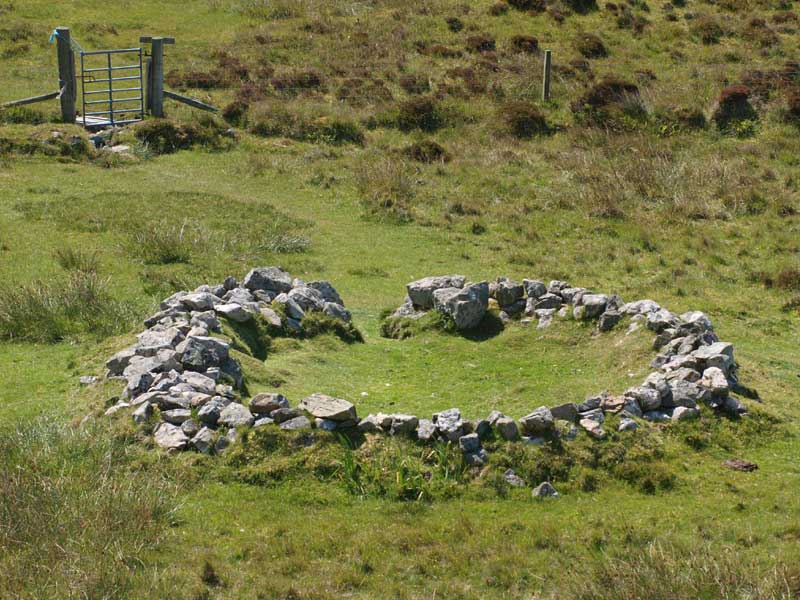
On the Island of Iona, in Scotland there are the remains of what has become known as the ‘hermit’s cell’. It lies between the shore and the Abbey. It is thought to be a place where a hermit did live and contemplate and pray. Some think St Columba used it for times of prayer and reflection. Another possibility is that, being between the shore and the Abbey, it was a welcome ‘resting place’ for the monks perhaps walking on a pilgrimage or carrying goods to the Abbey. A place to stop, sit for a while, pray, rest and recuperate then continue the journey. A good practice to follow – stopping along the way, to consider where we are, rest, then with fresh determination, take the next steps of faith.
SEPTEMBER 28, 2026
CONTENTIONS WITH INVENTIONS

Photo: Jose Antonioso: Flickr
There’s a story of an older man, a crofter in a Highland village in Scotland in the 1950’s. It was the last village in Scotland to get electricity. A newspaper reporter came to the village to see what the response was and interviewed this old crofter. ‘So, sir’, what do you see as being the advantages of electricity? ‘Ah, well,’ the old crofter replied,’It helps me see fine tae get ma paraffin lamp sterted!’
It can be hard to move on from the old ways and sometimes, like the crofter, we don’t see any need to do so – the paraffin lamps work just fine.
Over the centuries and, increasingly, over the last two centuries ‘modern inventions’ have mushroomed. From the motor car and its mass, assembly line production in the 1920’s to the dawn of Artificial Intelligence (AI) as we speak.
The questions I have are – do people control the inventions or do the inventions control people? Just because something is possible doesn’t mean, it’s desireable as Paul wrote: ‘Everything is permissable, but not all things are helpful. (1 Corinthians 20.43 – MOUNCE) Wise words indeed. Sometimes with new inventions we can see the ‘unhelpful’ aspects straight away – the speed of cars and people’s unfamiliarity with them would have no doubt been an issue in the very beginning. Over time, brand new shiny inventions lose their sparkle as we see how unhelpful they can be – the pollution and energy-guzzling of the petrol engine, the acres of space taken up with parking, the discouragement to walk, and, yes, as in the beginning, the dangers of speed.
As humans we seem mesmerised by inventions and so unaware of the threats they pose to the environment, to our social life, to our health, to our ability to give people employment. At least with AI, some discussions are taking place with, hopefully, good laws to guard against any harmful effects it may have.
I wonder, though, if, as humans, we should sometimes just say.’No’ to new inventions. ‘No’ this will take people’s jobs, it will change our social interaction, it is not ‘for the good of the community’ and then throw it into a very deep pit and cover it over. Somehow, knowing what we humans are like, I doubt it. But we do need to make sure that humans and the good of humanity is in control, for real intelligence, helpful intelligence, intelligence that promotes human dignity and growth is never artificial. Ever.
September 27, 2026
Distractions

Drinking hot chocolate, having a snack, scrolling through FaceBook, checking next week’s weather, cooking, on-line ‘window’ shopping, comparing car insurance (for next year!), sorting out photographs. What do they have in common? For me they can come into the category of – distractions. They’re all great things to do in their own right, but they can be used to do something you like when there’s something to do that you don’t like. It’s good to be able to recognise them and fine, do them for a little while until you muster the motivation to do what you really have to do.
Interestingly, the French word ‘distractions’ is used to mean ‘entertainment’ – a totally different and more positive take on the word, an acknowledgement that there are times when you need to be ‘taken away’ from being too serious, hard-working, focussed, intense all the time. Lighten up, change the activity and gain the energy and ‘change of activity’ that keeps you going.
In another realm, when other people are involved, distractions can be used to deflect attention from something they don’t want you to focus on. ‘A dead cat on the table’ is a phrase often used – if you say that, people’s attention will be turned from what you don’t want them to think about and we know in our political world distractions can abound.
The problem is, for them to continue to work, they often need to be ‘multiplied’ in terms of number and also in terms of ‘shock and awe’. We’ve been living in such a world for a while. Perhaps you have relationships with people who do the same to avoid talking about certain subjects.
I believe that distractions have their limits. It might take a while, but they will wear thin, people will see through them and then – the truth will out.
‘ … a woman named Martha opened her home to Jesus. She had a sister called Mary, who sat at the Lord’s feet listening to what he said. But Martha was distracted by all the preparations that had to be made…. “Martha, Martha,” the Lord answered, “you are worried and upset about many things, but few things are needed—or indeed only one. Mary has chosen what is better, and it will not be taken away from her.” (Luke 10.38-42 abridged NIV)
September 26, 2026
On the Edge
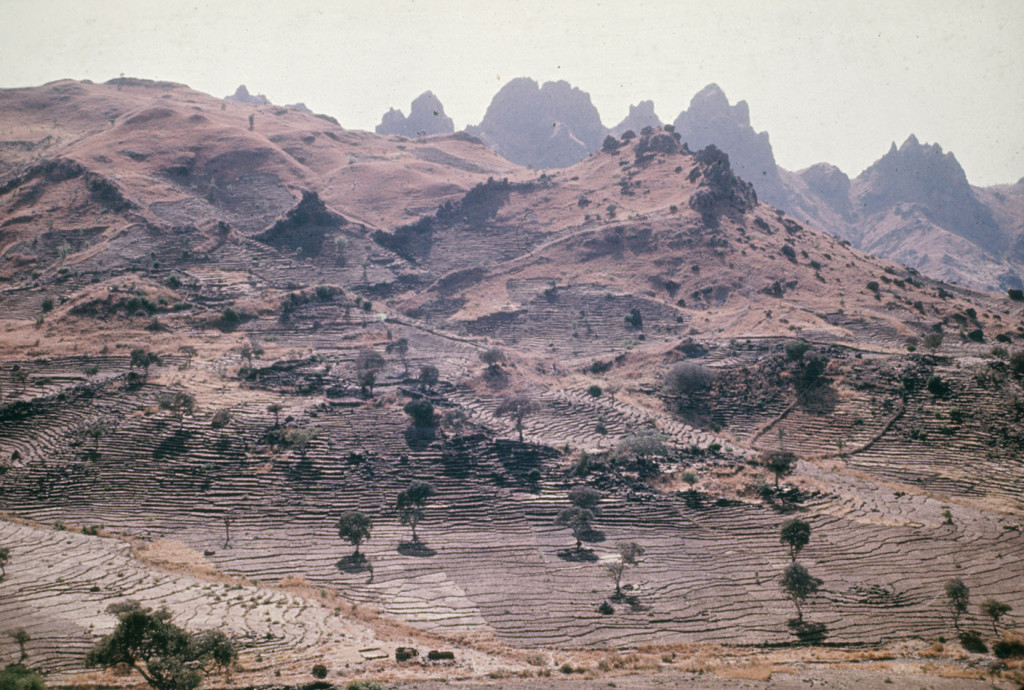
Jebel Marra, Darfur, Western Sudan
Just before Christmas, 1986, a group of us were climbing Jebel Marra in Western Sudan – the country’s highest mountain at just over 3,000 metres. It was, at that time a safe place to be and to travel and we ‘camped out’ in the big outdoors on our way up and down the mountain wary only of the chattering baboons who would have plagued us at night had we not kept the fire burning (and a good few rocks handy at our side!)
At one point, we were walking along quite a narrow ridge. There was just enough room on our right to jump to some kind of safety, but any slight movement to the left and we would have plunged to the bottom. Just one slight movement either way – one to complete safety, the other to certain death and we were on the dangerous ledge in between. Just one move.
It struck me then and I’ve often thought about it again over the years that we often walk along not really aware that we’re on the ridge and one small step would be all it takes to go hurtling down the mountain.
It is true of our own lives – in an instant, either because of a decision we make or something that happens to our health, wealth, family, faith, job, our sure footing slips and down we go into a world of pain and upheaval sometimes facing the death of the life we once knew.
It is true, too, as we know in these days, of our world. One small step, a few short months and here we are, hurtling down the mountain.
It’s also true, though, that safety, sure and steadfast, is only a step away – on the other side. That’s good to know in those times when we are aware we are living ‘on the edge’. We don’t need to be afraid because a safe place is right beside us, ours for the taking. That ‘safety net’ helps us walk more firmly, more boldly even and certainly without any constant nagging fear.
So how do we walk? Aware, I think, that each small step counts, that each moment could be life-changing and therefore we need to remain alert, but also remembering that we have a safe haven we can go to when we think we might lose our footing. Life is always ‘on the edge’ we need to walk on carefully, but not fearfully.
‘Watch and pray so that you will not fall into temptation. ‘ (Matthew 26.41)
September 25, 2026
And it was good – Creation (7)
‘All things sting- and bite-i-ful!)

Yes, it was good! And it is good. But there is no denying that we don’t warmly welcome all of God’s creatures! Hopefully this ‘alternative’ version of ‘All things bright and beautiful’ will remind us of some unwelcome guests!
ALL THINGS STING- AND BITE-I-FUL
All things sting- and bite-i-ful, all weeds both great and small,
All things creep- and crawl-i-ful, the Lord God made them all.
The slugs that eat the lettuce, the greenfly on the rose,
Things deadly and so slimy, they add to gardeners’ woes.
Colossal clouds of midgies, and bees and wasps that sting,
Their armoury he crafted, then gave them each their wings.
The birds that peck out seedlings, the naughty nibbling mice,
The squirrels that raid the dustbins, the cats and dogs that fight.
The freezing winds of winter, that raise our heating bills,
The ice on roads and pavements, that causes many spills.
And there are many many more things that creep and crawl,
That buzz, bark and attack us, and God has made them all.
Helen Cuthbert © 2026
So, why did God make things that bark and bite and sting? Most of the barking, biting and stinging are defence mechanisms used to protect God’s creatures (especially the small ones!)Others, too (usually of the slimy and creepy variety!) help to break down plant matter to enrich the soil. (Where would we be without worms!)
Some Christians believe that in the original garden of Eden, all creatures were ‘friendly’ but when mankind disobeyed God, that allowed ;unfriendliness to creep in, to just to human beings in terms of sin, but also to other creatures and parts of creation also. That makes sense to me in some ways.
Of course some ‘pests’ whether insects or larger creatures are made dangerous through human actions. A bee won’t sting you if you leave it alone. Try to swat it and you’re asking for trouble.
Plant biologists can usually find some usefulness for even the peskiest of creatures and each has its part to play in the vast system of life on earth. Killing them wholesale because we don’t like them can lead to problems, for example killing bees has an impact of plant and food production.
Perhaps we need to learn to protect ourselves from these biting, stinging, creatures while respecting God’s wisdom in creating them and their necessity for maintaining human life.
A symbol perhaps of how to deal with the other ‘unwanted’, pesky guests of trouble and difficulty that come into our lives – protect ourselves and learn to live with them – and in spite of them. And acknowledge that there are many things in the world God created that are indeed beyond our understanding, but we trust him still. Praise the Lord.

September 24, 2026
And it was good – Creation (6) God’s gardeners
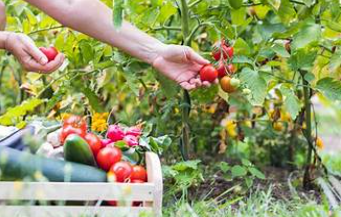
Photo: Newsweek
Creation, as we’ve said, is beautiful, wonderful, each part interdependent, all parts made in and through Christ. And, left on its own, creation would manage fine – if a bit on the wild side!!!
From the very beginning, however, God gave us the task of caring for his creation – to keep it beautiful and wonderful and also to provide for our needs and the needs of every living thing. In Genesis we read that God made human beings … ‘so that they may rule over the fish in the sea and the birds in the sky, over the livestock and all the wild animals,[and over all the creatures that move along the ground…’ (Genesis 1.26) and …The Lord God took the man and put him in the Garden of Eden to work it and take care of it.’ (Genesis 2.15)
I suppose, then, the first job ever recorded was ‘gardener’! And that ‘gardening’ – that care of the earth and the sky and the sea and the creatures who live there – is still going on.
I was clearing up the final vegetables and flowers in my garden which is made up of raised beds. It was getting a bit tired and I thought to myself – ‘I wish these carrots would lift themselves! But, of course, they won’t – yes, left to themselves, they could have ‘gone to ground’ – provided a bit of fertiliser for soil and a feast for the slugs etc and even re-seeded for next year’s crop. But they would not have dug themselves up and made their way (eventually) as the star attraction in lentil and carrot casserole! As all gardeners and farmers and fishermen and others who ‘work the land – and sea) know, producing food from the provision of the earth takes time and effort, skill and knowledge. God knew that. He probably designed that it should be so, giving people that measure of responsibility for their own lives and health and well-being according to his will.
Being God’s gardeners is a great example of the ‘partnership’ God means to have with us in his world – both on earth and in heaven. He doesn’t treat us as slaves or as babies, but as sons and daughters cooperating with him on the family farm (or raised bed!)
How good is God that he gives us such a privileged position and so great an honour. The Psalmist echoes that thought when he says: ‘Oh Lord – what is mankind that you are mindful of them, human beings that you care for them? You have … crowned them[f] with glory and honour. You made them rulers over the works of your hands.’ (Psalm 8.4-6 abridged)
Our ‘inheritance’ then, is not simply enjoying the fruits of the earth, but, if you like, managing it on God’s behalf – bringing his creation into new fruitfulness year after year. What a privilege! What a joy! What a blessing!
I believe, too running through these verses is the delight God takes in giving us the responsibility as ‘gardeners’. Something the same, perhaps as a farmer passing his farm onto his sons or daughters.
As well as the carrots, I gathered the last few sweet peas. They’re in a small vase on a table in front of me – the fruits of my labour(!), the beauty of God’s creation, a delight to the eye and just one symbol of the ‘great love that the Father has lavished on us, that we should be called children of God… ‘ (1 John 3.1) – and entrusts us with his good creation. Praise the Lord.
September 23, 2026
And it was good – Creation (5) Christ and creation

The birth of a star captured by NASA’s James Webb Space Telescope
I have to admit that I often consider Christ and creation quite separately. Creation is about nature, physical things, Christ is about the spiritual. Yet, the Bible seems to say that they are not, in fact separate, but connected.
There are a number of passages in the Bible that talk about Christ as creator. Speaking about Jesus, Paul writes: All things were created in him. He created everything in heaven and on earth. He created everything that can be seen and everything that can’t be seen. He created kings, powers, rulers and authorities. All things have been created by him and for him. 17Before anything was created, he was already there. He holds everything together.(Colossians 1.16-17) And, of course, probably most well known is the beginning of John’s Gospel: In the beginning was the Word, and the Word was with God, and the Word was God. 2 He was with God in the beginning. 3 Through him all things were made; without him nothing was made that has been made. (John 1.1-3)
These are amazing passages – the depth of their meaning take your breath away and, for me, anyway, they are on the edge of being understandable and mysterious. (I suppose, though, that is true of God and anything related to him – there is always an element of known and unknown.)
These passages and others make clear in no uncertain terms that, as well as God the Father and creator, Jesus is creator. He existed eternally before the world began, created our world and in our time and space became a human being. (John 1.14)
These are difficult passages, the kind you just have to keep reading and re-reading not just so their meaning becomes ‘clear’, but to allow the depth of their truth to take hold of your mind and heart and soul in a way that is almost beyond words.
Apart from declaring Jesus as creator, it is also good to know that he is also ‘sustainer’, the one who, if you like, ‘keeps creation going’ – ‘in him all things hold together’ (Colossians 1.17) From the smallest atomic particle to the largest planet continue through through the power and life and reality of Jesus. I’m sure we can all accept that Christ holds the world together spiritually, being the Son of God and having all ‘authority’ from God in heaven and on earth. (Matthew 28.20) I believe also, he holds the physical world together.
I’m sure from school physics we all know about atoms – divided into protons, electrons and neutrons with electrical charges in the mix of all of them. Physicists state that these charges don’t hold the atom together (In fact, if there were only electrical charges, they would split apart) They talk of another force which they simply call the ‘strong force’ that keeps the different parts of the atom together. They know it’s there (because if it weren’t nothing would exist!) but they have no detailed information about it, which is why they simply call it ‘strong force’. Many scientists who are also Christians, believe the ‘strong force’ is an example of Christ holding the universe together. It is indeed astounding that, even in the smallest particle that makes up all of creation – Jesus is holding all things together and that, as the hymn says:
Jesus Is Lord!
Creation’s Voice Proclaims It
For By His Power Each Tree And Flower
Was Planned And Made
Jesus Is Lord!
The Universe Declares It
Sun, Moon And Stars In Heaven
Cry, ‘Jesus Is Lord!’
(Written by David Mansell)
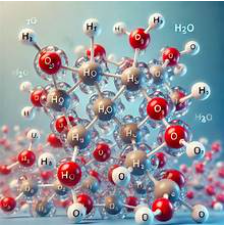
Diagram of the structure of water
September 22, 2026
And it was good – Creation (4) Old leaf-new leaf;old life-new life
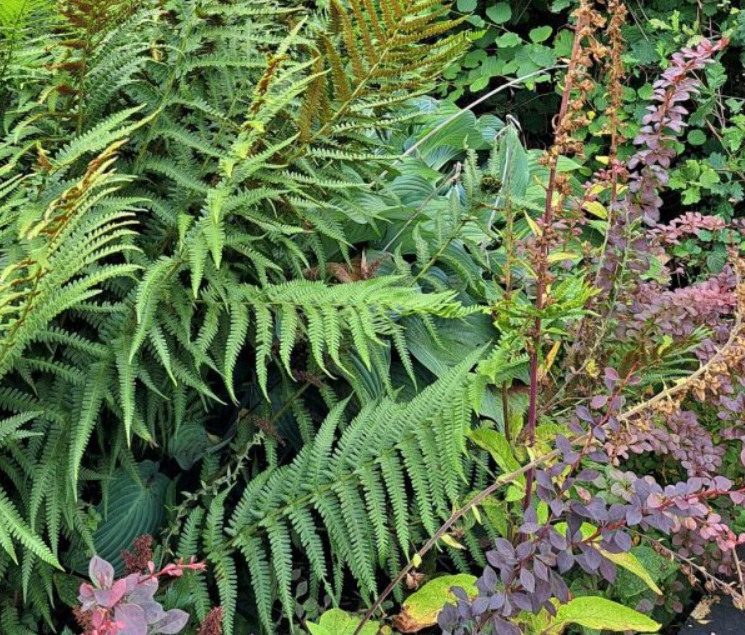
Autumn is my favourite season – I love the colours of the leaves, the more mellow sunlight, the rainbows, the ‘take-over’ bid of the brighty, shiny berries on various trees and shrubs.
I was driving along a beautiful tree-lined road the other day. There were foxgloves by the side of the road and they definitely looked past their best! Straggly, colour fading, not as tall, straight and majestic as they once were. I have to say, they reminded me of me! (Although, I was never really ‘tall, straight and majestic’ at any point in time!) And, to be honest, the withering foxglove picture is true of many of us as we become more fragile and the ‘bloom of youth’ fades. That’s not to say there are some very vibrant, energetic, colourful older folk, but generally, as Peter says: “…All people are like grass, and all their glory is like the flowers of the field; the grass withers and the flowers fall… (1 Peter 1.24) – just a fact of life.
On the other side of the road from the foxgloves were some trees, their leaves turning brown and gold. The leaves would finally die and fall off, but, wait a few months – and new leaves would come. I thought about heaven and the age-old question of whether we would recognise people there. I believe we will. The ‘new leaf’ that comes in, e.g. the chestnut tree – is a chestnut leaf and easily recognisable as such. In the same way, I believe, when we die and come to that day of new life in heaven – we will be recognisable as – us. Moses and Elijah were recognised on the mount of transfiguration when they appeared to Jesus, Peter, James and John. “And behold, Moses and Elijah appeared to them, talking with Him” (Matthew 17:3).
Paul has a wonderful description and explanation of old leaf/new leaf; old life/new life. This is how it will be when the dead are raised to life. When the body is buried, it is mortal; when raised, it will be immortal. 43 When buried, it is ugly and weak; when raised, it will be beautiful and strong. 44 When buried, it is a physical body; when raised, it will be a spiritual body. (1 Corinthians 42-43 Good News Bible) That’s the great transformation of resurrection: mortal to immortal; ugly and weak to beautiful and strong; physical to spiritual, through Christ our Lord.
So has God built in to his creation his everlasting, eternal ways. Praise the Lord.
Video with words of ‘In the bulb there is a flower’ by Natalie Sleeth.
September 21, 2026
And it was good – Creation 3 – All together now
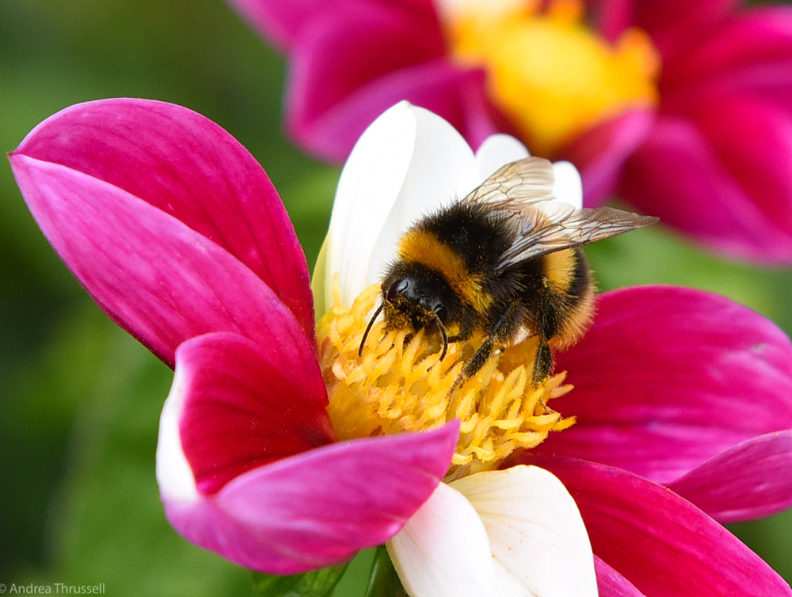
Photo: Andrea Thrussell
One of the things we can perhaps most learn from the created world is how each part depends on many (All?) of the other parts. When all parts benefit, the scientists call it ‘mutualism’. One example is of a bee and a flower. The bee gets nectar from a flower in order to survive. While collecting the nectar pollen from the flower sticks to the bee’s body and the bee then transfers the pollen to another flower allowing it to continue to form a seed and continue its existence. In all of this, of course – there is a ‘third party’ that benefits – us! We can continue to feast on the fruit and vegetables the plants produce – and feast our eyes on the flowers’ beauty. We also, of course can enjoy the honey that the bees make.
This is just a tiny example of the interdependence of our planet. It is a wonder to behold. It is also a lesson to be learned for if we, as humans, behave in such a way as to make life difficult for bees or flowers through the application of pesticides which are harmful or of cutting back on flowers that the bees can use – fewer flowers, fewer bees – less good food for us and vandalism of God’s good creation.
When thinking about creation and about God, I love to read Romans 1.20 which talks about God’s ‘invisible’ qualities which can be seen in what he has made. ‘People cannot see that God has power which lasts for ever. They cannot see that he is really God. But ever since he made the world, he has clearly shown this by the things he made. So they cannot say, `I did not know about God.'(World Wide English New Testament)
When we look at nature in all the goodness that God created it to have, we get to see things about God that are not in themselves visible to us. When we look at God’s creation we see his eternal power, his divine, holy, Godly nature reflected in all he has made. Creation stands as a witness to God. That’s why it is so good to look at, gaze at, think deeply about the world we see around us and hear the testimony it gives day by day in a multitude of ways to our almighty, ever-loving and everlasting God. Praise the Lord.

Photo: Thomas Rieken/Flickr
September 20, 2026
‘And it was good’ … Creation (2)
singing as they go

AI Generated
There is a hymn whose first line is ‘Eternal ruler of the ceaseless round of circling planets singing on their way.’ Beautiful poetic words, but also scientifically spot on. Yes, planets sing!
The US space agency, NASA, no less (they’re very good at rocket science!) confirms that ‘the stars in the sky are performing a concert, one that never stops.’ And SpaceSound claims ‘The planetary sounds we hear, are wavelike vibrations of air molecules occurring within the range of frequencies to which our ears are sensitive…’ as well as sounds produced by wind and weather, magnetic fields etc. Added to that, physicists in the 20th century put forward the theory that that ‘the fundamental building blocks of the universe are tiny, vibrating strings.’ (!) and further, that in music, sound is produced by vibrations in the air, which are perceived by our ears as different pitches… in string theory, the fundamental particles of the universe are believed to be tiny strings vibrating at different frequencies. A veritable Symphony of the cosmos!
There are, as we’ve briefly seen, scientific reasons for the sounds that stars and planets make. But looking at that phenomenon from a faith perspective, it is incredible and delightful that our circling stars and planets ‘make a joyful noise’ and I would say they ‘make joyful noise’ not simply as part of their ‘nature’ but in praise of God – singing on their way – to Him. It is little wonder that, the Book of Job says that ‘…(God) laid the earth’s foundation while the morning stars sang together and the angels shouted for joy?’ (Job 38.4, 7) And it was good. Praise the Lord.

photo Mike McKinven/flickr
The morning stars – can you hear them sing?!
September 19, 2026
‘And it was good’ … Creation (1):
All in order

Photo by C-Smooth/flickr
The ‘debate’ between ‘science and religion’ must be as old as the hills (If you’ll pardon the pun!) Scientists often say that religion has no ‘factual’ basis, people of a religious persuasion think scientists fail or refuse to see the evidence for God right at the end of their test tube!
Science – especially biology was one of my favourite subjects at school and, along with reading the Bible, hearing the Gospel, praying and going to Church was one of the things that made me more persuaded than ever that there had to be a God. Nothing else, to me, made sense. I was especially struck by an experiment we did where we put a small leaf under a microscope. The aim was to study chloroplasts – the tiny structures in a plant leaf cell that converts energy from the sun into ‘chemical energy’ for the plant (photosynthesis). I had learned all about these things and how they worked, but I was blown away when I looked through the microscope and saw the chloroplasts MOVING! That was definitely a ‘God’ moment for me. I was awestruck (and still am) by the intricacy and genius of created life in that tiny leaf.
When I stood back, zoomed out and looked around, outside the window at trees, plants, grass clouds, sky I was ovewhelmed with wonder, not just at the beauty and genius of each one, but by the fact that they all miraculously (I use that word deliberately), fit together – and that as just one small part of creation. Everything was – in order, carefully set in place to produce the building blocks of our universe and life on earth.
I know that many scientists pour cold water on the ‘story’ of creation in Genesis and will readily admit that it is a poem and not a strict ‘scientific document’. And yet, despite the fact that it probably wasn’t written by a ‘scientist’, the ‘order of business’ of creation given in Genesis 1 follows fairly accurately scientific accounts – The ‘Big Bang’ (let there be light), the separation of ‘land and sea’ (as is posited regarding huge bodies of water in ancient times then having dry land in it. (The story goes, for example that the European continent was one river/lake and a large sea creature could therefore make its way from the Jura mountains to Scotland. The waters subsided and lo and behold a lake surround by mountains formed – and Nessie was trapped!) There is also the progressive appearance of creatures, not exactly ‘evolution’ (especially between the species, but I would accept evolution through adaptation to the environment within the species.)
Everything in our created world, then had and has – order. It’s how it was formed, and essentially how it continues. God’s comment each day of his creative handiwork was – ‘and God saw that it was good’. No wonder! And part of that ‘good’ is the awesome order of our universe – right down to tiny chloroplasts – and beyond. Yes, it is good. Praise the Lord.
Video of movements of the chloroplasts in the cells of a leaf of Canadian Pondweed (Elodea sp.) by science of plants for schools/flickr
September 18, 2026
Humility (3) The humility of Christ
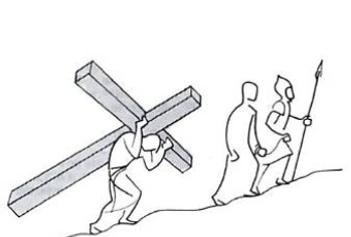
Drawing: Annie Vallotton
Speaking of Jesus, Paul writes:
He always had the nature of God, but he did not think that by force he should try to remain equal with God. Instead of this, of his own free will he gave up all he had, and took the nature of a servant.
He became like a human being and appeared in human likeness.
He was humble and walked the path of obedience all the way to death—his death on the cross. (Philippians 2.6-8 Good News Bible)
There we have it – true humility and the best example of it. ‘Humility’, as we saw previously, is to ‘have a modest view of one’s value or importance’. ‘Value and importance’? ‘Jesus always – from the beginning, while he was on earth and for all eternity’ had the nature of God. Jesus was God – the highest of the highest in all creation, over all creation, in heaven and on earth. He gave that up. He stepped aside from that place of greatness, power and authority. He, as one hymn says of him,’… laid aside his majesty.’ Stepping away from it. Voluntarily, of his own deliberate choice and free will.
He went from supreme ruler, one to be served by all to being the servant of all. What a role reversal. He went from being the majestic and the magnificent God to ‘becoming like a human being’. What a come-down! And this ‘humility’ was lived out by Jesus day by day as he ‘walked the path of obedience’, serving God and serving others. Lived out every day until the day of his death on the cross. What a sacrifice.
We can see Jesus’ humility, too, in how he treated others. James says that God ‘…opposes the proud but shows favour to the humble,’ and Jesus lived out that truth spending time with people considered unworthy because of their illnesses or disabilities, their low status in society, their lack of wealth. He seemed to be like a magnet, attracted to and attracting the weak and powerless, but having little time for the powerful and arrogant. ‘Do not be proud, but be willing to associate with people of low position,’ Paul encouraged the Church in Rome. Jesus consistently lived his life that way.
Two points to finish with – Firstly, in this passage in Philippians, Paul gives us an incredible challenge: ‘The attitude you should have is the one that Christ Jesus had’. This is indeed the way of the cross, the way of truly following Jesus – and it is very sobering and humbling in itself that God should call us to do this. May he give grace to each of us to follow.
But the second and final point is the one that is most important and the one which will help us to set out and keeping going along this road.
Jesus did this. He actually did this. And he did it for us.
Praise be to His Holy Name, since:
… God raised him to the highest place above and gave him the name that is greater than any other name. And so, in honour of the name of Jesus, all beings in heaven, on earth, and in the world below will fall on their knees, and all will openly proclaim that Jesus Christ is Lord, to the glory of God the Father. (Philippians 2.9-11)
Praise be to His Holy Name.
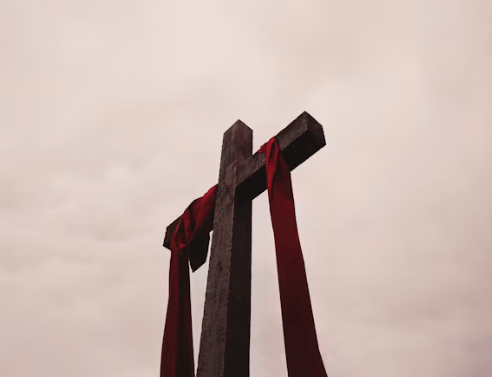
Photo: Alicia Quan/Unsplash
September 17, 2026
Humility (2) Towards others
Photo: Marie Van Cauteren/Flickr
When I was young, my family enjoyed watching the boxing on TV – there seemed to be quite a lot of it in those days!. ( My gran preferred the Saturday morning wrestling, but that’s another story!) I wasn’t really a fan, but I had no control over the TV at that time, so boxing it was. I learned a lot of the jargon – ‘seconds away”, ‘uppercut’, ‘knockout’ etc. Another common phrase in the boxing world was ‘a one-two’ which meant hit with your right hand followed up by a hit with your left hand – usually a winning move. One-two. You could say that the main command in the Bible is also a ‘one-two’ – Love God – Love your neighbour. Lead by loving God then follow that up by loving your neighbour. Jesus himself says that when someone asks what the greatest commandment is: ‘Love the Lord your God with all your heart, with all your soul, and with all your mind.’ This is the greatest and most important commandment. The second is like it: ‘Love your neighbour as you love yourself.’ (Matthew 22.27) First and second – one-two.
I believe this ‘one-two’ – God then others applies to all areas of the Christian life. However you treat God is also how you should treat your neighbour and humility is no different. One-two – we are humble before God and so we are also humble towards our neighbour.
Picking up on our definition of humility from yesterday, to be humble is to ‘have a modest view of one’s value or importance.’ Being humble towards others, then, I believe means valuing them before ourselves and seeing them and their needs, dreams, hopes as more important than ours. There are a number of verses in the Bible that express this:
… in humility value others above yourselves, (Philippians 2.3)
Do not think of yourself more highly than you should (Romans 12.3)
This is how we are to be, this should be our normal ‘stance’ towards each other. I often think of humility as ‘going lower’, putting others of higher value and respect, importance.
One of my favourite places ‘up North’ in Scotland is Fort Augustus – not only for its charm and beauty, but also for the fascination of the canal locks as boats make their way along the Caledonian canal. The boats have to negotiate the ‘ups and downs’ of the landscape. If they are going ‘down’, the boat is ‘locked’ in a small stretch of water between two gates and the water is emptied out until it reaches the level of the next stretch of the canal. In some ways, I think humility is like that. When we meet another person, we need to ’empty out’ any sense of pride or greater self-importance or ‘one-up-man-ship’ or boasting so that we can be ‘on the level’ with them. If the water in the lock is not emptied out – the boat is stuck and can’t move forward. In the same way, when we fail to live humbly with one another, our relationships can stall or at least not have the quality of love God asks of us. Humility (true humility, not pretend humility!) smooths the way between us.
So, we have a good idea of what ‘humility’ is towards others. But – are we humble towards others? And if so – just how humble are we!
Peter writes – All of you, clothe yourselves with humility toward one another, (1 Peter 5.5) Are we humble? Are we wearing the clothes of humility? Or are pride, self-interest, disregard for others, looking down on others, not counting others as being of much worth what we reach for in our ‘wardrobe’ of Christian life and character? It’s good to sit with those questions!
And how humble are we? How humble should we be?
Paul says – Be completely humble and gentle (Ephesians 4.2) That word ‘completely’ is quite a challenge. Paul knows how important humility is and also how we struggle with it. He knows, too, that being ‘completely’ humble is the attitude that will truly ‘oil the wheels of love’ between us. Think of the different people in your life. How ‘completely’ humble (or incompletely humble!) are you with each of them. Again, it’s good to sit with those questions.
As with everything in the Christian life, being humble doesn’t happen all at once – we have to work at it, become aware of our ‘pockets of pride’ and know that we will make progress and then have a time when we ‘fall back’. But Paul holds before us our aim – Be. Completely, Humble.
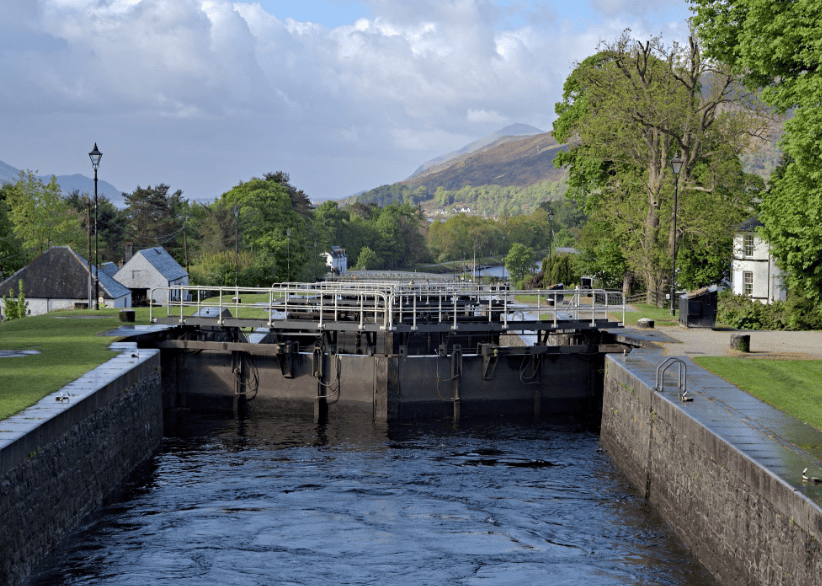
Photo: Christopher Moore/flickr
September 16, 2026
Humility (1) before God

Humility is a strong thread that runs right through the Bible including the lives of God’s people – Israel of old and the Church following that – and the life of God’s son, Jesus. Today, we think about humility before God. The dictionary definition of humility is: ‘to have a modest view of one’s value or importance.’ For me, in this definition, the words ‘view’ and ‘importance’ are key. Humility is about how we see ourselves in relation to another person and also involves the relative importance we give or ‘divide up’ between ourselves and that other person.
When we think of humility before God, we are concerned with how we view God in relation to ourselves, how important we believe Him to be in relation to ourselves.
You could say there’s a ‘line’, a continuum of this view from total humility where we view God as of supreme importance and pride/arrogance where we see ourselves as of supreme importance. The Bible has some pretty insightful (and at times challenging!) pictures of the relative importance of ourselves and God. In absolute awe, David the Psalmist says:
When I consider your heavens,
the work of your fingers,
the moon and the stars,
which you have set in place,
4 what is mankind that you are mindful of them,
human beings that you care for them?
Humility – David’s view of God as of supreme importance and power and might and majesty. Who are we before him? David has a ‘proper’ ie humble view of humankind when compared to God.
And through the Prophet Isaiah, we hear God talking: (God) sits enthroned above the circle of the earth,
and its people are like grasshoppers. (Isaiah 40.22)
Grasshoppers – that’s us put in our place! And David and Isaiah express the truth of it. As one hymn says ‘Our God is a great big God.’
When we are humble, we accept and even rejoice in that – God is God. Why, then would we not be humble? Why think we are just as important or even more important than he is? Pride. Human pride. C.S. Lewis talked of pride as the greatest sin and the sin that is at the root of every other sin. Where do we stand with God? Do we consider him, view him as David did? Do we agree with the prophet that, compared to almighty God we are ‘grasshoppers’? It doesn’t mean we are worthless, far from it. God loves us, considers us worthy of his love, as David said – ‘cares for us’. But we cannot fully operate as people, I don’t believe and certainly in our relationship with God unless we see him as vastly more important than us, than anything and live out that view of him through obedience to his will and his ways. Our God is a great big God.

September 15, 2026
Teach us to pray (7) Prayer for healing (2) ‘No’

We have said that God always hears and answers prayer and I believe that. Sometimes the answer is ‘wait’. Sometimes the answer is not what we expected but when it happens we can see it as a true answer to prayer, a remedying of the situation in a way we could never have imagined. And sometimes, the answer is just plain – no.
Do we persist in prayer no matter what or are there times when we simply leave our requests with God without continuing to pray for a specific need? How do we know when God is saying,’no’?
The Church leader, Paul, found himself in that situation. This, in his own words was happening in his life:
‘I was given a painful physical ailment, which acts as Satan’s messenger to beat me and keep me from being proud. 8 Three times I prayed to the Lord about this and asked him to take it away. 9 But his answer was: “My grace is all you need, for my power is greatest when you are weak.”’ (2 Corinthians 12.7-9)
The essence of the prayer request was ‘take away this painful physical ailment’ – essentially a prayer for very specific healing. We can also see that Paul has been reflecting on the situation, no doubt prayerfully reflecting on it, and he comes to a few conclusions: 1) the physical ailment is not simply ill health, but an illness which ‘acts as Satan’s messenger to beat me and keep me from being proud.‘ Paul in his wisdom and deep spiritual insight arrives at that interpretation of events – the physical illness is there to bring about a spiritual result – humility. 2) Paul has heard God speaking to him either in his spirit and God’s message is ‘My grace is all you need (ie not the removal of your painful ailment), for my power is greatest when you are weak. In his weakness Paul is more dependent on God, and continuing to live and work despite the physical illness are testimonies to God’s power sustaining him.
We are not Paul! So what can we take from his experience? Firstly, that same Holy Spirit that was in Paul is in us and may well reveal to us why God’s answer to a prayer is ‘no’. The reason of course, may not be the same reason as it was for Paul (to stop him boasting and depending on his own power). It may be that for us, but it may be something different. Our continuing problem/pain may be, for example, a witness to others about perseverance and faith, a ‘modelling’ of how to live for Christ in difficult situations. The Holy Spirit will make the reason plain in God’s own time.
Also, it is always true – whether the answer to our prayer is no/not in this way/not now, that God’s power is seen when we are weak, when we are challenged or struggling. We may not be able to see it – but God can. And others can. As Paul said in 2 Corinthians 4.7, ‘…we have this treasure (our experience of God through Jesus Christ) in jars of clay to show that this all-surpassing power is from God and not from us. It is not an easy lesson to learn. It may take time to learn, but what a joy it must be to come, as Paul and many others did, to that place of complete sufficiency in our supremely loving God.
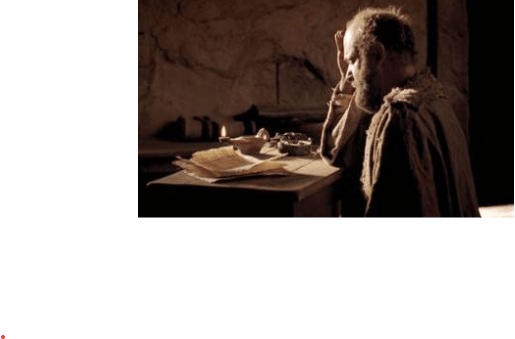
September 14, 2026
Teach us to pray (6) Prayer for healing (1)The prayer of faith

We could spend many days considering prayer for healing. Perhaps the two most important things to say are 1) God can heal and 2) We are meant to pray for healing. Healing, as we know, was a key part of Jesus’ ministry as many came to him with physical and mental illnesses. Mark tells us: (People) begged him to let (the sick) just touch the edge of his coat. And all who touched him were healed. (Mark 6.56)
We also know that we should pray ‘for everything’ which includes healing. One passage which deals with healing is in James 5.14-15 Is anyone among you sick? He should send for the church leaders and they should pray for him. They should pour oil on him in the name of the Lord. The prayer given in faith will heal the sick man, and the Lord will raise him up.
The key point is that it is ‘prayer given in faith’ that will heal – very simple, yet very powerful. I believe that any prayer by any person of faith is answered and is effective. (James himself says that – The prayer of a (righteous) person has a powerful effect.(James 5.16 GNB adapted) Interestingly, though, James here seems to have two examples of ‘prayer plus’. I think we can learn from both. Firstly – prayer plus the leaders of the Church. As we said, (and James says!) not only leaders can pray, but the presence of the Church leaders would obviously encourage the sick person and their family and their spiritual maturity and gifting would also be valuable. The leaders also represent the spiritual nurturing that comes from the community of faith. It is always good to enlist the prayers of many people.
Secondly, James talks of prayer plus ‘anointing with oil’. There are two views on this – that the oil is part of the ‘first aid kit’ of early first century people (The Good Samaritan poured oil and wine on the injured person’s wounds (Luke 10.34) or that the oil is symbol of the work of the Holy Spirit in healing. I believe both are true when we pray for healing. As we said in a previous day’s blog, God can answer our prayer for healing miraculously or through the medical knowledge and provision that he has put in place and allowed us to discover – or both! Usually, when I pray for healing for someone I ask God that he would heal by his miraculous power or through the practical health care they receive.
We cannot limit or direct God in how he answers prayer – he is the God of miracles, the Lord of all. Neither can we ‘bypass or disregard’ the vast resources of medicine we have – he is also the God of ‘every good and perfect gift.’ (James 1.17) We can simply pray for healing – and leave the rest up to God.

September 13, 2026
Teach us to pray (5)A most amazing prayer time
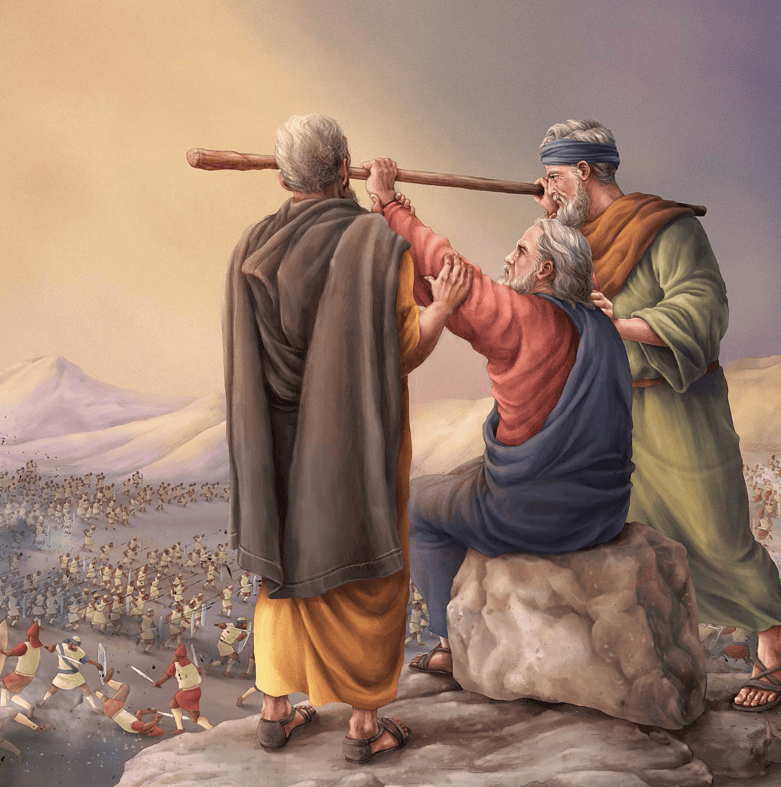
One of my favourite stories in the Bible about prayer is the story of Joshua and Moses. Joshua is the commander of the Israelite army fighting the Amalekites when Moses is in his ‘senior years’. The story is in Exodus 17 … and here are the ‘edited highlights’.
‘Joshua fought the Amalekites … and Moses and Aaron (Moses’ borther) and Hur (their companion) went to the top of the hill. As long as Moses held up his hands (in prayer), the Israelites were winning, but whenever he lowered his hands, the Amalikites were winning. When Moses’ hands grew tired, they took a stone and put it under him and he sat on it. Aaron and Hur held his hands up … so that his hands remained steady until sunset. So Joshua overcame the Amalakite army….(Exodus 17.10-13)
Talk about seeing answers to prayer! The response of God to Moses’ prayers were immediate! Yes, Joshua was the warrior on the ground, but it was Moses’ prayers that led to Joshua’s success – instantly and clearly: As long as Moses held up his hands (in prayer), the Israelites were winning, but whenever he lowered his hands, the Amalakites were winning. Surely a great lesson to Joshua and his army that, though they were good fighters, their victory at all times belonged to the Lord. Amazing prayer time part 1!
Amazing prayer time part 2 is that Moses was old and frail by this time. It was difficult for him to hold up his arms in prayer for any length of time never mind for a whole day as the battle raged. But he had help. Aaron and Hur got a stone for the Moses to sit on and then held up his arms so that his prayers could win the day for the Israelites.
Prayer (at any age!) can be demanding of time, energy, prioritising, focussing, persevering. We all need help. Perhaps not people physically holding up our arms or finding a seat for us, but we done need people, at times to make prayer possible for us. This might mean encouraging us to pray, arranging prayer times or places of prayer and meeting with each other to pray. It might mean inspiring us to pray by setting good examples of faithfully praying. There might also be times when we do need practical help – taking some practical responsibilities from us for a while, giving us space and time in our lives so that we can pray. This is rich prayer story – showing us the ‘power’ of prayer and the necessity for ‘prayer helpers’ to make prayer possible in our own lives and our life together and give us, too – the most amazing prayer times.

‘
September 12, 2026
Teach us to pray (4) Answers
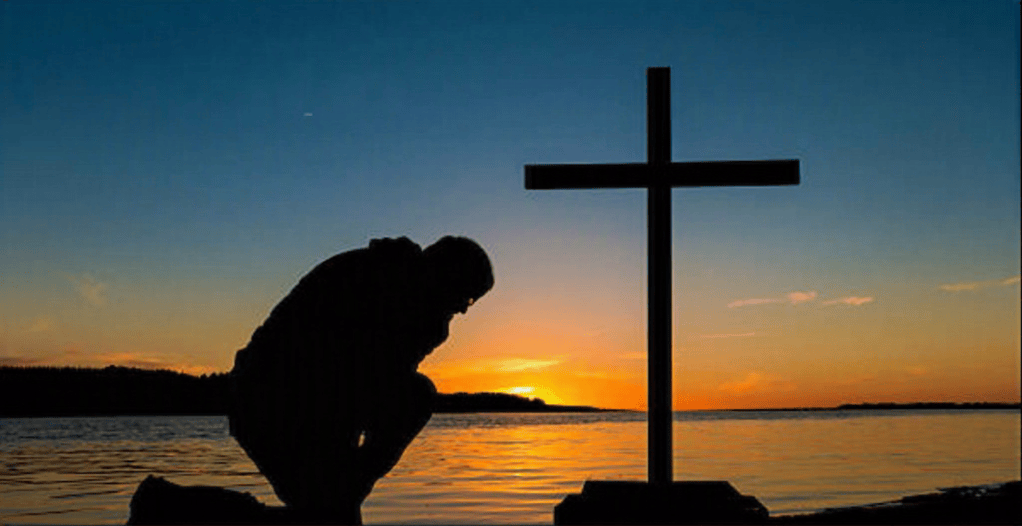
I believe that every prayer is heard and every prayer is answered: God does not have deaf ears for our prayers to fall on. There will be times when we can clearly and fairly quickly see God’s answer to our prayers. (Usually when we get exactly what we’ve asked for!)These are times of great encouragement.
There are times, too, when we don’t get what we’ve asked for, but we can see the answer was, in fact, what was best for us and for the situation.
I remember when I was in my mid-teens and my grandmother was ill. I earnestly prayed for her to be healed. Sadly, my grandmother died the very next day. I was distraught – not only because of my grandmother’s death, but also because I felt God had not answered my prayers. It took me a while, but I eventually realised that God had answered my prayer – but in a way that was different to my expectations. He had known just how ill my grandmother was and took her, without any more suffering, to that place of what a friend called ‘final healing’ in his nearer presence. It took a while, but over time, I could actually rejoice that my grandmother was at peace and see the wisdom and compassion in how the situation had developed, or, in other words, how God had answered my prayer.
But what about those times when we don’t seem to get what we prayed for at all, in any way, shape or form? As we saw a few days ago, when that happens – we wait and keep on praying and don’t give up. But I don’t believe we wait ‘idly by’. In these times of ‘persistent prayer’, we need to be open to God, to allow the Holy Spirit to work in our minds and hearts and ‘reason together’ with us about the prayers we’ve prayed – perhaps making us rethink what we’ve asked for or our expectations, perhaps making us more certain and leading us to determinedly keep praying for exactly that same thing.
The letter in the New Testament written by James, James makes some good points in this regard (And he doesn’t mince his words!) You do not have because you do not ask. When you ask, you do not receive, because you ask with wrong motives, that you may spend what you get on your pleasures. (James 4.2-3 New English Translation/NIV)
James makes two points here – You don’t have, because you don’t ask. Simple, it would seem, in fact why does he even say it, it seems so obvious? Perhaps to correct the attitude of taking God for granted, believing that he ‘should’ understand our needs, he ‘should’ help us without us needing to bother to go before him humbly, intentionally, seeking his grace and favour. Prayer is not a routine or a jumble of words (even in the right order!), prayer involves direct contact with God, an acknowledgement and coming into his presence where we take the time, make the effort to be with him, come before him and ‘ask.’
James second point is this: When you ask, you do not receive, because you ask with wrong motives, that you may spend what you get on your pleasures.
Wow – that’s very straight! What a thing to suggest – that we ask and sometimes pray ‘with the wrong motives’? James is a very wise mature leader of the early Church. (They used to call him ‘camel knees’ because he was always down on his knees praying!)
He knows people well. He knows not just the words that flow from their lips, the devotional practices they engage in (like prayer), all the ‘outward signs’ that prayers are being made. James knows the hearts of those he is writing to, the hearts of his ‘flock’, his people. He knows they are human and will, therefore, often have ‘mixed motives’, that their requests may stem from selfishness, their prayers really involve them asking God to do things ‘for their own pleasure’, instead of God’s will, to feather their own nest, build their own kingdom rather than seek the kingdom of God. Time and again in the Bible, prayer is linked with the will of God, because prayer that is answered must always be linked with the will of God. (Jesus’ struggle in prayer in Gethsemane is a poignant example – Luke 22.42 and forward – where Jesus asks three times for ‘the cup to be taken away from him’, NOT to have to go to the cross. Then Jesus’ prayer moves from his own understandable request to ‘not my will by yours be done’.
Jesus prayed – these three times – until, in the Father’s presence, in ‘conversation’ with the Father, he realised what he should pray for – not my will, but yours – and left it at that.
Only God has ‘the big picture’. He will graciously answer all of our prayers when we ask them according to his will, according to that ‘big picture’ he has of all of our lives.
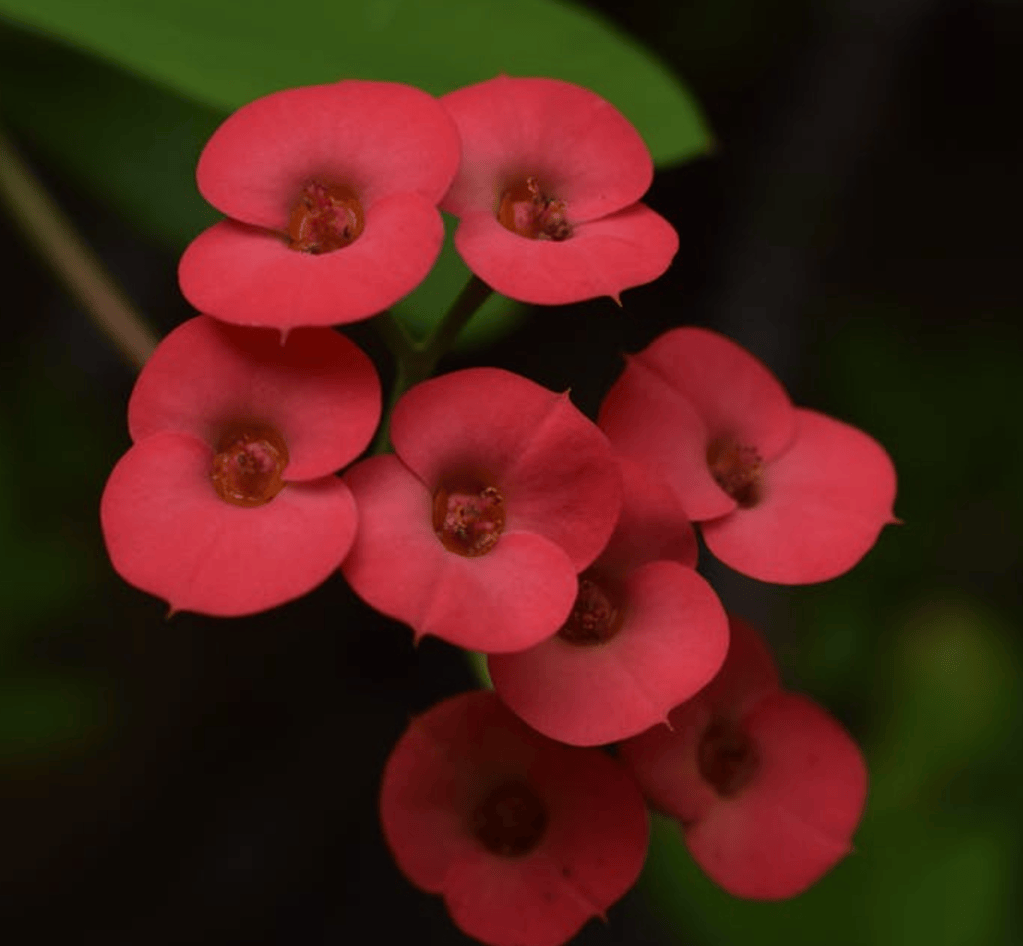
September 11, 2026
Teach us to pray (3) – when we don’t have the words

Often, when we’re faced with tragic events in our personal lives or beyond, a common response is ‘No words’ or ‘I’m lost for words.’
And, indeed, silence is a very appropriate response to circumstances that cause us or others great pain, deep sorrow, when the unimaginable happens, when our world is turned upside down.
When these moments paralyse our thinking and overwhelm our emotions, and stunned, aching silence is all we can muster, it is comforting – beyond words – to know that God hears our silence.
How do we know this? Because, in the Bible, Paul writes: ‘… when we don’t know what to pray for, the Spirit prays for us in ways that cannot be put into words. (Romans 8.26 – Contemporary English Version)
Praise the Lord for that. What do we do while the Spirit is ‘praying for us’? I think we wait, in our silence, trusting him to pray for us, comforted that he is praying for us, strengthened because he is praying for us, waiting in hope for God’s answer to the Spirit’s prayer for us. When there are no words – don’t force words. Don’t try to fill that precious silence. Wait. In silence. Passing the baton of prayer on to God the Holy Spirit.
Paul piles on the words of encouragement for moments like this: ‘… the Spirit helps us in our weakness … and God, who looks into our hearts, knows the mind of the Spirit. And the Spirit prays for God’s people according to God’s will. (Romans 8.26-27 New English Translation/Contemporary English Version)
What an almighty and ever-loving God we have – who hears us when we ourselves can’t pray, who understands us when we barely understand ourselves, who deeply, boundlessly loves in real and true and difference-making ways – always.
Today, September 11, 2026 is the 25th anniversary of the attack on the World Trade centre (and attacks at other locations), with the loss of thousands of lives of people of many nations, religions, backgrounds; countless more thousands injured and many still suffering the long term physical and emotional effects. A day to stop and remember those who died and suffered, those who are still grieving and suffering, those who bravely did what they could to help. A day when we probably pray best, when we pray silently.
The Message translation of the Bible sums it up well.
If we don’t know how or what to pray, it doesn’t matter. The Spirit does our praying in and for us, making prayer out of our wordless sighs, our aching groans. (Romans 8.26 The Message)
A day like today is a good day to ask God to teach us to pray. A day like today when there are no words…..

… for things like this.
September 10, 2026
‘Teach us to pray’ (2)Don’t give up

Believe it or not, Jesus told lots of jokes or at least funny stories. I think because we have heard them ‘in Church’ we don’t consisder God’s word or the words of Jesus as things that would make people laugh! Of course, these funny stories always had a serious point, but Jesus knew that the humour in them would help get that ‘serious point’ across – and make folk remember it!
One of Jesus’ ‘funny stories’ is about a widow who wanted her case heard by a judge. The judge isn’t painted in a good light, Jesus portrays him as a judge who ‘neither feared God nor cared what people thought. (Luke 18.2) (In those days, the stereotype of a self-important couldn’t care less judge would raise a few laughs! Just as the ‘mean Scot’ or the ‘greedy lawyer/politician’ appears in many jokes. Apologies to any politicians, lawyers or Scots!)
The widow goes again and again to him asking for justice against her opponent. (The idea of this wee widow woman constantly pestering the judge would cause even more humour.)
And the ‘punchline’ would have them rolling about with laughter when Jesus said: For some time he refused. But finally he said to himself, ‘Even though I don’t fear God or care what people think, yet because this widow keeps bothering me, I will see that she gets justice, so that she won’t eventually come and attack me!’” (Luke 18.4-5)
What a thought! This big, self-important judge cringing in fear of the ‘wee wumman’ at his door.
And the point of the story? That the disciples should always pray and not give up. (Luke 18.1)
We know that not all prayers are answered straight away, or even after a few months, or years, or many years. Don’t give up. Isn’t God more just and more caring, more ‘on our side’ than this judge?
I used to watch the TV programme ‘Case Jones’ about a train driver in the US. The train was ‘old style’ and the engineer had to put coal into the fire to power the engine. There would often be some danger or other when the train had to keep going in difficult circumstances – cue thundering, scary music, film of the train hurtling along the track spliced with film of the engineer shovelling coal endlessly into the engine. Persistence is the coal for the fire of prayer which keeps us and our world on the right track. Don’t give up! Keep going! Keep ‘piling the prayer’ on the fire of faith and obedience.
I’m sure the disciples would come up against many situations where their prayers went unanswered for long stretches of time. At those points especially, they would remember Jesus’ words ‘always pray, and don’t give up.’ And into their mind, too, I would imagine, would come the heroine of Jesus’ story – the widow who, again and again knocked on the judge’s door. Until he opened it.
‘Knock, says Jesus, and the door will be opened.’ (Luke 11.9)
September 9, 2026
‘Teach us to pray’ (1)
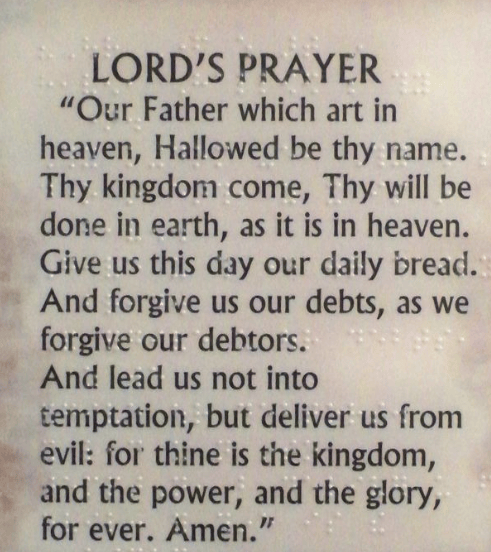
In Luke’s Gospel, this request from the disciples – Lord, teach us to pray’ – gives way to the most famous prayer in the world that we call the ‘Our Father’ or ‘The Lord’s Prayer’. (Luke 11.2-4) It’s words are used for prayer by millions and it is analysed and preached about probably more than any other prayer. Yet, because we focus on the prayer itself, we often forget the disciples’ request: ‘Lord, teach us to pray’.
I’ve been turning that question over in my mind recently as it seems such a strange request to make. These men would have been praying their whole lives – by local rabbis and other holy men, in their families, at the synagogue, even at the Temple if they visited it.
My first thoughts were that they had seen Jesus pray and were aware of his close relationship with God as he did so. They would also be aware of how earnestly he prayed, how much of a priority prayer was for Jesus, how powerfully his prayers were answered. These are all good reasons for the disciples’ request.
Yet, Luke also tells us that, They asked Jesus to teach them to pray ‘as John had taught his disciples’. (Luke 11.1) The reason here, then, seems to be not simply because of witnessing Jesus’ prayer life, but more as a matter of ‘group identity’. Perhaps each Rabbi wrote or gave his disciples a prayer of their own that expressed his particular beliefs and thoughts on prayer. In the same way that groups and organisations (and football teams!) have pledges and songs and ‘mission statements’. The prayer that Jesus would give them would be ‘theirs from him’ – as much ‘the disciples’ prayer than the Lord’s prayer. That sense of identity and bond captured in that first simple word – ‘our’. Not a ‘personal prayer’, but a prayer of and for the community of faith. Jesus’ prayer requests to his Father, written down so that his disciples could follow him in these words and so follow him in a close and fruitful relationship with God.
It’s a beautiful prayer – it covers everything:
Praise – hallowed be Thy Name
Vision – Thy kingdom come ….
Obedience – Thy will be done ….
Dependence on God to meet our needs – Give us this day our daily bread
Seeking and promising forgiveness – forgive us our debts
Asking for protection from ourselves and for ourselves – Lead us not into temptation
A prayer, given by Jesus to his disciples because they asked – not imposed upon them by him but his response to their earnest desire for his worded prayer for them. His words for them.
And also, now, his words for us.
September 8, 2026
Trees (4) The Tree of Life
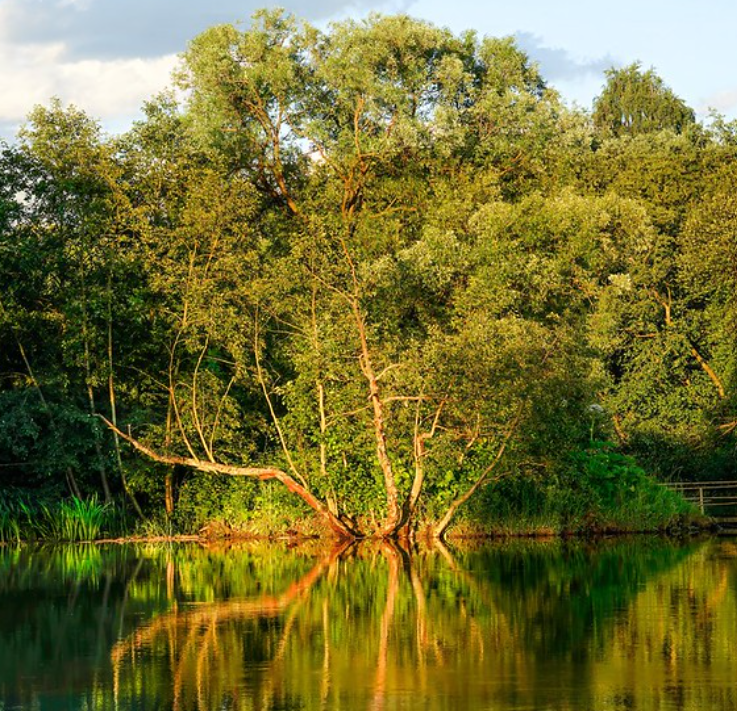
Photo: Bulat Baysuldin/Flickr
Our final tree in this short series is not found on present day earth, but in the new earth and heaven at the end of time. John in his vision in Revelation writes: Then I saw “a new heaven and a new earth,”for the first heaven and the first earth had passed away … I saw the Holy City, the new Jerusalem, coming down out of heaven from God. (Revelation 21.1-2)
When we think of heaven or ‘the life to come’ or ‘what will happen next’, it’s good to read what the Bible tells us. And it’s also good that there will be trees! One specific tree – the Tree of Life.
John goes on to write: ‘Then the angel showed me the river of the water of life, as clear as crystal, flowing from the throne of God and of the Lamb down the middle of the great street of the city. On each side of the river stood the tree of life, bearing twelve crops of fruit, yielding its fruit every month. And the leaves of the tree are for the healing of the nations. No longer will there be any curse. The throne of God and of the Lamb will be in the city, and his servants will serve him. (Revelation 22.1-3)
What a vision! Do I understand everything about it? No. Am I completely enthralled and inspired by it? Yes! What is not to like about these verses from Revelation?
What a beautiful scene – a crystal-clear river, it’s source the very throne of God and of Jesus the lamb, in pride of place, right at the centre of the life of the city and its people, freely available. And then – the tree of life. There are, of course, echoes of the first tree we read about in Psalm 1, which talks about, ‘a tree planted by streams of water, which yields its fruit in season and whose leaf does not wither. (Psalm 1.3) Obviously trees planted right by the rivers, constantly fed by water are the healthiest, the most abundant, the most reliable in terms of fruit. The tree of life is no exception – crop after crop of fruit, month by month. A symbol of the richness of all the treasures of heaven flowing out from the throne of God.
And the leaves of the tree? ‘The leaves of the tree are for the healing of the nations.‘ (Revelation 22.2) What a beautiful verse. God knows how broken the nations of his world are and his desire is the healing of the nations, restored by the leaves of this tree of the life of God.
When I was out walking in the countryside when I was young, I would sometimes brush against some nettles. Ouch – immediate sharp pain and itching and wee red spots. I learned, though, that if you found a ‘doken leaf’ and rubbed the underside of the leaf on the spots, it would cool your skin and ease the pain. And it did. (Not because of special chemicals, but the cool liquid of the doken leaf as you rubbed it against your skin plus the very act of rubbing your skin took your mind off the pain, probably until your body provided its own remedy!)
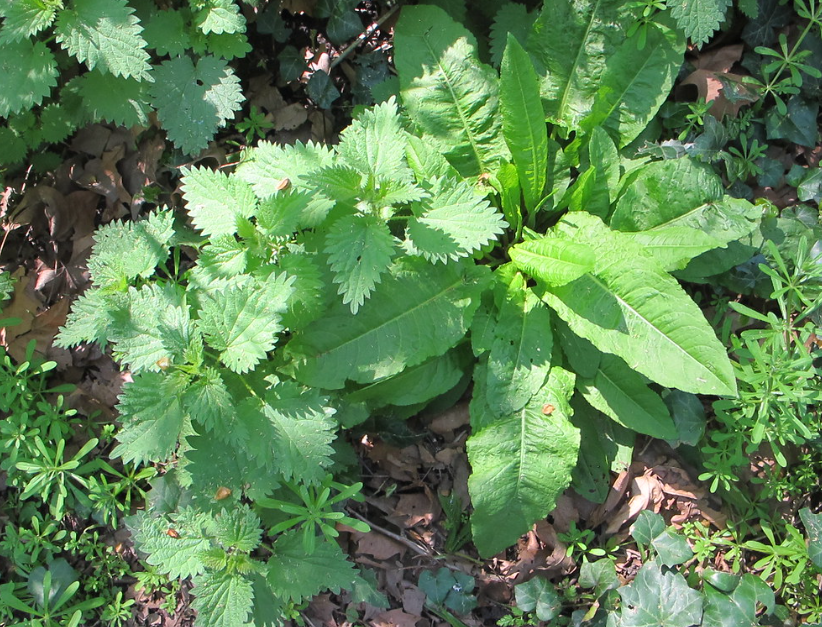
And wasn’t it great that wherever there were nettles, there were doken leaves!
The leaves of the tree are for the healing of the nations. The leaves of the tree taking the sting of hatred, the pain of millennia of violence, the redness and scarring of lifetimes of death and destruction.
The leaves of the tree are for the healing of the nations.
We are very aware, especially at the moment of the brokenness of the nations and their need to be healed. So does our God and he has provided a remedy for that healing.
But what good is that now, you might ask, that’s in the future, that’s heaven?
Yes, it is. But there is One who taught us right now, in our present tense to pray – ‘Thy kingdom come, thy will be done on earth as it is in heaven.’ (Matthew 6.10)
When we pray these words, we pray for many things and one of these is the healing of the nations. God’s will, the way of God’s kingdom. So we pray, we trust, we hope for the coming of God’s kingdom. And our prayer and trust and hope is this: The leaves of the tree are for the healing of the nations.
September 7, 2026
Trees (3) The Cedars of Lebanon
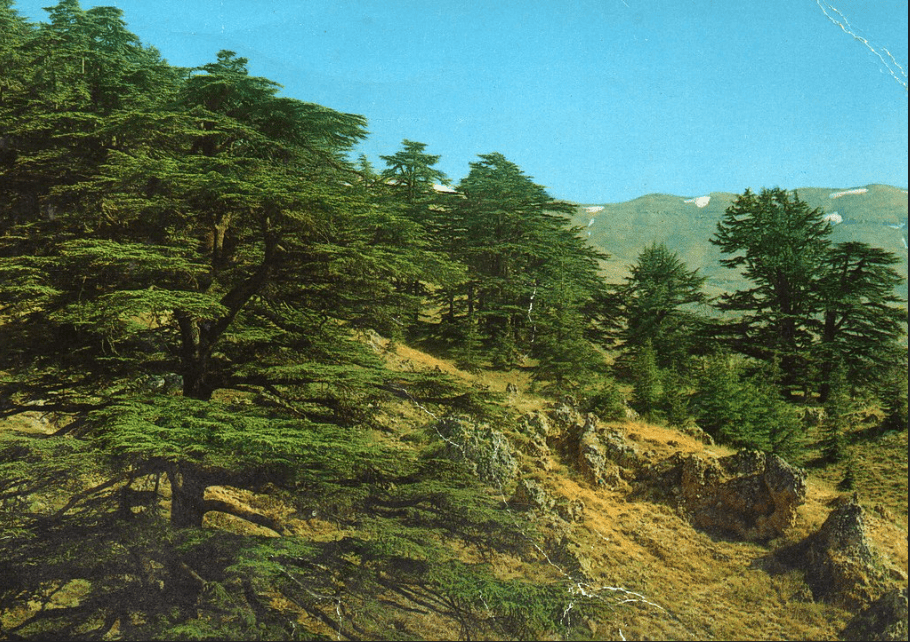
Photo: K3s(Kris)/Flickr
There are trees and then there are trees! In the Bible and probably more generally, the Cedars of Lebanon had the reputation of being a ‘tree of trees’ and so is used as a symbol of a multitude of good things:
STRENGTH AND GROWTH
Like a cedar of Lebanon he (Israel, God’s people) will send down his roots; his young shoots will grow. (Hosea 14.6)
FRAGRANCE – (which itself symbolises good influence and the blessing we spread among the people we are with)
His fragrance shall be like a cedar of Lebanon.(Hosea 14.6)
A SIGN OF GOD’S RICH PROVIDING
May there be abundance of grain in the earth on top of the mountains; Its fruit will wave like the cedars of Lebanon. (Psalm 72.16 NASB)
TREES FIT FOR THE BUILDING OF THE TEMPLE
… the foundation of the temple of the Lord was not yet laid. So they gave money to the masons and the carpenters, …. to bring cedar trees from Lebanon (Ezra 3.6-7)
A SYMBOL OF THE RIGHTEOUS
The righteous … grow like a cedar in Lebanon. (Psalm 92.12)
A tree of trees – well worth looking at, gazing at, taking in its strength and richness and beauty.
It reminds of the verse in Philippians where Paul says:
Finally, brothers and sisters, whatever is true, whatever is noble, whatever is right, whatever is pure, whatever is lovely, whatever is admirable – if anything is excellent or praiseworthy – think about such things. (Philippians 4.8)
Look – look at the Cedar of Lebanon – and think of these things.
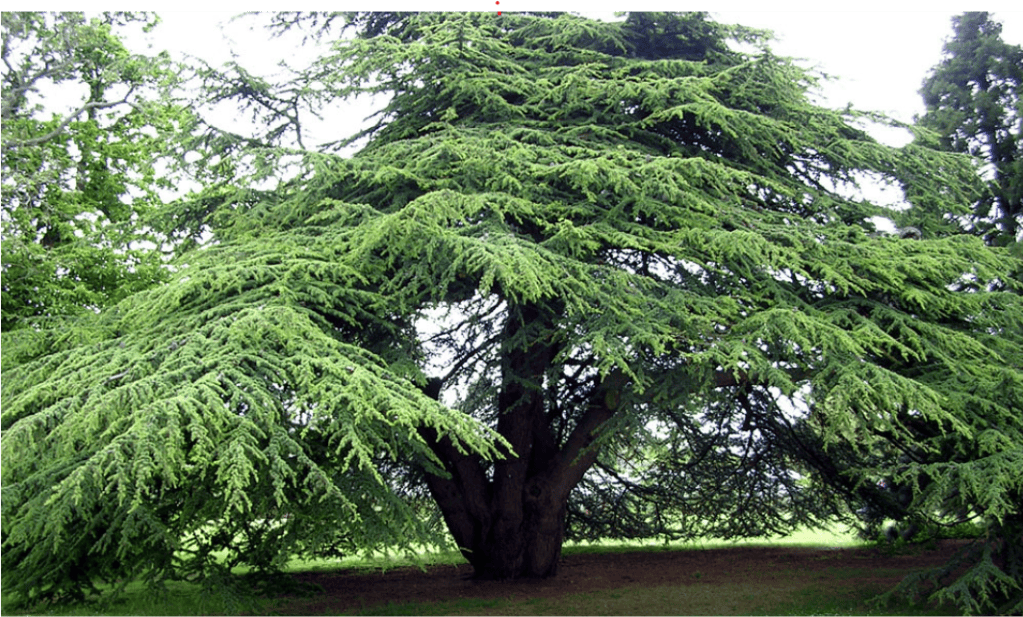
Photo: Hornbeam Arts/Flickr
Thoughts originally from a ‘Morning by Morning’ video made while I was minister at New Cumnock during COVID:
September 6, 2026
Trees (2) The Olive Tree
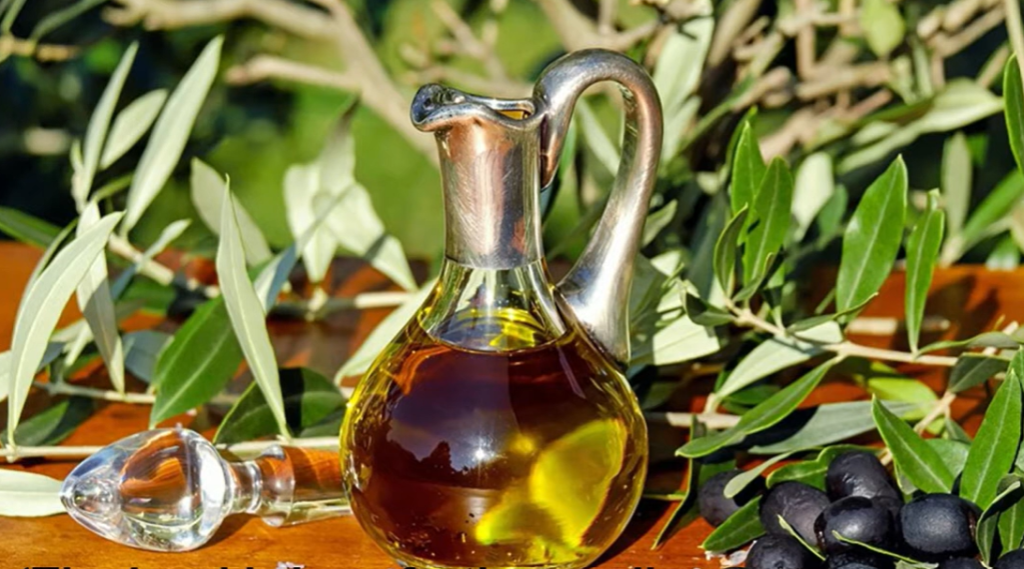
The olive tree – a tree at home in sundrenched climates of the middle east, mediterranean and elsewhere. Known for its food, though mainly for the oil it produces, which we mainly use for salads or for cooking. In ancient times, olive oil was used for healing (the Good Samaritan had oil in his first aid kit! (Luke 10.34), as a basic beauty product ( ‘oil that makes the face shine’ Psalm 104.15, for light and for religious ceremonies, especially setting people apart for some special task as a priest or a king.
Olive oil is also a symbol of the Holy Spirit, especially in the book of the prophet Zechariah. He is given a vision by an angel and this is how Zechariah describes the vision:“I see a solid gold lampstand with a bowl at the top and seven lamps on it, with seven channels to the lamps. Also there are two olive trees by it, one on the right of the bowl and the other on its left.”

A strange picture, even for Zechariah! But one of a continual supply of oil producing a continuous supply of light. The angel explains the vision: ‘‘Not by might nor by power, but by my Spirit,’ says the Lord Almighty. Zechariah 4.6)
What a picture of the ever living Spirit of God supplied in abundance to us, bringing us God’s light.
Spirit of the Living God,
Fall afresh on me,
Spirit of the Living God,
Fall afresh on me.
Break me, melt me, mould me, fill me.
Spirit of the Living God,
Fall afresh on me.
D. Iverson

Thoughts originally from a ‘Morning by Morning’ video made while I was minister at New Cumnock during COVID: https://www.youtube.com/watch?v=0A3YCJmwkVg
September 5, 2026
Trees (1)
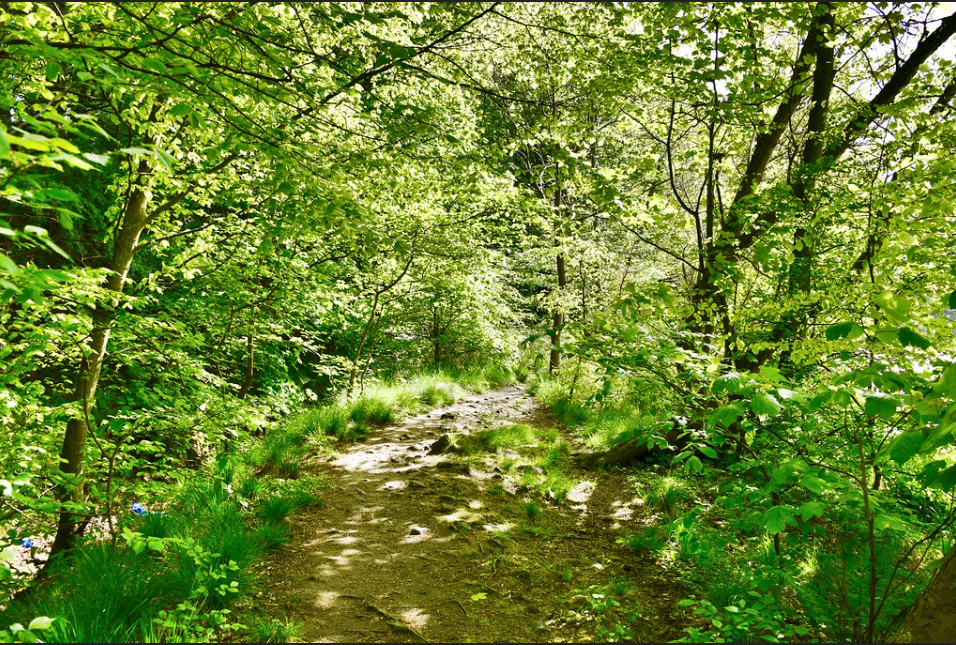
Photo: DanoAberdeen/Flickr
I love trees. A fellow-tree-loving friend, (let’s call her Esther) tells the story of a drive through some beautiful tree-lined countryside with one of her friends. Esther’s comments as she took in the beauty of the trees, were ‘Oh my!’, ‘Look!’, ‘Aren’t they beautiful?!’ To which her much less enthusiastic friend replied,’Huh – If ye’ve seen wan tree, ye’ve seen them a’!
Thankfully, I think Esther’s friend is in the minority. The next few days are going to be ‘tree appreciation’ days, looking at some of the trees in the bible and how they can speak to us.
We begin with the tree in Psalm 1.
Happy is the one who does not walk in the way sinful men tell him to, or stand in the path of sinners, or sit with those who make fun of God. But who finds joy in the Law of the Lord and thinks about His Law day and night. This person is like a tree planted by rivers of water, which gives its fruit at the right time and its leaf never withers. Whatever they do prospers. (Psalm 1.1-3 NIV/New Life Version adapted)
What a tree this is – firm, strong, in prime place beside not just one river, but rivers of water that will never run dry. It can be depended upon to bear fruit in its season, year after year. And it is an ever-green tree, no dry, dying, falling leaves. Always healthy.
It’s a great picture of strength, life, fruitfulness, dependability. The tree that keeps on giving. The tree that is always there.
The Psalmist’s point is that there are people like that. How do we get to be like this tree?! You are known, they say, by the company you keep. And the person who is like this tree avoids ‘bad company’. They don’t ‘sit or stand or walk’ anywhere near people who have a dim view of God and godliness and goodness. It doesn’t mean that they ignore them or don’t spend time in their company, but they don’t allow themselves to be influenced by them. They don’t ‘linger’ with their thoughts and opinions. Instead, their minds and hearts keep company with God through his word. It is a joy to them, their constant companion.
We often talk nowadays about pollution – especially by carbon dioxide gas (CO2) the destroys our planet. Trees absorb CO2 and stop our towns and cities and countryside from being polluted. The Woodland Trust says,’… trees are one of the best ways to tackle the climate crisis.’
We have a ‘climate crisis’ in our society and many live in an ‘atmosphere’ of violence, intolerance, cruelty, indifference, unkindness, self-centredness. We need trees. We need people like the person described in Psalm 1 who, by their very presence, by the living of their lives in the light of God’s truth help remove the ‘pollution’ of all kinds of evil and harm.
So, it’s not so much – ‘hug’ a tree as be a tree.

September 4, 2026
Why worry? (4)

One of my worries when I was doing maths at school was the dreaded phrase – ‘a worked example’. It wasn’t enough to say what the answer was – you had to show it, see it in action.
This is the fourth and final day thinking about worry, ‘in theory’ if you like, in principle with many words of wisdom from different parts of the Bible. Today we have a ‘worked example’. It’s the story of Martha, Mary and Jesus and it was Martha who was the worrier. Here’s the story…
As Jesus and his disciples were on their way, he came to a village where a woman named Martha opened her home to him. She had a sister called Mary, who sat at the Lord’s feet listening to what he said. But Martha was distracted by all the preparations that had to be made. She came to him and asked, “Lord, don’t you care that my sister has left me to do the work by myself? Tell her to help me!”
“Martha, Martha,” the Lord answered, “you are worried and upset about many things, but few things are needed—or indeed only one. Mary has chosen what is better, and it will not be taken away from her.” (Luke 10.38-42 NIV)
Martha was in a real tizzy. She was playing hostess to a special guest and, very possibly his friends and others who would come along to hear him. Quite a responsibility. And a great deal of work. And also, for Martha, a great deal of worry – ‘she was distracted by all the preparations that had to be made’. It wasn’t simply that she was preparing her home and possibly a meal, but her thinking and worrying about the preparations had ‘distracted’ her: work plus worry – it’s a common equation! As we’ve seen, that’s what worry does – diverts our thinking from what matters. Martha’s worried state also isolates her – another favourite trick of worry – making us think we’re on our own, there’s no one to help. And worry is also making Martha angry ‘Don’t you care?’ she says – to Jesus! Her frustration with him overflows. ‘Tell her to help me.’ Worry is making her very bold as she tries to order Jesus about and berates her sister at the same time.
Now, I know we’ve said that we take our worries to Jesus, but that doesn’t include telling him us what he should do about them! When we bring our worries to Jesus we surrender them to him, seeking his grace, his peace, his solution to the problem. Martha gives us a classic ‘worked example’ of someone in a real stew about something.
And Jesus shows us how he responds to a person so consumed with worry. His response? ‘Martha, Martha’. He calls her by name – not angrily, I believe (that would have just been one sharp ‘Martha’!), but lovingly, gently, sympathetically. ‘Martha, Martha’ – he draws her to himself. ‘Martha, Martha’ – he has heard not just what she said, but how she is, how she feels. Then he tells it like it is: you are worried and upset about many things … He knows her, he knows what is on her mind in that moment. He acknowledges her despair and distress. But he doesn’t give in to it. Our worry doesn’t stop Jesus from getting to the root of the problem and making us see the reality of the situation. He doesn’t paper over the cracks and say,’There, there, don’t worry, it’ll be fine.’
‘Only one thing is needed’ – that is actually the answer to her worries! As we’ve said often these past few days: Don’t worry! Don’t be distracted by all the preparations. Focus on Jesus and what, in that moment he wants you to do and be.
For me, in all of this, all of these different parts of this ‘worked example’ of worry and Jesus’ response to it, two words stand out – ‘Martha, Martha’. Said in the gracious way I believe Jesus uttered them, they must have been so soothing – like ointment on a burn, like rain on dry dusty ground, like rest for the soul as Martha heard her Saviour say her name. ‘Martha, Martha’.That’s what Jesus does for us in our worries. He tells us that he knows, he calls us to himself.
In all of our worries, may we hear the Saviour say our name.
September 3, 2026
Why worry? (3)

Let’s just go straight to scripture today with one of the most classic passages about worry in the Bible.
‘Don’t worry about anything, but pray about everything. In earnest prayer with thanksgiving, present your requests to God. And the peace of God, which is far beyond human understanding, will keep your hearts and your minds in Christ Jesus.(Philippians 4.6-7 – CEV/NIV adapted)
As we’ve looked over the past few days at worry and what God wants us to do about it, we can see some common threads, here they are, I believe:
Don’t! …. Turn to God …. The Gift of Peace ….cling tightly to Jesus.
As with each passage, these verses from Philippians also have their own particular ‘words of wisdom’ on worry. It’s all or nothing – don’t worry about ANYTHING. And Prayer is the spiritual activity that is the alternative to worry and again – all or nothing – pray about EVERYTHING. Nothing too big, nothing too small. What a habit to get into – turning EVERY worry into a prayer! If you worry about it – pray about it. Straight away. (It’s not easy and it takes practice, so good we are at worrying, so much a part of us worrying is!)Be specific because your real needs are specific and God wants to meet your real needs.
And make these prayers and requests with thanksgiving. God is our Father, and we preserve that good relationship as we preserve any good relationship – not taking people for granted, being grateful and expressing our thanks. In a way, I feel thanksgiving ‘turbo-charges’ our prayers, makes them more than just a long list of requests, but strengthens the bond between ourselves and God as we pray with gratitude.
And the peace when we translate worry into prayer? What a peace that is – it’s God’s peace and it’s so deep and wide, so full to overflowing, so holy and heavenly and pure and powerful that we couldn’t even begin to understand it. (MY peace, I give you, said Jesus – as we saw previously – my peace I give you. Not as the world gives. John 14.27)
And this peace has work to do in us: it keeps our hearts and minds in Christ Jesus. Keeps them – in the circle of his love and power – safe from thoughts, feelings, fears, dangers that would attack and erode our minds our hearts, our ‘inner space’. Peace is, if you like the sheep dog or the ‘rod and staff’ that keeps our hearts and minds safe – in the sheepfold; with the shepherd.
We began with the scripture and, to help us reflect a bit more on these verses, we end with the same scripture but in the modern translation called The Message:
‘Don’t fret or worry.
Instead of worrying, pray.
Let petitions and praises shape your worries into prayers, letting God know your concerns.
Before you know it, a sense of God’s wholeness, everything coming together for good, will come and settle you down.
It’s wonderful what happens when Christ displaces worry at the centre of your life.‘
It is indeed wonderful what happens when Christ displaces worry at the centre of your life.

September 2, 2026
Why worry? (2)
Photo: Flickr/Marriannes_stuff
Name this song! ‘What’s the good of worrying, it never was worthwhile so …..’
Yep, you guessed it – ‘Pack up your troubles in your old kit bag’. One of the many morale-boosting First World War songs. In fact, the question – ‘What’s the good of worrying?’ goes much further back – all the way to the Gospels! when Jesus asks, ‘Can any one of you by worrying add a single hour to your life?’ Worrying achieves nothing. Doesn’t put the slightest dent in the fender of life.
For something that doesn’t make any difference to the grand scheme or outcome of things, Jesus spends quite a bit of time talking about worry. ‘Worry’ verses make up about 8% of Jesus’ teaching the sermon on the mount where Jesus ‘waxes lyrical’ about the things people worry about – clothes, food, what tomorrow might bring. Why the focus on worry? First, because Jesus knows us well. He knows that most of us are ‘worriers’. And secondly because he knows how destructive worry can be – causing us emotional, mental and even physical harm, stealing our time, thought-space and energy, paralysing our decision-making and actions, chipping away at our faith. Worry has a lot to answer for. Of course ‘worry’ is not a ‘thing’ or some ‘bogey man’ (or woman!) that eats away at us. Worry is us: a response we choose to make. It’s part of being human and is, as Jesus knew, more often than not, our ‘default position’ in many of the circumstances we face in life.
We could go deeper into the psychological roots of worry, but don’t ‘worry’ – we won’t! Jesus didn’t. He named it as a common human behaviour and as something that we needed to address and deal with. Why worry? Don’t, says Jesus.
But he knows that worry is like a magnet, drawing us to itself. Where else can we go but worry? So, Jesus gives us another road for our minds and hearts to travel: ‘… seek first God’s kingdom and his righteousness, and all these things (ie – all the things you’re so worried about) will be given to you as well.’ (Matthew 6.33)
And, I believe ‘seek’ is an important word – make a deliberate choice and make that choice constantly.
In one school physics lesson, we worked with magnets – using them to pick up metal filings, but also, being asked to pull ‘strong’ magnets apart – it took an amazing amount of strength to do so. (Very strong magnets can be used to lift tons of kilos of metal!)
As we said earlier, worry is like a magnet, and often a strong magnet. To loosen its hold on us, Jesus says we have to ‘seek’ God’s kingdom – actively, day in day out intentionally, determinedly, as top priority, pull ourselves towards, be constantly ‘attracted to’ God’s kingdom. Seek. First. The Kingdom of God. Seek – and God will draw you towards himself out of worry’s way.
Photo: Flickr/Tammy Jackson
September 1, 2026
Why worry? (1)
A friend of mine who was quite an anxious person, but who also had a sense of humour, put a poster on her wall that said: ‘Don’t tell me not to worry. The things I worry about never happen!’ That’s probably true a lot of the time. It’s also true, of course, that telling somebody ‘not to worry’, doesn’t often help.
Yet Jesus said to his disciples,’Do not be worried and upset’ (John 14.27b) But, with Jesus, this was not just an empty piece of advice for he also told them,’Peace is what I leave with you; it is my own peace that I give you. I do not give it as the world does.
Jesus had a real remedy for their worry – His peace.
I remember my early days training as a teacher, arriving in the class before the ‘real’ teacher did. Was I worried? No, I was scared to death! What a relief it was when the teacher appeared and my worries were over. Jesus’ peace is like that, I believe: his peace is his presence. We can be ‘at peace’ in threatening or worrying situations because he is present with us.
He says, I think, three more things about peace.
He leaves his peace with us. I always thought that was a bit strange – what was the difference between that and ‘giving’ us his peace? Why the repetition?
Many years ago one of my cousins had an Italian girlfriend and we got to know her really well. Before she went back to Italy, she gave me one of her own necklaces – made in Italy – as a keepsake. She was going away and she left me a gift. Jesus ‘leaves us’ his peace because he is going away, back into heaven. A reminder that the peace he leaves is a heavenly peace that he is leaving with us on earth.
His peace is a gift. We cannot earn it, buy it, bargain for it, manufacture it on our own. We simply receive it. Of course, we can’t receive anything if our hands are full. We have to let go of the worry in order to fully receive his peace.
And finally, Jesus tells us his giving is not like the giving of the world. It is, unlike many or even most of the ‘gifts of the world’, a free gift. No strings attached.
August 31, 2026
Sparrows
Photo: Robin Lamb
I love sparrows. They were the commonest birds when I was growing up (seagulls, I think may have taken their place!)and it was their ordinariness that was attractive – no colourful markings, just solid browns and more browns, small and insignificant pecking about in the grass. No pride or preening, with a kind of friendliness to them.
They are often used as a symbol of small, unimportant things. Jesus referred to this when he said: ‘Are not two sparrows sold for a penny? Yet not one of them will fall to the ground outside your Father’s care … So don’t be afraid; you are worth more than many sparrows. (Matthew 10.29-31 NIV)
What a picture of God’s ‘intensive care’ of us.
I remember the day I retired and drove for the last time away from the town of New Cumnock where I had been Minister for about 12 years to my home back in Kilmarnock. The journey of a life-time filled with the sadness of parting and all the great unknowns of a very different life. We’d had a spell of dry weather and as I drove up to the house, I noticed two sparrows playing in the dry earth in the garden, having a great time rolling about in the dust (I suppose even sparrows have spa days!)As I watched them, Jesus’ words from Matthew came to mind. The words and the playful garden sparrows a huge encouragement and reminder of God’s love at that difficult time. God letting me know (again) at that time of great change and uncertainty, that I was worth more than many sparrows. As are we all.
August 30, 2026
Colour Schemes
Photo: Eastmoor/Flickr
I’ve recently redecorated my house so have invested a lot of time deciding on colour schemes – the basic colours plus others that ‘blend in’ – different rooms with different colour schemes creating a different atmosphere.
God’s colour schemes are awesome – each season a different blend of colours: the light green and pastel shades of spring, the bold multi-colours of summer, the browns, golds and berry-reds of autumn, the stark black-white-grey of winter.
Of course, the colours are ‘driven’ by the needs of nature to produce different plants in their different stages throughout the year – and the colours ‘feed in’ to that very practical part of God’s continuing ‘productivity’ of plant life for food for us and all other animals. We often (rightly) focus on what is produced to meet our needs. But it is amazing to me that, as well as providing the ‘basic necessities’ of life, God also factored into that – beauty. His colour schemes, season by season are awesome, with his creation not just feeding the body, but feeding the soul.
My favourite ‘colour scheme’ is autumn. The brightness of summer flowers is passing, but pushing through, coming into their own are the more subdued, richer, deeper colours – the purples of the heather, the rusty-golden leaves, the red berries, the deep purple-black of brambles and elderberries. A feast for the eyes. A testimony not just to God’s greatness that he can ‘colour in’ his world so beautifully, but also to his love for us, that he ‘thinks of everything’ and extravagantly and enrichingly decorates his world, colour scheme by colour scheme throughout the year. It’s true –
‘God has made everything beautiful in its time. (Ecclesiastes 3.11a NIV)
August 29, 2026
Turning the tide
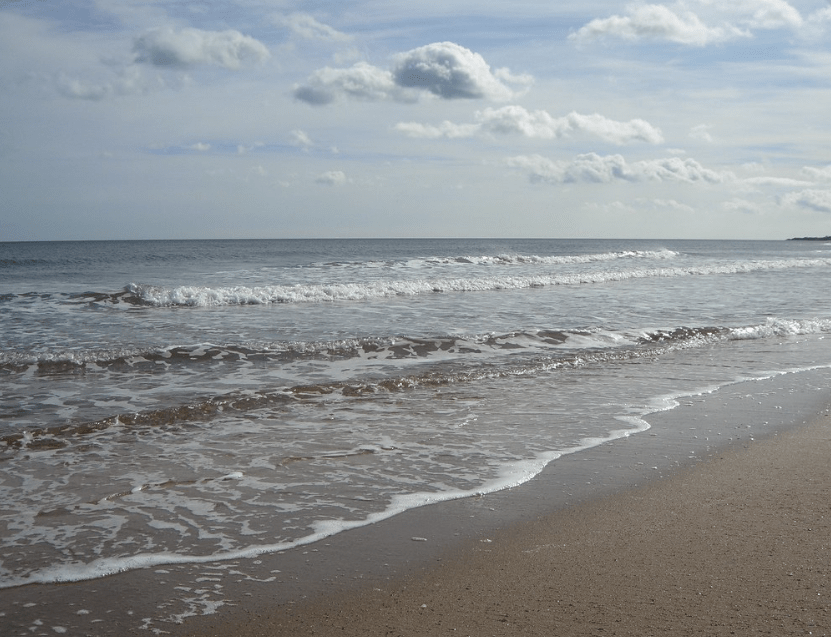
I loved going to the seaside or ‘the shore’ as we called it, when I was young. Sandcastles, rounders, picnics, swimming, paddling, skiffing, looking for shells. One of my favourite things to do was ‘jump the waves’ – stand at the shoreline and jump over each wave as it came in, with, I always thought the seventh wave being the biggest (Scientists tell us that’s a myth – but I counted – what do they know!)
The rolling of the waves is so soothing and seeing the waves and the tide go out and then in, is so reassuring. The tide might be quite far out and you need to walk a while to reach it, but you know that eventually, it will come back in.
Tide’s out. The ‘waves’, it would seem, of kindness, common sense, care for each other, acceptance of difference, making planet and people priorities, making and keeping the peace, are at a low ebb in our world at the moment. There seems to be such a long stretch between that way of living and what we see and experience day by day.
On the sea, the tide always turns. But in the world? Will these waves of consideration and good sense ever return?
There are two words, I believe that give us confidence that the tide will turn – one is faith, the other is hope.
In Hebrews we read: ‘To have faith is to be sure of the things we hope for, to be certain of the things we cannot see.‘ (Hebrews 11.1 Good News Bible) If we’re standing at the waters edge, hope is, if you like on the horizon, a looking forward, an expectation of better things to come or to return, of the waves coming in. Faith is at our feet – no waves to speak of, but wet sand – a testimony of the good things to come, a standing firm on God’s promises, a ‘being sure of the things we hope for.’
Standing by the waters edge with the waves seemingly so far away, let’s use these words from Paul as our prayer for the tide to turn.
May the God of hope fill you with all joy and peace as you trust in him, so that you may overflow with hope by the power of the Holy Spirit. (Romans 15.13)

Photo: Janine/Flickr
August 28, 2026
A few thoughts on the loss of Dolly Parton
I’m sure there are very few people these past few days who have not had thoughts on Dolly Parton. Her life was such a gift, her death is such a loss. She lived life to the full, used every ounce of the talents and opportunities God gave her, treated others as she believed Jesus would have. Enjoyed and blessed all the people she met whether those close to her or those who fleetingly passed through her life. I confess I’m a country girl (though John Denver is more my hero!) and so I love her songs and music. But, as someone commented on FB today, people are remembering her, not primarily as a singer-songwriter, actor, entertainer, philanthropist, but as a genuine human being exuding kindness, compassion, friendliness, wisdom and a great sense of humour. A line from a Burns’ poem says ‘the man’s the gowd (gold) for a’ that.’ I’m sure Burns meant women to be included in that sentiment! Dolly, as we know was always adorned in jewels and sparkles and gold. But on the inside, as a person, she was also the gold. The genuine article. A truly authentic and joyful human being. An inspiration to all of us.
August 27, 2026
Circles of Care (God bless the NHS)
After visiting a friend in hospital yesterday, I thought about the times when friends or family had had hospital stays. I was thinking especially of those people who are fairly seriously ill or injured and spend quite a bit of time in hospital.
My experience with that kind of situation is that the patient moves through the stages of their illness and road to recovery surrounded at each stage by circles of care. The stages might involve: emergency services, combined assessment staff, those in theatre, ward staff, therapists, social workers, staff in ‘specialist’ hospitals for rehab and further therapy, carers, district nurses, GP surgeries, outpatient clinics. At each point there is care, concern, commitment to healing, skill, professionalism, camaraderie, empathy, humour. I know there are times when, because of pressures on the system, human error, human tiredness and the umpteen other human factors that bend the circles of care out of shape (or even break them) But, I believe, in the majority of cases, the circles of care hold and allow healing and well-being to take place.
I am so glad we have these circles of care ‘free at the point of need’ and those who are financially able can contribute to the ‘well-being’ of their fellow men and women.
Is the healing that takes place in this way different from the ‘miraculous’ healing we associate with Jesus? Not entirely, especially since the gifts and skills themselves are God-given. Hospitals are, I believe – holy places.
HOSPITALS ARE HOLY PLACES
Hospitals are Holy Places,
Not surprising, really:
Death happens there and birth
And most else in-between.
Life’s dramas and mysteries criss-cross the corridors
And are ushered into beds and rooms.
Hospitals are Holy Places,
I would imagine that in them, people of all faiths
(And of the faith that doesn’t feel it needs to
Bother with a Name) pray.
Short prayers mainly – help, why, thank you.
Hospitals are Holy Places,
For healing happens and if it doesn’t,
It is certainly not for want of people trying,
Of Hospital in all its fulness, all its many parts
Straining to make it so.
And when it doesn’t, when it can’t,
Brave acceptance hallows those small rooms,
Those too-cramped bedsides
Where the worst of truths have to be told.
Hospitals are Holy Places,
For, despite their business-like busyness,
Underneath and all around the crises and the pain,
The science and the skill, the weight of far too much to do,
The clash of cultures – medical and non,
The understandable human misunderstandings,
There is love – saving, even when the medicine fails, so many lives.
Hospitals are Holy Places,
Because, for me in my faith, anyway,
The Holy One was the first great paramedic,
Everyone’s doctor on call,
Nursing back to health the people that he touched.
I would think, for the most part, He would just love hospitals
And agree that they are Holy Places.
Helen Cuthbert 2019
August 26, 2026
Back on Track!
Well, in terms of stepping stones and river crossings – ‘seas between us braid hae roared’ as Burns said! Much has happened these past 6 months – mainly house and garden refurbishment and redecoration plus, plus ….. So now, here we go again -stepping stone by stepping stone.
Getting ‘back on track’ is one of life’s great challenges. It’s much easier to ‘wander away’, become distracted, change/lose priorities than it is to engage in the hard struggle to take up the reins again, get back on to the road again. Sometimes we fail completely and the ‘track’ fades away whether the ‘track’ is an activity, a commitment, a relationship -with people or with God.
Sometimes we need to ‘step away’. Sometimes other things are more important. But, if what we have ‘left’ is valuable to us, we will circle round again and begin again.
There’s a story in the Gospels – Matthew 14, where Jesus has heard of the death of John the Baptist. He wants nothing more than to be by himself, to mourn John’s death, to consider the future. When Jesus heard what had happened, he withdrew by boat privately to a solitary place.( Matthew 14.13) Well that didn’t happen – the crowds gathered round. He fed them, then dismissed them and his disciples – only to find the said disciples in troubled by a storm, so Jesus again cuts short his ‘quite time’ to help them out. In amongst these stories, there is a time when Jesus go the peace and quiet he needed. After he had dismissed them, he went up on a mountainside by himself to pray. (Matthew 14.23) but it seemed to be short-lived. But short-lived or not, we can see Jesus’ determination to seek God in prayer. It would have been so easy to give it up as a bad job. He didn’t. And that perhaps brief ‘back-on-track’ prayer time enabled Jesus, I believe to serve the crowds, the disciples and more people along the way. Jesus knew what was important to ‘get back to’. He knows what, for us, is ‘important to get back to’. And he will help us, he will give us the strength and energy and power of will to get back on track.
February 13, 2026
Bundles of Prayer
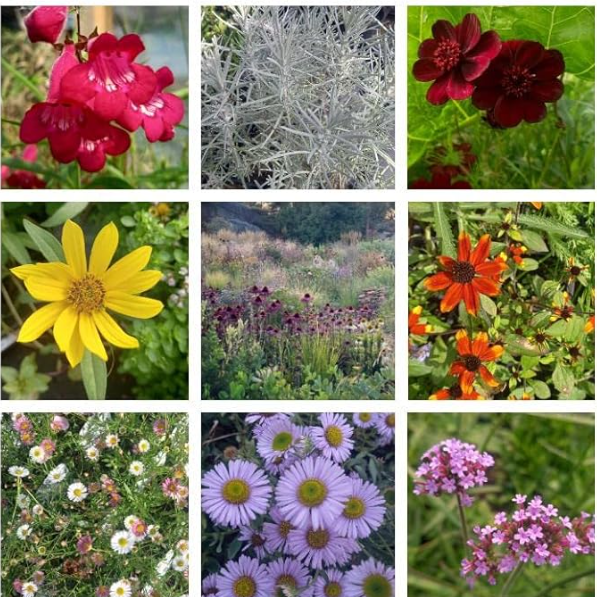
I’ve been having great fun these past few days looking at plants for the garden. (A number of Scottish nurseries have online shopping and delivery!)
Sometimes there are, of course, single plants but there are also, as with most shopping – ‘bundles’ – four for the price of three and you can choose which three you want.
It got me to thinking that sometimes when we pray for someone or some situation there might be one thing that is important – healing, comfort, wisdom, guidance, joy, peace, patience. But some people at different times in their lives and specific situations need, if you like a ‘bundle’ of ‘answers to prayer’, of things we want to ask God for, for that person/situation. t is good to simply ‘pray for’ people, but I also believe it is good to, as Paul says make all kinds of different very specific requests. I believe, too, that the Holy Spirit guides us in ‘making up’ the bundle and then focussing our hearts and minds and prayers on it.
Sometimes, companies will ‘throw in’ something extra to the ‘bundle’ and in the same way, God is not limited by our list of requests although he does, I believe, respect, honour and answer these requests according to his will, but he, because of his amazing grace will go above and beyond our requests.
So when we pray, may we thoughtfully, guided by God make our ‘bundle of requests’ to God for the people we pray for.
the Spirit also comes to help us, weak as we are. For we do not know how we ought to pray; the Spirit himself pleads with God for us in groans that words cannot express. 27 And God, who sees into our hearts, knows what the thought of the Spirit is; because the Spirit pleads with God on behalf of his people and in accordance with his will.(Romans 8.26-27 GNB)
‘…pray in the Spirit on all occasions with all kinds of prayers and requests.’Ephesians 6.1
February 12, 2026
Jesus loves me
Karl Barth was a famous Swiss theologian. He worked at a number of Universities including the University of Bonn in the 1930’s. He was required during Nazi rule to take an he Oath of Loyalty to Adolf Hitler. He refused to do so and was told to leave the country, returning to Switzerland to teach there.
Unfortunately, Nazi ideas and beliefs had infiltrated much of the German Church and Karl Barth wrote most of a ‘declaration’ called the Barmen Declaration against what he and others saw as giving up their faith in Christ to be subservient to the state. One of the statements, for example says: ‘The only source of revelation is the Word of God — Jesus Christ. Any other possible sources (earthly powers, for example) will not be accepted.’
Along with Barth, a number of theologians and pastors met in the German town of Barmen to sign the Declaration and found the ‘Confessing Church’ in Germany which refused to follow the orders of the German government, It was a great act of courage and a number of them were put in prison for standing firm in their faith.
A great man, an influential man, a man of courage, of great intellect and learning, a man of many words in his sermons and teaching and the crafting of the Barmen Declaration, his letters, speeches, his great work on his commentary to the Book of Romans.
Towards the end of his life, he was interviewed and asked, given all of the things he had read and studied, how would he sum up his faith to which Barth replied, ‘Jesus loves me, this I know for the Bible tells me so.’ All of his great knowledge and learning aside, Karl Barth had the strong trusting faith of the child in him that would have sung that hymn in Sunday School. Of all the truths he had learned and written about, one was supreme – the love that Jesus had for him.
And so for us all. However much we know or don’t know, have or don’t have, whatever we experience or don’t experience, not matter what happens to us, the bedrock of our faith, of our being is – that Jesus loves us. It’s the most important truth to grasp and to keep holding on to and yet, it is often the most difficult thing – to accept that we are loved and accepted by God – just as we are. It is, I believe that acceptance of Christ’s love for us (and sometimes we have to ‘re-accept’ it when life knocks us off course or makes us doubt our ‘loveableness’ and tells us how ‘unworthy’ we are of such love.) – it is that love of Christ for us that is the ‘engine that drives the train’ of all and any act or word of love we offer to other and to God.
‘We love,‘ said John,‘because He first loved us‘(1 John 4.19). May we take time today to remember how much we are loved by God.
February 11, 2026
Fun with words
Where would we be without words! Whatever language we speak, whether we communicate with spoken words or sign language, how difficult life would be if we had no words. Words are essential for life. Even God uses words to speak to us (though he also speaks to us in other ways like through nature, through human experience for example)
Apart from all the serious and crucial aspects of words, they are also fun! Not simply in telling funny stories or jokes, but in themselves, they are like toys and some words are just funny to use.
Many of these ‘fun words’ or phrases have some kind of strangeness to them, or have some kind of poetic quality (remember from school – alliteration = repeated sounds; onomatopoeia = the word sounding like its meaning = tick tock or purr. Near rhyming or repeated words are also fun = topsy turvy, helter skelter. Then there are ridiculous words or names – Boaty McBoatface or simply nonsense words which vary from ‘decipherable’ – like saying I’m very sleepified in stead of sleep, to the completely seemingly random which bear no resemblance to any relevant word, like Lewis Carroll’s poem Jaberwocky, the first lines of which are:
Twas brillig, and the slithy toves
Did gyre and gimble in the wabe:
You really haven’t a clue what each word means exactly, but you do get a sense of it – such is the human capacity for making meaning where there is really very little meaning!
Going beyond single words, we also have tongue twisters with repeated but similar sounds that it’s hard not to get mixed up = Sally sells sea shells by the sea shore – which end up with a great many she shores!
I love language and especially the fun aspect of it. It’s a great gift from God a testimony to the fact that God wants us to have fun and enjoy every part of his creation. The Bible itself is full of ‘fun words’ and phrases which are often lost in translation! (In Genesis 1.2, the phrase – formless and empty describing the earth before creation is the Hebrew phrase – tohu-wa-bohu – a ‘fun word’ you might say in the same category as helter-skelter topsy turvy. In fact topsy-turvy might be a better translation that ‘formless and empty’ since, to my mind, the translation ‘irons out’ the playfulness and descriptiveness of the original Hebrew phrase – tohu-wa-bohu,
Right through the Bible, God has ‘fun with words’. For example when Jesus says,’If your son asks you for bread will you give him a stone> (Matthew 7.9) We consider the meaning of that verse with great seriousness and Jesus is making a serious point, but I would imagine his listeners would be falling about laughing at the ridiculousness of the suggestion. Fun words and fun with words, lighten the moment, smooth the communication are like yeast in flour. It’s good to know that God is a ‘laughing God’ and it’s good that we can have so much fun with words – maybe God’s way of encouraging us to have fun – and not take ourselves too seriously!
February 10, 2026
Black History Month
Some issues in our life as a society or world are too important just to be remembered for a day and they have a whole month allocated to them. February is Black History Month. It is commemorated mainly in the USA, but other nations including our own use it as an opportunity to focus on the history of black or African American people.
So today, to remember the month, we have a story where black history is a part of Scottish history – and vice versa.
It’s the story of Joseph Knight, a black slave brought to Scotland by his ‘owners’ in the 1700’s. In 1778, he appealed to the Court of Session that slavery was against Scottish Law.
Lord Auchinleck (the father of the author, James Boswell) ruled in Joseph Knight’s favour with words that are relevant today:
‘…I do not think that (slavery) is agreeable to humanity, (never mind) the Christian religion. Is a man a slave because he is black? No. He is our brother; and he is a man, although not our colour; he is in a land of liberty, with his wife and his child: let him remain there.”
Unfortunately, Lord Auchinleck’s son, James Boswell was of the opposite opinion. And that was (and is) the problem….
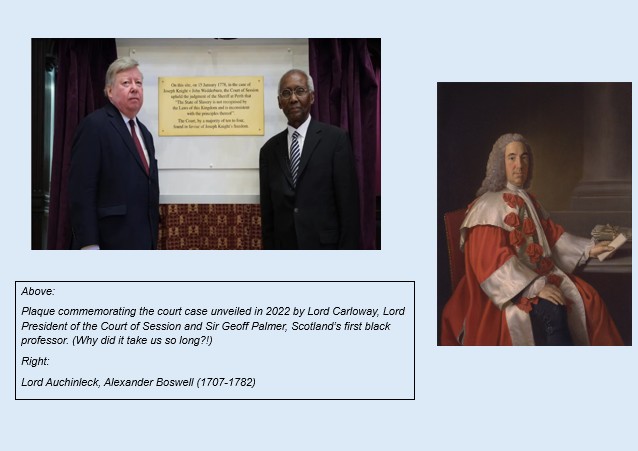
February 9, 2026
What National Day is today?
Some day always seems to have a name and today – well, well, well. After thinking about rest and the Sabbath on February 8, February 9th which happens to be …..’Read a book in a bathtub day!’ celebrated the world over (well, the world somewhere) by, as far as is possible filling a hot bath, adding bubbles with a book in hand or an audio book on a nearby (waterproof!) listening device.

It is even allowed to have a ‘dry’ bathtub like a recliner or a couch – any kind of cosy little nook.
I know it’s Monday, but why not sneak in some bath-time reading?
(I should say, it’s also national pizza day – no instructions required!)

What would you name your day?!
February 8,2026
Free-wheeling
The Bobsleigh run is one of my favourite events at the Winter Olympics. I love to see the them careering down the track, zooming up the sides at break-neck speed. I know a lot of work, energy, power, training, skill goes into it, but it looks like the ultimate ‘freedom’ sport – letting go, down and down in a thrilling adventure.
I suppose the closest I came to that feelings was on my bike (!). It was really hard going cycling up the hills, but freewheeling down the other side was magnificent: hands locked on the handlebars, legs held out to the sides, pedal spinning round in free flow at a rate of knots.
I was, I have to admit, a bit of a scaredy cat and would often apply the brakes so that I didn’t go too fast, though I did try to push the limits of my courage and ‘stay off the brakes’ for as long as possible. But freewheeling was wonderful, thrilling, energising. Then the road evens out and it’s back to normal.
I suppose that’s what ‘Sabbaths’ are for and other times of rest – not just relaxing or catching up on sleep, but freewheeling, letting go of the routine, stepping away from work days and commitments, to be able to take your feet off the pedals for a while.
Freewheeling might look as if it’s downhill all the way! But it refreshes you for the long and the uphill roads.
How do you ‘freewheel’ on your days (or hours!) off? Is it thrilling, exciting, energising? And when was the last time your truly ‘freewheeled’?
There were no bicycles in Jesus’ day, so on their time out, he and his friends just let loose, chilled, hung out and went for walk in the fields, free from the ‘trachles’ of everyday life. What would that kind of ‘freewheeling’ look like for us?
One Sabbath, Jesus was strolling with his disciples through a field of ripe grain. Hungry, the disciples were pulling off the heads of grain and munching on them. (Matthew 12.1-2)
Strolling through the field, snacking on the grains of wheat – sounds like freewheeling – and sounds like Sabbath – to me.

February 7, 2026
I’ve started, so I’ll finish!
Ah! The famous Mastermind TV Quiz chair, where contestants had two rounds of questions, – one on a specialist subject, the other on general knowledge. Each round was two minutes long and if the time buzzer went in the middle of the questionner asking the last question, they would say the famous phrase – ‘I’ve started, so I’ll finish’ and the whole question would be read out. It was coined by Magnus Magnusson, the first Mastermind host and continued by all the others over the years.
‘I’ve started, so I’ll finish’ takes its place among the iconic utterances of the English language (even for those who never watch Mastsermind!)
Yesterday we thought about ‘making a start’, especially to difficult or challenging tasks and it is good to determinedly begin some new activity, work at some weakness, take the next new step of faith.
But what about keeping going? Even in early February, statistics show most people will have given up on their New Year Resolutions. (In fact, ‘Quitters Day’ is thought to be January 14th.
Faith, too, can be an uphill struggle. We might start and start well, but, like the story of the seed that fell on thorny ground – the worries and weariness of life can snatch away the good seed of the Gospel and the good efforts of new attitudes and habits.
Writing to the Galatians, Paul says ‘You were running a good race. Who cut in on you to keep you from obeying the truth? That kind of persuasion does not come from the one who calls you. (Galatians 5,7-8) And the writer to the Hebrews encourages us ‘ let us run with determination the race marked out for us, fixing our eyes on Jesus, the pioneer and perfecter of faith. …Consider him who endured such opposition from sinners, so that you will not grow weary and lose heart. (Hebrews 12.1-3 – abridged and adapted)
These verses tell us that getting discouraged, blown off course, wanting to give up are ‘par for the course’, normal, natural, part of still being human as we follow Jesus. I think they also give us ways of ‘finishing once we’ve started’: Face the truth – that you have gone off course, someone/something has ‘cut in on you’; then, having faced that harsh reality, pick up where you left off with fresh determination and let yourself be inspired by the example of Jesus. Fix your eyes upon him and let him re-direct and renew you.
On the Island of Iona, in Scotland there are the remains of what has become known as the ‘hermit’s cell’. It lies between the shore and the Abbey. It is thought to be a place where a hermit did live and contemplate and pray. Some think St Columba used it for times of prayer and reflection. Another possibility is that, being between the shore and the Abbey, it was a welcome ‘resting place’ for the monks perhaps walking on a pilgrimage or carrying goods to the Abbey. A place to stop, sit for a while, pray, rest and recuperate then continue the journey. A good practice to follow – stopping along the way, to consider where we are, rest, then with fresh determination, take the next steps of faith.
Hermit’s Cell, Iona
February 6, 2026
Ready, steady, maybe!
Bernhard Russi (Switzerland) in the gate for his silver medal downhill run at the 1976 Winter Olympics in Innsbruck
Ah! The Winter Olympics are upon us, when the world’s greatest athletes take to the snow and ice in search of gold.
I love all of the Winter Olympic sports, especially the outdoor ones. My heart is always in my mouth when the camera pans out to the downhill slope or slalom the skiers have to attempt at to speed.
I have very little experience of skiing, my initial enthusiasm being killed entirely by going on a slope that was too icy and way beyond my capabilities. I just closed my eyes and hoped for the best and thought my end had come! So I have great admiration for those fast and fearless Olympians and when I watch them, I sometimes revisit that fear of many years ago.
One of the most nerve-wracking parts of the race I would imagine for the skiers (it certainly is for me as a spectator) is the part at the top of the slope, where they wait and slide back and forth on their skis waiting for the starter’s gun – Ready, steady go! And they launch themselves down the slope.
After my close encounter with the snowy mountain I mentioned earlier, I gave it once last chance and made my way to the ‘revolving’ chair lift – round and round the empty chairs go, never stopping, so you have to ‘jump’ on. Well, round and round the empty chair lifts went. And round and round they went again. As they approached for the third time, I said to myself, ready, steady…. well, to be honest I said ‘ready, steady, maybe’ and waited for the chair to come round again. Eventually I decided I didn’t mind facing danger and the risk of life and limb for something ‘serious and worthwhile’, but not to simply get on the ski slopes again. I was OK with skiing not being on my hobby list.
That moment, that ‘ready, steady …. what will come next? moment. We gear ourselves up to do difficult, even scary things – weighing them in our minds – is it worth it? Do I really need to do this? Can it wait until tomorrow? (My favourite!) Sometimes we do have to do things and, no they can’t wait until tomorrow, and we have to ‘bite the bullet’ and launch into whatever difficult task is before us. Sometimes we don’t have such a strict ‘deadline’ – it isn’t really worth it, I can live happily ever after without it (well, at least another day!)
The real problem comes when you face something you DO need to do – but there’s no external ‘deadline’ obliging you to do so. You have a choice. Something at work, in your family, in Church, in your personal life that will benefit yourself and others. As we ‘get ready’ we have a decision to make – will it be ‘ready, steady, go’? Or ready, steady – maybe’? Ready, steady, tomorrow?’
As someone who struggles on a regular basis with ‘healthy eating’ and exercise, I am well aware of the ‘ready, steady, maybe’s’ and tomorrows that stand between me and a healthier life. Maybe your struggle will be different, but that’ jumping off point’, that ‘ready, steady’ point is crucial. It’s the difference between ‘go’ and ‘maybe’ (which is just another word for ‘stop’!) The weight and difficulty of that moment can be overwhelming. It is a crucial, often life-changing moment.
There’s a Chinese proverb that says ‘the longest journey begins with the first step’. I would say, and I’m sure we all know that that ‘first step’ is the hardest and we need prayer from ourselves and others for the ‘push’ of God’s power, the support and encouragement of others and the inner strength and determination to make it happen.
I can do all this through him who gives me strength.’ (Philippians 4.13)
The ideal recipe for, I would say, for ‘Ready, steady ……….. go!’
February 5, 2026
Listen, Listen, talk
Someone once said (you know, the someone who says all the clever things and whose name you’ve forgotten!) – God gave us two ears and one mouth because he meant us to listen more than we talk!
Wise words indeed. I wonder why? And I wonder how, how good we are at listening more than we speak.
I still remember a time, probably about 50 years ago now (yes, I’m that old!) when I was in a Church meeting that was going to be addressed by a guest speaker. Before the meeting started, I was sitting next to the speaker. I started making small talk, asking him a few questions. Although he was a ‘public speaker’, he seemed quite shy and quiet. Then he started asking me questions. About me. Every answer I gave, he would follow up with another question until I was in ‘free flow’ almost giving him my complete unedited life story, sharing with him things that were important to me. It was, as I said, 50 years ago, but I still remember how deeply listened to I was, how deeply and sincerely listened to I felt and the sense of worth and wellbeing and positivity I experienced. It was powerful. Being listened to. Really listened to – in quality of attention and focus and in quantity of time – not just a few minutes’ greeting/small talk. That ‘speaker’ was a natural listener!
I enjoy conversations – I like to talk and sometimes I talk when I should be listening. Another memory of maybe 30 years ago was of a friend sharing some problem she had. I listened for a wee while then gave my tuppence-worth as to what she should do. With a pained expression she looked at me and said,’I don’t want your advice, I just want you to listen to me,’ then got up and walked away. Ouch!
We are all different with different personalities. We live in a world where we are often encouraged to ‘be ourselves’, yet in terms of ‘good listening’, I think those of us who are ‘talk-more-than-listen’ need to be our better selves and make a deliberate effort to stop, listen, ask questions, nod, encourage, let the other person do the talking.
Listening can often lead to great blessing. I remember visiting an elderly man that I’d often passed the time of day with. He was quite quiet and I felt I had to ‘make the conversation’, but we enjoyed each other’s company. He became ill and I visited him in hospital. After a few visits I ran out of ‘things to say’, so I asked some questions and out came the most amazing life story, filled with adventures and challenges you would never have imagined that this ‘wee quiet man’ would have had. I don’t know if he enjoyed talking and being listened to – he seemed quite happy. I do know that I enjoyed listening to him and thought about what I had missed and what I would have missed if I hadn’t ‘stopped talking’ and listened.
Jesus says – ‘Do for others what you would want them to do for you.’ (Matthew 7.12) and Paul said,’… look out for one another’s interests, not just for your own.(Good News Bible) which is also translated in the New Living Translation as ‘Don’t look out only for your own interests, but take an interest in others, too.
Who among us doesn’t like and often need to be listened to, to have our experience, our thoughts, our joys, our dreams, our worries heard and affirmed.
It’s good to talk. It’s even better to talk and be truly listened to. And It’s better still to listen and be amazed and humbled and sometimes entertained by the stories and words and lives of others.
February 4, 2026
Ayrshire Blanket – 2
Yes, God wraps us up in his love through the Holy Spirit. But in so many other ways, he showers his love on us – through people, provision of food, clothing, homes, education etc and also, I believe through the place on the planet we call home. (We may have more than one of these!)
Paul writes:
From one man he made all the nations, that they should inhabit the whole earth; and he marked out their appointed times in history and the boundaries of their lands. God did this so that they would seek him and perhaps reach out for him and find him, though he is not far from any one of us. (Acts 17.26-27)
Home – the boundaries of our land however and wherever we make these boundaries.
For me, ‘home’ is Ayrshire – an amazingly varied county in the West of Scotland with a lot of woodland, farmland, hills, sea sky. An eternally undulating landscape coming into its own, I believe when the green of the fields contrasts with the rich brown earth after ploughing.
For those who live there, the very land itself is our Ayrshire blanket.
The River Ayr, Ayrshire Photo: Jim Johnstone
February 3, 2026
Ayrshire Blankets – 1
A blast from the past! These woollen blankets with their distinctive stripes (black and white or navy and white, usually) were made in the Scottish Cooperative Wholesale Society Mills in Galston, Ayrshire in the 1940s and 50’s mainly. They were toasty warm, though in the winter, you probably needed at least two plus a winceyette sheet, an eiderdown and a candlewick plus, of course, a hot water bottle!
People would be always on the lookout for weather that was ‘a guid day fur blankets’ because of their weight and the extra time it took to dry them!
I loved the warmth and the weight and felt safe and happy and warm inside my multi-layered cocoon.
Safe and warm like an Ayrshire blanket. That’s a good description, I think of God’s amazing love for us. John says: See what love the Father has lavished on us in letting us be called God’s children! For that is what we are. (1 John 3.1) Love that’s lavished, piled on, wrapped round and round. Love that is strong because of the strong bond between us and God – we are his children. He is not going to get up and leave us. He is eternally committed to us in the deepest of ways.
When it was bed time in the winter and we were maybe a bit cold leaving the fire in the living room, going upstairs, my mother would often shout – ‘come on and coorrie in’ – get right under the blankets, wrap them right round you, snuggle in.
God wants us to do that with him and his love. He wants us to live, even in the coldest of climates and harshest of circumstances to ‘coorie in’ and know his love lavished on us. What’s not to like.
February 2, 2026
Fruit
Photo: Pexels: AS Photography
We live very much in a ‘5-a-day’ world, with the fruit and vegetable for health message impressed upon us at every turn. And it’s a good message. I remember in school learning about sailors (and probably others) who, on long sea journeys where food was neither varied nor plentiful, often developed scurvy – a disease that affects the skin and gums. Eventually a doctor linked the disease with a lack of vitamin C. The sailors were given ample supplies of lemons/lemon juice and became healthy again.
And so with many fruits – they are medicine chests of vitamins, minerals, essential oils, water that keep our bodies in good shape.
Paul talks about the fruits of the Spirit -‘ But the fruit of the Spirit is love, joy, peace, patience, kindness, goodness, faithfulness, gentleness and self-control.’ (Galatians 5.22-23)
Fruit that keeps our minds and hearts and souls healthy and our relationships in good order. Don’t forget your daily dose!
Hymn:The Fruit of the Spirit
(Tune – The Streets of Laredo – CH4 522)
The fruit of the Spirit is love, joy, peace, patience,
Kindness and goodness and faithfulness,
Being gentle with others, whoever they are,
And keeping good watch o’er our own minds and hearts.
For God is the gardener, our lives are his garden,
And He takes delight when we follow his ways,
And share with each other the fruits of His Spirit,
As he tends and cares for us all of our days.
Sing praise to the Father, sing praise to the Son,
Sing praise to the Spirit, Love’s great Trinity,
Sing praise for the garden of love he’s made for us,
And for fruit that lasts throughout eternity.
(Based of Galatians 3.32-33)
Helen Cuthbert © 2026
February 1, 2026
Days – 5

New day, new month. Already! Time flies, they say when you’re having fun. Sometimes it flies anyway. Sometimes it drags. Sometimes you ‘don’t know where the time has gone.
The Country singer, John Denver (my hero!) wrote a song called ‘Today is the first day of the rest of my life’ – (a famous phrase even before he wrote the song!) Words of hope, I think, of looking forward with excitement, anticipation to see what this new day, new ‘rest of your life’ will bring. Today, of course (sorry to be morbid!) could also be the last day of your life. There’s a thought. One we usually don’t want to consider. And if we did stop and consider it, what would we change? How would we live it? What would we do? What would our priorities be?
Jesus’ advice? ‘…watch out,be ready and pray, for you don’t know when the time will come.’ (Mark 13.33) Indeed, we don’t.
January 31, 2026
Days – 4
Another poem, on a lighter note – but one that still rings very true!
Annual reminder of how many days there are in each month
Mnemonic
Thirty days hath September,
April, June and November.
Unless a leap year is its fate,
February hath twenty-eight.
All the rest hath three days more,
excepting January,
which hath six thousand,
one hundred and eighty-four.
Brian Bilston – Selected Poems
January 30, 2026
Days – 3
Someone once said ‘ Days are like suitcases – some people pack more into them than others!’ As a ‘retired person’ I’m often so aware of how much I used to be able to (had to?) pack into the suitcase of each day and how I revelled in it. Now, suitcase is a lot lighter! And that’s fine. I’m older, less fit and healthy, I don’t have a ‘full-time’ working life. I enjoy an emptier suitcase!
The thing about days and suitcases – you have to be able to carry them! If they weigh you down, you can’t travel very far or very happily. Maybe you need another hand to carry your case. Maybe (like when you’ve exceed your Ryanair carry-on allowance!) you need to take some of the contents out. Maybe your suitcase has become a bit too lightweight and there is room for more.
Maybe a wee craft activity for the day – draw a picture of a suitcase – lid open then either draw or write in what you fill it with most days or during a week. Is it too full? Is it too empty? Is just right? For the journey you’re on at the moment.
January 29, 2026
Days – 2
Following on from yester’day’ just a wee poem – one of my favourites – by Philip Larkin called, funnily enough ‘Days’!
What are days for?
Days are where we live.
They come, they wake us
Time and time over.
They are to be happy in:
Where can we live but days?
Ah, solving that question
Brings the priest and the doctor
In their long coats
Running over the fields.
Indeed – where can we live but days.
SONG VIDEO: BEFORE THE DAWN
January 25, 2026
BURNS AND MUM
What a day! That oh, so Scottish celebration of our national poet- Robert Burns AND the birthday of my mum who would have been 101 this year (She passed away in 2019, aged 95)
So in celebration – a sang fae the lad born in Kyle and a poem fur the lady born in Killie!
A MAN’S A MAN FOR A’ THAT
Is there for honest Poverty
That hings his head, an’ a’ that;
The coward-slave, we pass him by,
We dare be poor for a’ that!
For a’ that, an’ a’ that.
Our toils obscure an’ a’ that,
The rank is but the guinea’s stamp,
The Man’s the gowd for a’ that.
What though on hamely fare we dine,
Wear hoddin grey, an’ a that;
Gie fools their silks, and knaves their wine;
A Man’s a Man for a’ that:
For a’ that, and a’ that,
Their tinsel show, an’ a’ that;
The honest man, tho’ e’er sae poor,
Is king o’ men for a’ that.
Ye see yon birkie ca’d a lord,
Wha struts, an’ stares, an’ a’ that,
Tho’ hundreds worship at his word,
He’s but a coof for a’ that.
For a’ that, an’ a’ that,
His ribband, star, an’ a’ that,
The man o’ independent mind,
He looks an’ laughs at a’ that.
A Prince can mak a belted knight,
A marquis, duke, an’ a’ that!
But an honest man’s aboon his might –
Guid faith, he mauna fa’ that!
For a’ that, an’ a’ that,
Their dignities, an’ a’ that,
The pith o’ Sense an’ pride o’ Worth
Are higher rank than a’ that.
Then let us pray that come it may,
As come it will for a’ that,
That Sense and Worth, o’er a’ the earth
Shall bear the gree an’ a’ that.
For a’ that, an’ a’ that,
It’s comin yet for a’ that,
That Man to Man the warld o’er
Shall brithers be for a’ that.
Robert Burns
PRETTY AS HER PICTURE
PRETTY AS HER PICTURE (Snapshot of a life)
‘… all the days ordained for me were written in your book …’ (Psalm 139.16)
The wispy hair, the lines of wisdom and of age,
(‘Ma face cream’s Pollyfilla’ she would joke!)
The eyes, still deep, still brown, still beautiful
And the smile whose sunshine solar-powered my every day.
The bonnie purple jumper loosely, but colourfully, don’t you think?
Covering the now much smaller frame.
The trousers that always had to have pockets – for hankies,
combs, nail files, sweeties and whatever else essential for her day.
The phone, oh, that phone – thank goodness Sky does ‘unlimited calls’!
So she could share her own unlimited love.
And you see that blue book underneath the phone?
Her life – inscribed in page after dated page.
No Samuel Pepys, Charles Darwin or Anne Frank, but – ‘up early this morning; Helen at school; prescription delivered, lovely lunch – cornbeef, tatties, beetroot; wee Suki let me scratch her’. And every birthday. And all the folk she’d phoned.
No, not Pepys, Darwin or Frank, but the Diary of one who knew life to be made of moments where every moment counted and the ordinary blossomed like the fairest flower.
The window – her watchtower on a village, that helped her be a part of its rich life. And, if the recliner was in place, angled just right, she could be seen as well as see and the folk passed by in … ‘waves’!
And from that watchtower, too, the Knipes* would be her weather map as a wall of rain, hail, snow or more burst over the hills and ambushed New Cumnock’s streets and neuks. Though sometimes there’d be sun, poking its head up like a jack-in-the-box: ‘Surprise! Surprise! See me, I live here, too!’
The nurse companion – skilfully made, thoughtfully given, a constant wish to ‘Get Well Soon’.
And there she was, in those remembered years, real and true and pretty as her picture.
And I thank God for the years, the real, the true, the pretty. And the picture.
*Hills to the south of New Cumnock
Helen Cuthbert © 2024
January 24, 2026
THERE ARE NO PENGUINS IN GREENLAND!
A wee bit light-hearted satire today in the form of a song in response to a picture released by the White house.

(Tune – ‘Yes, we have no bananas’ – first two lines repeated)
There are no penguins in Greenland,
in Greenland no penguins are there.
And no, not even in Iceland,
no penguins in Iceland there are.
Watch out, for that cunning wee penguin’s leading you to the wrong hemisphere.
The ‘poles’ once more they defeat you,
defeat you, the ‘poles’ do once more.
So how got that penguin to Greenland,
To Greenland, how’d that penguin go?
That penguin to Greenland it got there
straight from Minnesota Zoo. For ……
there are no penguins in Greenland,
in Greenland, no penguins are there.
Helen Cuthbert 2026
January 22, 2026
Normalisation
Normal is good, right? If all your ‘vital signs’ – temperature, blood pressure, heart rate etc are ‘normal’ – you’re doing fine. So,yes, normal is good. I’m not medically trained in any way (although I do have a First Aid certificate from 1976 – does that count), but I’m sure it must have taken years of careful research by a generations of scientits to establish what the ‘norms’ were for each of these vitals signs and more.
in the realm of everyday experience, special things like holidays, travels, special guests, house alterations make life interesting, but when they’re over, we often say that it’s good to get ‘back to normal’. No scientists required for that – you define normal for you. There is often a sense of peace and even purpose that comes when the ‘back to normal’ phase kicks in again. (Normal, of course, can be boring – but that’s for another blog!)
In the shared experience that is planet earth 2026, one of the many ‘buzz words’ that has arisen is ‘normalisation’ where normalisation can be defined as ‘a process whereby certain practices, behaviours, and ideas are made to appear natural and self-evident.’ (hhttps://easysociology.com/general-sociology/normalisation-an-overview/)
In other words, some idea, let’s say that was either not thought much about before or was thought to be unusual or even wrong moves into the category of ‘normal’ and, therefore the category of ‘acceptable’.
Imagine a tee-totaller none of whose family or friends touched alcohol, went to college, let’s say and became friendly with his roommates and classmates. She would probably be surprised or even appalled to see the drink flow free. There would be an initial time of feeling uneasy, that these people were very strange. Over time, when every social situation involved alcohol, the presence and consumption of alcohol would just be the norm. The surprise would disappear and then a decision would have to be made: to continue to see this ‘new normal’ as something to be avoided in terms of participation or, accepting it – for yourself.
‘Normal’ can be very persuasive. ‘Everybody does it’, ‘everybody thinks that’, ‘I don’t know what the fuss is about’ are stamps of approval for any idea of behaviour. And that’s OK – when the ‘normal’ is OK. But what if something harmful or immoral or unjust or violent or bigoted becomes normal? Then, we have a problem.
Many writers in many countries have spoken, for example, about the ‘normalisation’ of political violence. (See e.g. Benjamin Wallace-Wells in the New Yorker https://uk.video.search.yahoo.com/search/video?fr=mcafee&p=normalisaiton+of+political+violence+charlie+kirk&type=E210GB1067G0#id=7&vid=ea284341b657d0291d4b4613c0749516&action=click)
Normalisation can happen in sectors of a society e.g. right wing or left wing, rich or poor, educated or less educated or in a society as a whole. The danger is that, when the idea or behaviour is harmful in some way, that harm becomes permissible. Violence or a certain degree of violence is accepted and people do nothing to stand up against it.
I’ve noticed, for example, the use of swearing by both TV journalists and politicians on all sides. Once a word or a phrase is said often enough, it becomes normalised and people then use it making it even more ‘normal’.
So, yes, normalisation of what is harmful must be guarded against. It can happen so easily, so we must be aware of it. Once a ‘new and harmful normal’ is established, it means those who don’t participate or who speak out against it are seen as ‘abnormal,’ not worth listening to’ and their views rejected.
Most people take their ‘normal’ from their own moral compass informed by their own belief systems, religious or not. Normalisation has way, at times, of ‘re-calibrating’ that compass. To avoid that, we need to go back to the basics of our belief system and use to examine the ‘new normal’. (Though it is also true that the ‘new normal’ can be used to examine our belief system!)
Stop and look. Stop and re-calibrate. Stop and reverse the normalisation of things that are harmful and evil.
And, at the same time, do everything we can to ‘normalise’ what is good, what is healthy, helpful, hopeful, what builds up, what resists the destructive forces in our world – the normalisation of kindness, compassion, forgiveness, justice, peace, love. These are great normals for planet earth, 20026 to have.
Finally, brothers and sisters, whatever is true, whatever is noble, whatever is right, whatever is pure, whatever is lovely, whatever is admirable—if anything is excellent or praiseworthy—think about such things. (Philippians 4.8 NIV)
January 20, 2026
Speaking the Same Language: (Ain’t Technology wonderful?!
After a long and bruising battle with FaceBook in an attempt to set up a new page, I’m licking my wounds and pondering the great invention that is technology. Great that is, when it works. And when it doesn’t, it is a great teacher! It makes you patient, humble and in awe of its mysteries. Patient – when updates happen. Humble – when you realise you haven’t switched it on. In awe of its mysteries – most of the time.
I think one of the main problems is communication. It doesn’t speak our language or rather one programme, piece of software, system doesn’t speak the language or use the same words for the same thing: ‘page’ on Face Book is different from a ‘page’ in WordPress.
Not every programme puts the same items in the same ‘box’: the same editing feature is found under ‘file’ in one programme and ‘edit’ in another with no rhyme or reason. Then, of course, along comes that glorious intruder – ‘update’ and it’s all change again.
The way to win in this situation is, I suppose, to realise that each programme or piece of software or post-update programme will be in some and perhaps many ways new and different and be its ‘flexible friend’, learning to understand its language and become familiar with its cupboard spaces.
Maybe a good life lesson, too. Communication, putting things in the place you believe or have grown up believing they should be, give rise to the majority of our world’s problems – big and small. Technology (at the moment – AI might be different!) can’t be flexible – it says and does what it was programmed to say and do. It’s up to us to do the accommodating and the learning. We expect other humans, of course, to have flexibility built into them – as long as we don’t have to change, or learn or do things differently. A little flexibility all round would go a long way, I think.
‘…in humility value others above yourselves, not looking to your own interests but each of you to the interests of the others. (Philippians 2.3b-4 NIV)
January 19, 2026
The Madness of Kings
The Madness of King George – or Nebuchadnezzar or Nero, or Idi Amin or Gadaffi or ……… ‘Power corrupts, absolute power corrupts absolutely’. We often think of areas like finance or the laws of the land when we think of corruption. But sadly, I believe, corruption can go deeper than that into a person’s heart and mind and soul poisoning the deep wells of morality, human sensibility and, ultimately sanity, spiralling out of all control.
Daniel 4 has the story of Nebuchadnezzar’s ‘absolute power’, his descent into madness and his way out of the pit of deep despair. God, we read, was gracious to Nebuchadnezzar and when the King finally acknowledged that God was God and the ultimate King of the World, he was given back his kingdom and all was well.
What did it take? I suppose Nebuchadnezzar had a similiar experience to the Prodigal Son in Luke’s Gospel at the moment where he ‘came to himself’ or ‘came to his senses’ – realised he was on the wrong track and turned his life round. For both, humility was involved – for the Prodigal – going back home, tail bewteen his legs; for Nebuchadnezzar – repenting, doing the right thing instead of his own thing, helping the poor which meant acknowledging their existence (a does of good old-fashioned empathy)
There is, it would seem, in the madness of our days, the madness of not just one but many of our world leaders, hope. But choices have to be made, coming back from the brink of madness is not automatic. Self-destruction, too, sadly, is a possibility and when leaders are involved, it is not only they themselves who are destroyed. May they make that turnaround soon.

