
Stepping Stones Blog
February 13, 2026
Bundles of Prayer
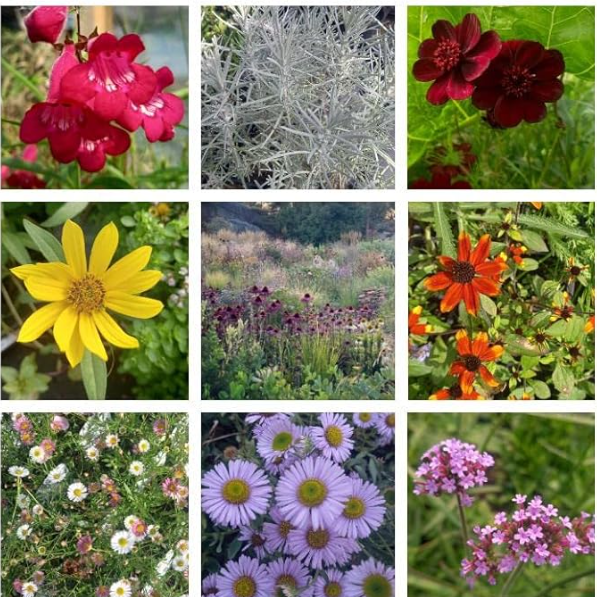
I’ve been having great fun these past few days looking at plants for the garden. (A number of Scottish nurseries have online shopping and delivery!)
Sometimes there are, of course, single plants but there are also, as with most shopping – ‘bundles’ – four for the price of three and you can choose which three you want.
It got me to thinking that sometimes when we pray for someone or some situation there might be one thing that is important – healing, comfort, wisdom, guidance, joy, peace, patience. But some people at different times in their lives and specific situations need, if you like a ‘bundle’ of ‘answers to prayer’, of things we want to ask God for, for that person/situation. t is good to simply ‘pray for’ people, but I also believe it is good to, as Paul says make all kinds of different very specific requests. I believe, too, that the Holy Spirit guides us in ‘making up’ the bundle and then focussing our hearts and minds and prayers on it.
Sometimes, companies will ‘throw in’ something extra to the ‘bundle’ and in the same way, God is not limited by our list of requests although he does, I believe, respect, honour and answer these requests according to his will, but he, because of his amazing grace will go above and beyond our requests.
So when we pray, may we thoughtfully, guided by God make our ‘bundle of requests’ to God for the people we pray for.
the Spirit also comes to help us, weak as we are. For we do not know how we ought to pray; the Spirit himself pleads with God for us in groans that words cannot express. 27 And God, who sees into our hearts, knows what the thought of the Spirit is; because the Spirit pleads with God on behalf of his people and in accordance with his will.(Romans 8.26-27 GNB)
‘…pray in the Spirit on all occasions with all kinds of prayers and requests.’Ephesians 6.1
February 12, 2026
Jesus loves me
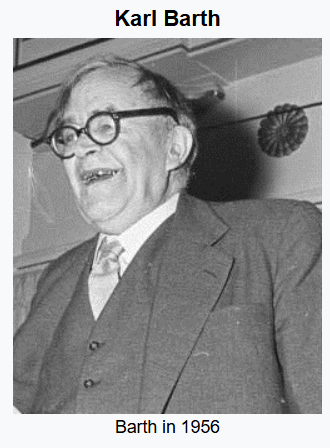
Karl Barth was a famous Swiss theologian. He worked at a number of Universities including the University of Bonn in the 1930’s. He was required during Nazi rule to take an he Oath of Loyalty to Adolf Hitler. He refused to do so and was told to leave the country, returning to Switzerland to teach there.
Unfortunately, Nazi ideas and beliefs had infiltrated much of the German Church and Karl Barth wrote most of a ‘declaration’ called the Barmen Declaration against what he and others saw as giving up their faith in Christ to be subservient to the state. One of the statements, for example says: ‘The only source of revelation is the Word of God — Jesus Christ. Any other possible sources (earthly powers, for example) will not be accepted.’
Along with Barth, a number of theologians and pastors met in the German town of Barmen to sign the Declaration and found the ‘Confessing Church’ in Germany which refused to follow the orders of the German government, It was a great act of courage and a number of them were put in prison for standing firm in their faith.
A great man, an influential man, a man of courage, of great intellect and learning, a man of many words in his sermons and teaching and the crafting of the Barmen Declaration, his letters, speeches, his great work on his commentary to the Book of Romans.
Towards the end of his life, he was interviewed and asked, given all of the things he had read and studied, how would he sum up his faith to which Barth replied, ‘Jesus loves me, this I know for the Bible tells me so.’ All of his great knowledge and learning aside, Karl Barth had the strong trusting faith of the child in him that would have sung that hymn in Sunday School. Of all the truths he had learned and written about, one was supreme – the love that Jesus had for him.
And so for us all. However much we know or don’t know, have or don’t have, whatever we experience or don’t experience, not matter what happens to us, the bedrock of our faith, of our being is – that Jesus loves us. It’s the most important truth to grasp and to keep holding on to and yet, it is often the most difficult thing – to accept that we are loved and accepted by God – just as we are. It is, I believe that acceptance of Christ’s love for us (and sometimes we have to ‘re-accept’ it when life knocks us off course or makes us doubt our ‘loveableness’ and tells us how ‘unworthy’ we are of such love.) – it is that love of Christ for us that is the ‘engine that drives the train’ of all and any act or word of love we offer to other and to God.
‘We love,‘ said John,‘because He first loved us‘(1 John 4.19). May we take time today to remember how much we are loved by God.
February 11, 2026
Fun with words
Where would we be without words! Whatever language we speak, whether we communicate with spoken words or sign language, how difficult life would be if we had no words. Words are essential for life. Even God uses words to speak to us (though he also speaks to us in other ways like through nature, through human experience for example)
Apart from all the serious and crucial aspects of words, they are also fun! Not simply in telling funny stories or jokes, but in themselves, they are like toys and some words are just funny to use.
Many of these ‘fun words’ or phrases have some kind of strangeness to them, or have some kind of poetic quality (remember from school – alliteration = repeated sounds; onomatopoeia = the word sounding like its meaning = tick tock or purr. Near rhyming or repeated words are also fun = topsy turvy, helter skelter. Then there are ridiculous words or names – Boaty McBoatface or simply nonsense words which vary from ‘decipherable’ – like saying I’m very sleepified in stead of sleep, to the completely seemingly random which bear no resemblance to any relevant word, like Lewis Carroll’s poem Jaberwocky, the first lines of which are:
Twas brillig, and the slithy toves
Did gyre and gimble in the wabe:
You really haven’t a clue what each word means exactly, but you do get a sense of it – such is the human capacity for making meaning where there is really very little meaning!
Going beyond single words, we also have tongue twisters with repeated but similar sounds that it’s hard not to get mixed up = Sally sells sea shells by the sea shore – which end up with a great many she shores!
I love language and especially the fun aspect of it. It’s a great gift from God a testimony to the fact that God wants us to have fun and enjoy every part of his creation. The Bible itself is full of ‘fun words’ and phrases which are often lost in translation! (In Genesis 1.2, the phrase – formless and empty describing the earth before creation is the Hebrew phrase – tohu-wa-bohu – a ‘fun word’ you might say in the same category as helter-skelter topsy turvy. In fact topsy-turvy might be a better translation that ‘formless and empty’ since, to my mind, the translation ‘irons out’ the playfulness and descriptiveness of the original Hebrew phrase – tohu-wa-bohu,
Right through the Bible, God has ‘fun with words’. For example when Jesus says,’If your son asks you for bread will you give him a stone> (Matthew 7.9) We consider the meaning of that verse with great seriousness and Jesus is making a serious point, but I would imagine his listeners would be falling about laughing at the ridiculousness of the suggestion. Fun words and fun with words, lighten the moment, smooth the communication are like yeast in flour. It’s good to know that God is a ‘laughing God’ and it’s good that we can have so much fun with words – maybe God’s way of encouraging us to have fun – and not take ourselves too seriously!
February 10, 2026
Black History Month
Some issues in our life as a society or world are too important just to be remembered for a day and they have a whole month allocated to them. February is Black History Month. It is commemorated mainly in the USA, but other nations including our own use it as an opportunity to focus on the history of black or African American people.
So today, to remember the month, we have a story where black history is a part of Scottish history – and vice versa.
It’s the story of Joseph Knight, a black slave brought to Scotland by his ‘owners’ in the 1700’s. In 1778, he appealed to the Court of Session that slavery was against Scottish Law.
Lord Auchinleck (the father of the author, James Boswell) ruled in Joseph Knight’s favour with words that are relevant today:
‘…I do not think that (slavery) is agreeable to humanity, (never mind) the Christian religion. Is a man a slave because he is black? No. He is our brother; and he is a man, although not our colour; he is in a land of liberty, with his wife and his child: let him remain there.”
Unfortunately, Lord Auchinleck’s son, James Boswell was of the opposite opinion. And that was (and is) the problem….

February 9, 2026
What National Day is today?
Some day always seems to have a name and today – well, well, well. After thinking about rest and the Sabbath on February 8, February 9th which happens to be …..’Read a book in a bathtub day!’ celebrated the world over (well, the world somewhere) by, as far as is possible filling a hot bath, adding bubbles with a book in hand or an audio book on a nearby (waterproof!) listening device.
It is even allowed to have a ‘dry’ bathtub like a recliner or a couch – any kind of cosy little nook.
I know it’s Monday, but why not sneak in some bath-time reading?
(I should say, it’s also national pizza day – no instructions required!)

What would you name your day?!
February 8,2026
Free-wheeling
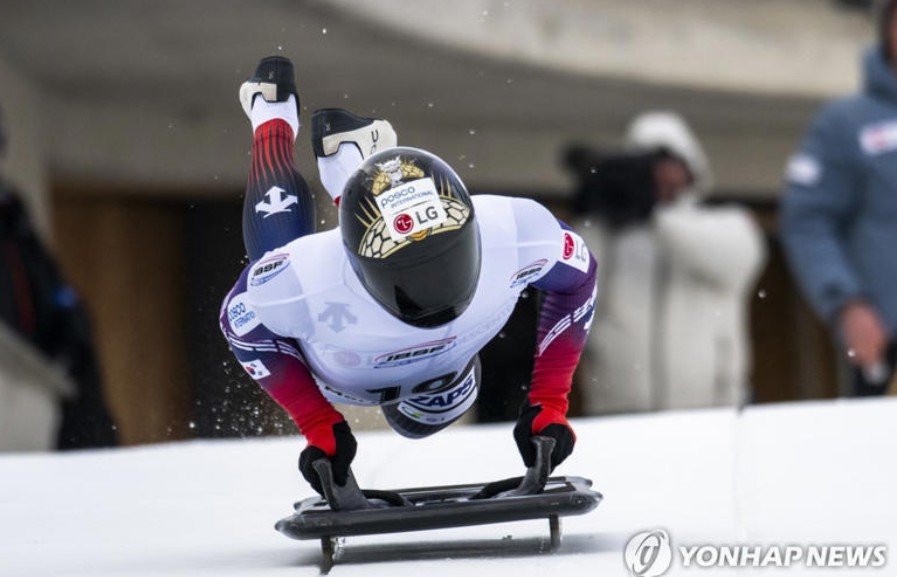
The Bobsleigh run is one of my favourite events at the Winter Olympics. I love to see the them careering down the track, zooming up the sides at break-neck speed. I know a lot of work, energy, power, training, skill goes into it, but it looks like the ultimate ‘freedom’ sport – letting go, down and down in a thrilling adventure.
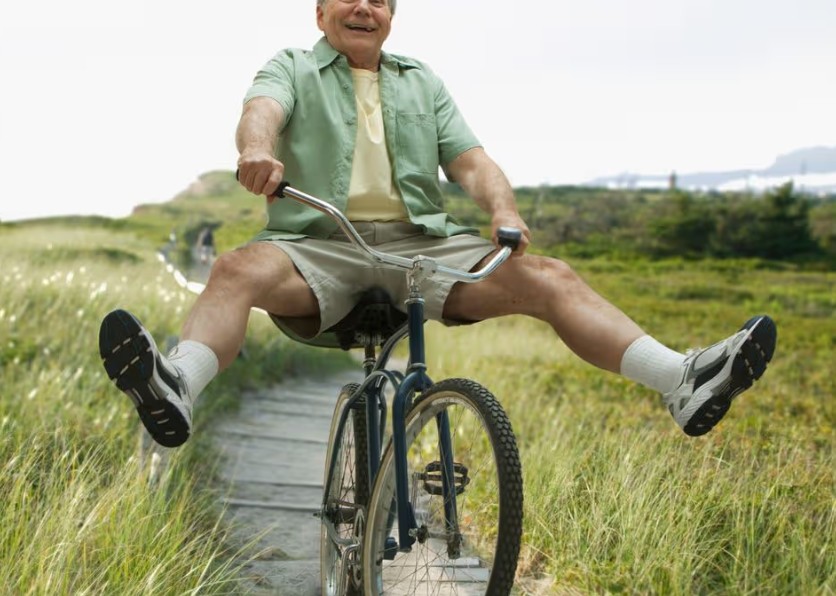
I suppose the closest I came to that feelings was on my bike (!). It was really hard going cycling up the hills, but freewheeling down the other side was magnificent: hands locked on the handlebars, legs held out to the sides, pedal spinning round in free flow at a rate of knots.
I was, I have to admit, a bit of a scaredy cat and would often apply the brakes so that I didn’t go too fast, though I did try to push the limits of my courage and ‘stay off the brakes’ for as long as possible. But freewheeling was wonderful, thrilling, energising. Then the road evens out and it’s back to normal.
I suppose that’s what ‘Sabbaths’ are for and other times of rest – not just relaxing or catching up on sleep, but freewheeling, letting go of the routine, stepping away from work days and commitments, to be able to take your feet off the pedals for a while.
Freewheeling might look as if it’s downhill all the way! But it refreshes you for the long and the uphill roads.
How do you ‘freewheel’ on your days (or hours!) off? Is it thrilling, exciting, energising? And when was the last time your truly ‘freewheeled’?
There were no bicycles in Jesus’ day, so on their time out, he and his friends just let loose, chilled, hung out and went for walk in the fields, free from the ‘trachles’ of everyday life. What would that kind of ‘freewheeling’ look like for us?
One Sabbath, Jesus was strolling with his disciples through a field of ripe grain. Hungry, the disciples were pulling off the heads of grain and munching on them. (Matthew 12.1-2)
Strolling through the field, snacking on the grains of wheat – sounds like freewheeling – and sounds like Sabbath – to me.
February 7, 2026
I’ve started, so I’ll finish!

Ah! The famous Mastermind TV Quiz chair, where contestants had two rounds of questions, – one on a specialist subject, the other on general knowledge. Each round was two minutes long and if the time buzzer went in the middle of the questionner asking the last question, they would say the famous phrase – ‘I’ve started, so I’ll finish’ and the whole question would be read out. It was coined by Magnus Magnusson, the first Mastermind host and continued by all the others over the years.
‘I’ve started, so I’ll finish’ takes its place among the iconic utterances of the English language (even for those who never watch Mastsermind!)
Yesterday we thought about ‘making a start’, especially to difficult or challenging tasks and it is good to determinedly begin some new activity, work at some weakness, take the next new step of faith.
But what about keeping going? Even in early February, statistics show most people will have given up on their New Year Resolutions. (In fact, ‘Quitters Day’ is thought to be January 14th.
Faith, too, can be an uphill struggle. We might start and start well, but, like the story of the seed that fell on thorny ground – the worries and weariness of life can snatch away the good seed of the Gospel and the good efforts of new attitudes and habits.
Writing to the Galatians, Paul says ‘You were running a good race. Who cut in on you to keep you from obeying the truth? That kind of persuasion does not come from the one who calls you. (Galatians 5,7-8) And the writer to the Hebrews encourages us ‘ let us run with determination the race marked out for us, fixing our eyes on Jesus, the pioneer and perfecter of faith. …Consider him who endured such opposition from sinners, so that you will not grow weary and lose heart. (Hebrews 12.1-3 – abridged and adapted)
These verses tell us that getting discouraged, blown off course, wanting to give up are ‘par for the course’, normal, natural, part of still being human as we follow Jesus. I think they also give us ways of ‘finishing once we’ve started’: Face the truth – that you have gone off course, someone/something has ‘cut in on you’; then, having faced that harsh reality, pick up where you left off with fresh determination and let yourself be inspired by the example of Jesus. Fix your eyes upon him and let him re-direct and renew you.
On the Island of Iona, in Scotland there are the remains of what has become known as the ‘hermit’s cell’. It lies between the shore and the Abbey. It is thought to be a place where a hermit did live and contemplate and pray. Some think St Columba used it for times of prayer and reflection. Another possibility is that, being between the shore and the Abbey, it was a welcome ‘resting place’ for the monks perhaps walking on a pilgrimage or carrying goods to the Abbey. A place to stop, sit for a while, pray, rest and recuperate then continue the journey. A good practice to follow – stopping along the way, to consider where we are, rest, then with fresh determination, take the next steps of faith.
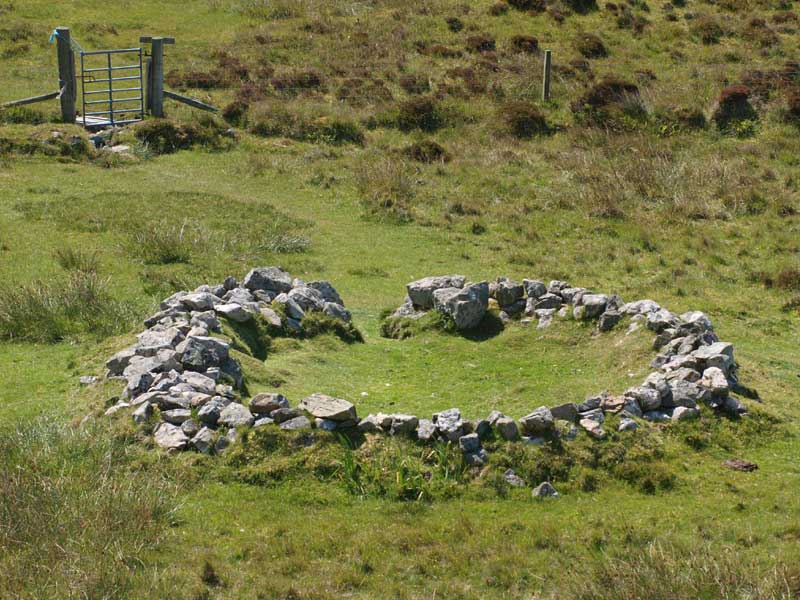
Hermit’s Cell, Iona
February 6, 2026
Ready, steady, maybe!
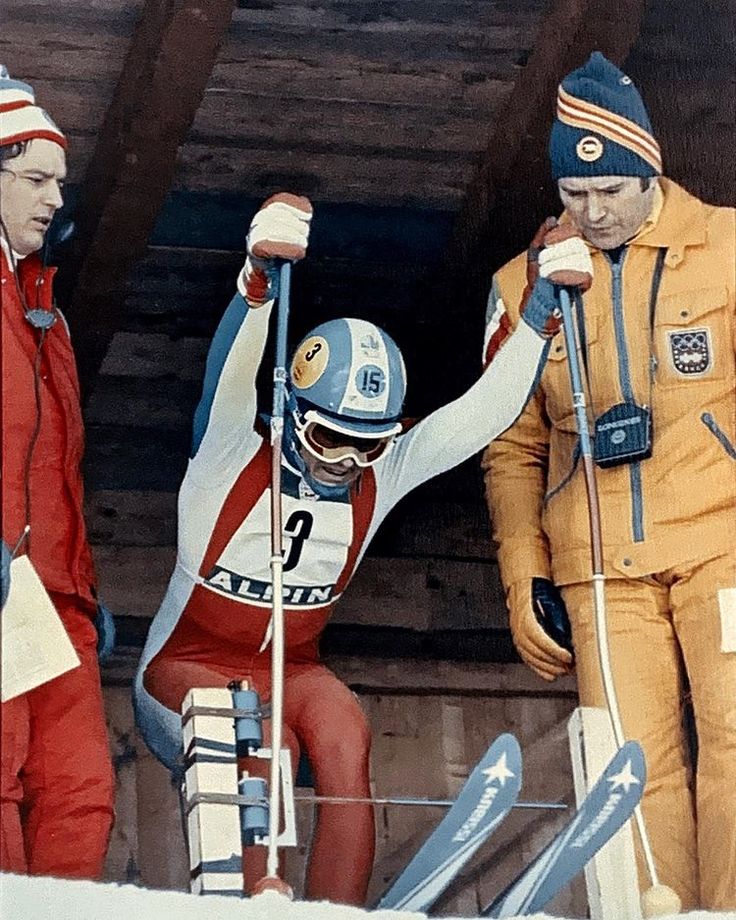
Bernhard Russi (Switzerland) in the gate for his silver medal downhill run at the 1976 Winter Olympics in Innsbruck
Ah! The Winter Olympics are upon us, when the world’s greatest athletes take to the snow and ice in search of gold.
I love all of the Winter Olympic sports, especially the outdoor ones. My heart is always in my mouth when the camera pans out to the downhill slope or slalom the skiers have to attempt at to speed.
I have very little experience of skiing, my initial enthusiasm being killed entirely by going on a slope that was too icy and way beyond my capabilities. I just closed my eyes and hoped for the best and thought my end had come! So I have great admiration for those fast and fearless Olympians and when I watch them, I sometimes revisit that fear of many years ago.
One of the most nerve-wracking parts of the race I would imagine for the skiers (it certainly is for me as a spectator) is the part at the top of the slope, where they wait and slide back and forth on their skis waiting for the starter’s gun – Ready, steady go! And they launch themselves down the slope.
After my close encounter with the snowy mountain I mentioned earlier, I gave it once last chance and made my way to the ‘revolving’ chair lift – round and round the empty chairs go, never stopping, so you have to ‘jump’ on. Well, round and round the empty chair lifts went. And round and round they went again. As they approached for the third time, I said to myself, ready, steady…. well, to be honest I said ‘ready, steady, maybe’ and waited for the chair to come round again. Eventually I decided I didn’t mind facing danger and the risk of life and limb for something ‘serious and worthwhile’, but not to simply get on the ski slopes again. I was OK with skiing not being on my hobby list.
That moment, that ‘ready, steady …. what will come next? moment. We gear ourselves up to do difficult, even scary things – weighing them in our minds – is it worth it? Do I really need to do this? Can it wait until tomorrow? (My favourite!) Sometimes we do have to do things and, no they can’t wait until tomorrow, and we have to ‘bite the bullet’ and launch into whatever difficult task is before us. Sometimes we don’t have such a strict ‘deadline’ – it isn’t really worth it, I can live happily ever after without it (well, at least another day!)
The real problem comes when you face something you DO need to do – but there’s no external ‘deadline’ obliging you to do so. You have a choice. Something at work, in your family, in Church, in your personal life that will benefit yourself and others. As we ‘get ready’ we have a decision to make – will it be ‘ready, steady, go’? Or ready, steady – maybe’? Ready, steady, tomorrow?’
As someone who struggles on a regular basis with ‘healthy eating’ and exercise, I am well aware of the ‘ready, steady, maybe’s’ and tomorrows that stand between me and a healthier life. Maybe your struggle will be different, but that’ jumping off point’, that ‘ready, steady’ point is crucial. It’s the difference between ‘go’ and ‘maybe’ (which is just another word for ‘stop’!) The weight and difficulty of that moment can be overwhelming. It is a crucial, often life-changing moment.
There’s a Chinese proverb that says ‘the longest journey begins with the first step’. I would say, and I’m sure we all know that that ‘first step’ is the hardest and we need prayer from ourselves and others for the ‘push’ of God’s power, the support and encouragement of others and the inner strength and determination to make it happen.
I can do all this through him who gives me strength.’ (Philippians 4.13)
The ideal recipe for, I would say, for ‘Ready, steady ……….. go!’
February 5, 2026
Listen, Listen, talk
Someone once said (you know, the someone who says all the clever things and whose name you’ve forgotten!) – God gave us two ears and one mouth because he meant us to listen more than we talk!
Wise words indeed. I wonder why? And I wonder how, how good we are at listening more than we speak.
I still remember a time, probably about 50 years ago now (yes, I’m that old!) when I was in a Church meeting that was going to be addressed by a guest speaker. Before the meeting started, I was sitting next to the speaker. I started making small talk, asking him a few questions. Although he was a ‘public speaker’, he seemed quite shy and quiet. Then he started asking me questions. About me. Every answer I gave, he would follow up with another question until I was in ‘free flow’ almost giving him my complete unedited life story, sharing with him things that were important to me. It was, as I said, 50 years ago, but I still remember how deeply listened to I was, how deeply and sincerely listened to I felt and the sense of worth and wellbeing and positivity I experienced. It was powerful. Being listened to. Really listened to – in quality of attention and focus and in quantity of time – not just a few minutes’ greeting/small talk. That ‘speaker’ was a natural listener!
I enjoy conversations – I like to talk and sometimes I talk when I should be listening. Another memory of maybe 30 years ago was of a friend sharing some problem she had. I listened for a wee while then gave my tuppence-worth as to what she should do. With a pained expression she looked at me and said,’I don’t want your advice, I just want you to listen to me,’ then got up and walked away. Ouch!
We are all different with different personalities. We live in a world where we are often encouraged to ‘be ourselves’, yet in terms of ‘good listening’, I think those of us who are ‘talk-more-than-listen’ need to be our better selves and make a deliberate effort to stop, listen, ask questions, nod, encourage, let the other person do the talking.
Listening can often lead to great blessing. I remember visiting an elderly man that I’d often passed the time of day with. He was quite quiet and I felt I had to ‘make the conversation’, but we enjoyed each other’s company. He became ill and I visited him in hospital. After a few visits I ran out of ‘things to say’, so I asked some questions and out came the most amazing life story, filled with adventures and challenges you would never have imagined that this ‘wee quiet man’ would have had. I don’t know if he enjoyed talking and being listened to – he seemed quite happy. I do know that I enjoyed listening to him and thought about what I had missed and what I would have missed if I hadn’t ‘stopped talking’ and listened.
Jesus says – ‘Do for others what you would want them to do for you.’ (Matthew 7.12) and Paul said,’… look out for one another’s interests, not just for your own.(Good News Bible) which is also translated in the New Living Translation as ‘Don’t look out only for your own interests, but take an interest in others, too.
Who among us doesn’t like and often need to be listened to, to have our experience, our thoughts, our joys, our dreams, our worries heard and affirmed.
It’s good to talk. It’s even better to talk and be truly listened to. And It’s better still to listen and be amazed and humbled and sometimes entertained by the stories and words and lives of others.
February 4, 2026
Ayrshire Blanket – 2
Yes, God wraps us up in his love through the Holy Spirit. But in so many other ways, he showers his love on us – through people, provision of food, clothing, homes, education etc and also, I believe through the place on the planet we call home. (We may have more than one of these!)
Paul writes:
From one man he made all the nations, that they should inhabit the whole earth; and he marked out their appointed times in history and the boundaries of their lands. God did this so that they would seek him and perhaps reach out for him and find him, though he is not far from any one of us. (Acts 17.26-27)
Home – the boundaries of our land however and wherever we make these boundaries.
For me, ‘home’ is Ayrshire – an amazingly varied county in the West of Scotland with a lot of woodland, farmland, hills, sea sky. An eternally undulating landscape coming into its own, I believe when the green of the fields contrasts with the rich brown earth after ploughing.
For those who live there, the very land itself is our Ayrshire blanket.
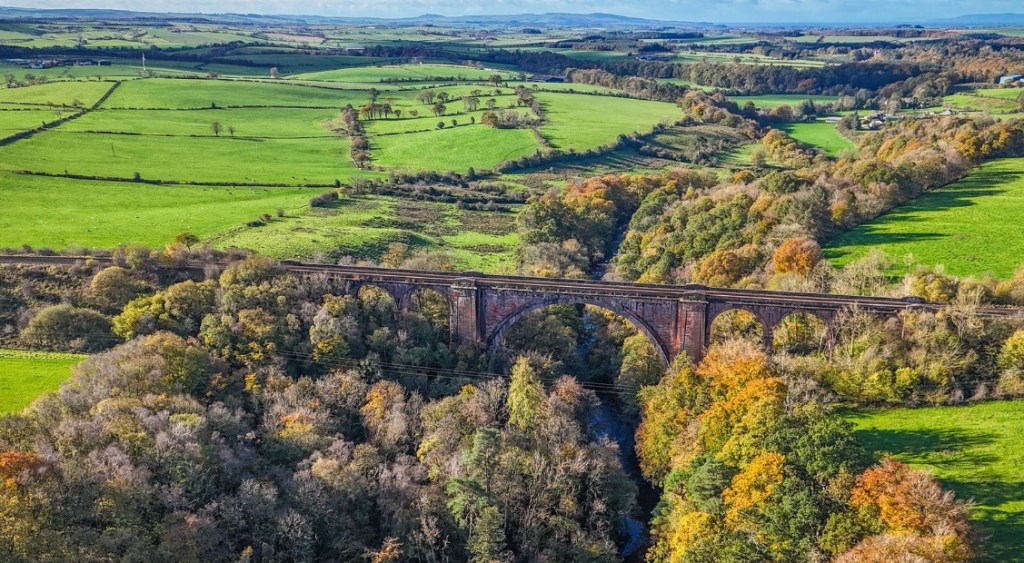
The River Ayr, Ayrshire Photo: Jim Johnstone
February 3, 2026
Ayrshire Blankets – 1
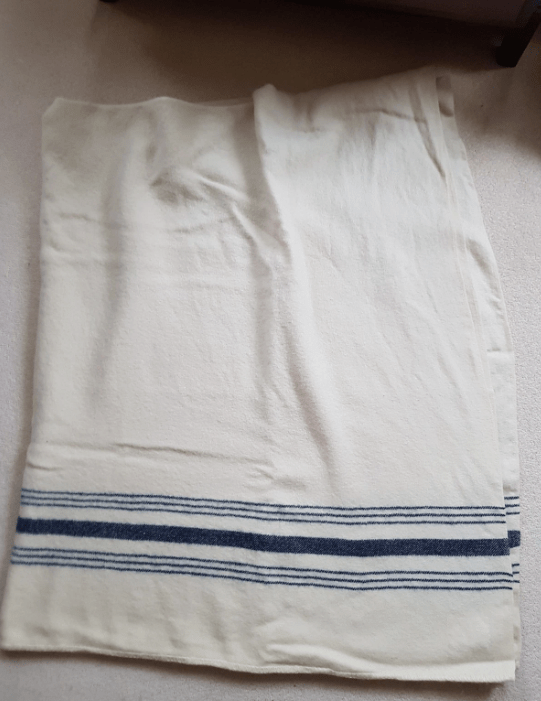
A blast from the past! These woollen blankets with their distinctive stripes (black and white or navy and white, usually) were made in the Scottish Cooperative Wholesale Society Mills in Galston, Ayrshire in the 1940s and 50’s mainly. They were toasty warm, though in the winter, you probably needed at least two plus a winceyette sheet, an eiderdown and a candlewick plus, of course, a hot water bottle!
People would be always on the lookout for weather that was ‘a guid day fur blankets’ because of their weight and the extra time it took to dry them!
I loved the warmth and the weight and felt safe and happy and warm inside my multi-layered cocoon.
Safe and warm like an Ayrshire blanket. That’s a good description, I think of God’s amazing love for us. John says: See what love the Father has lavished on us in letting us be called God’s children! For that is what we are. (1 John 3.1) Love that’s lavished, piled on, wrapped round and round. Love that is strong because of the strong bond between us and God – we are his children. He is not going to get up and leave us. He is eternally committed to us in the deepest of ways.
When it was bed time in the winter and we were maybe a bit cold leaving the fire in the living room, going upstairs, my mother would often shout – ‘come on and coorrie in’ – get right under the blankets, wrap them right round you, snuggle in.
God wants us to do that with him and his love. He wants us to live, even in the coldest of climates and harshest of circumstances to ‘coorie in’ and know his love lavished on us. What’s not to like.
February 2, 2026
Fruit
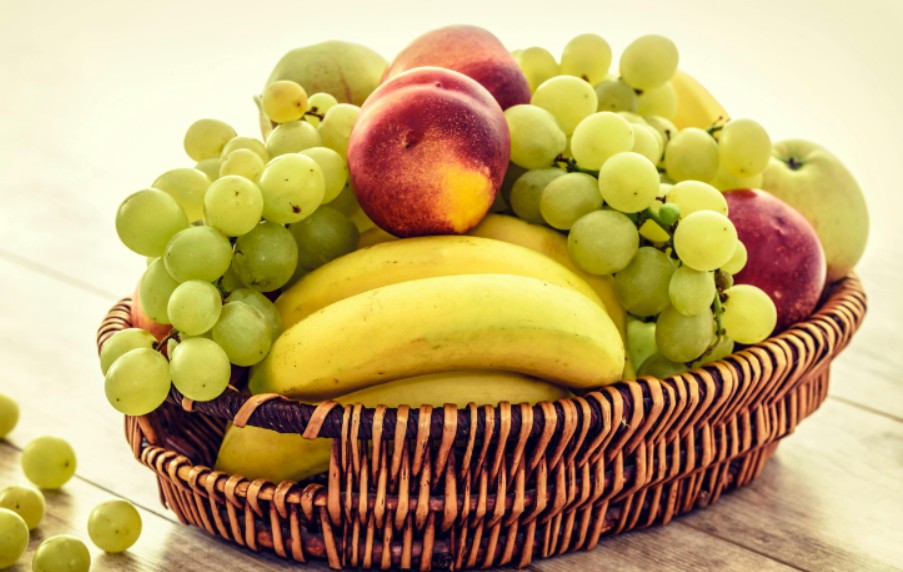
Photo: Pexels: AS Photography
We live very much in a ‘5-a-day’ world, with the fruit and vegetable for health message impressed upon us at every turn. And it’s a good message. I remember in school learning about sailors (and probably others) who, on long sea journeys where food was neither varied nor plentiful, often developed scurvy – a disease that affects the skin and gums. Eventually a doctor linked the disease with a lack of vitamin C. The sailors were given ample supplies of lemons/lemon juice and became healthy again.
And so with many fruits – they are medicine chests of vitamins, minerals, essential oils, water that keep our bodies in good shape.
Paul talks about the fruits of the Spirit -‘ But the fruit of the Spirit is love, joy, peace, patience, kindness, goodness, faithfulness, gentleness and self-control.’ (Galatians 5.22-23)
Fruit that keeps our minds and hearts and souls healthy and our relationships in good order. Don’t forget your daily dose!
Hymn:The Fruit of the Spirit
(Tune – The Streets of Laredo – CH4 522)
The fruit of the Spirit is love, joy, peace, patience,
Kindness and goodness and faithfulness,
Being gentle with others, whoever they are,
And keeping good watch o’er our own minds and hearts.
For God is the gardener, our lives are his garden,
And He takes delight when we follow his ways,
And share with each other the fruits of His Spirit,
As he tends and cares for us all of our days.
Sing praise to the Father, sing praise to the Son,
Sing praise to the Spirit, Love’s great Trinity,
Sing praise for the garden of love he’s made for us,
And for fruit that lasts throughout eternity.
(Based of Galatians 3.32-33)
Helen Cuthbert © 2026
February 1, 2026
Days – 5

New day, new month. Already! Time flies, they say when you’re having fun. Sometimes it flies anyway. Sometimes it drags. Sometimes you ‘don’t know where the time has gone.
The Country singer, John Denver (my hero!) wrote a song called ‘Today is the first day of the rest of my life’ – (a famous phrase even before he wrote the song!) Words of hope, I think, of looking forward with excitement, anticipation to see what this new day, new ‘rest of your life’ will bring. Today, of course (sorry to be morbid!) could also be the last day of your life. There’s a thought. One we usually don’t want to consider. And if we did stop and consider it, what would we change? How would we live it? What would we do? What would our priorities be?
Jesus’ advice? ‘…watch out,be ready and pray, for you don’t know when the time will come.’ (Mark 13.33) Indeed, we don’t.
January 31, 2026
Days – 4
Another poem, on a lighter note – but one that still rings very true!
Annual reminder of how many days there are in each month
Mnemonic
Thirty days hath September,
April, June and November.
Unless a leap year is its fate,
February hath twenty-eight.
All the rest hath three days more,
excepting January,
which hath six thousand,
one hundred and eighty-four.
Brian Bilston – Selected Poems
January 30, 2026
Days – 3

Someone once said ‘ Days are like suitcases – some people pack more into them than others!’ As a ‘retired person’ I’m often so aware of how much I used to be able to (had to?) pack into the suitcase of each day and how I revelled in it. Now, suitcase is a lot lighter! And that’s fine. I’m older, less fit and healthy, I don’t have a ‘full-time’ working life. I enjoy an emptier suitcase!
The thing about days and suitcases – you have to be able to carry them! If they weigh you down, you can’t travel very far or very happily. Maybe you need another hand to carry your case. Maybe (like when you’ve exceed your Ryanair carry-on allowance!) you need to take some of the contents out. Maybe your suitcase has become a bit too lightweight and there is room for more.
Maybe a wee craft activity for the day – draw a picture of a suitcase – lid open then either draw or write in what you fill it with most days or during a week. Is it too full? Is it too empty? Is just right? For the journey you’re on at the moment.
January 29, 2026
Days – 2
Following on from yester’day’ just a wee poem – one of my favourites – by Philip Larkin called, funnily enough ‘Days’!
What are days for?
Days are where we live.
They come, they wake us
Time and time over.
They are to be happy in:
Where can we live but days?
Ah, solving that question
Brings the priest and the doctor
In their long coats
Running over the fields.
Indeed – where can we live but days.
January 28, 2026
Days – 1
When I was young, our main evening meals (we called it ‘tea’!)each day of the week were quite regimented: Monday, Omelette; Tuesday – macaroni cheese; Wednesday; Mince and Tatties; Thursday – a fry-up; Friday – Fish; Saturday – ‘High Tea’ – some kind of main course (maybe even cheese pudding) with LOTS of tea bread – scones, pancakes, cream buns/cream rounds, sugar buns and something called ‘Cat’s faces’ which were sugar buns but with coconut through the icing! Sunday – something a wee bit special – pork chops or gammon steak and pineapple.
Each day was ‘marked’ by the meal!
In other ways, too, each day of the week can be ‘marked ‘ by something – work, no work, some leisure activity (our own or someone we give a lift to!). Each day, too, can often have its own particular ‘feel’ to it: the Monday morning blues; the ‘hump’ of Wednesdays when three working days are finally over. The peace/silence/ worshipfulness (and sometimes the loneliness) of Sundays. Different feelings, different days for different people.
The Psalmist tells us to ‘count our days’ (Psalm 90.12) – ‘mark’, count, number, take account of each one. Savour their difference – enjoy the ones you love, make the most and try to inject more and find peace in those that you perhaps dread, or find tiring for each day is a gift from God – as if he writes a ‘cheque of time’, just for that day, to spend as we will, and spend best as He wills.
January 27, 2026
CONTENTIONS WITH INVENTIONS
There’s a story of an older man, a crofter in a Highland village in Scotland in the 1950’s. It was the last village in Scotland to get electricity. A newspaper reporter came to the village to see what the response was and interviewed this old crofter. ‘So, sir’, what do you see as being the advantages of electricity? ‘Ah, well,’ the old crofter replied,’It helps me see fine tae get ma paraffin lamp sterted!’
It can be hard to move on from the old ways and sometimes, like the crofter, we don’t see any need to do so – the paraffin lamps work just fine.
Over the centuries and increasingly over the last two centuries ‘modern inventions’ have mushroomed. From the motor car and its mass, assembly line production in the 1920’s to the dawn of Artificial Intelligence (AI) as we speak.
The questions I have are – do people control the inventions or do the inventions control people? Just because something is possible doesn’t mean, it’s desireable as Paul wrote: ‘Everything is permissable, but not all things are helpful. (1 Corinthians 20.43 – MOUNCE) Wise words indeed. Sometimes with new inventions we can see the ‘unhelpful’ aspects straight away – the speed of cars and people’s unfamiliarity with them would have no doubt been an issue in the very beginning. Over time, brand new shiny inventions lose their sparkle as we see how unhelpful they can be – the pollution and energy-guzzling of the petrol engine, the acres of space taken up with parking, the discouragement to walk, and, yes, as in the beginning, the dangers of speed.
As humans we seem mesmerised by inventions and so unaware of the threats they pose to the environment, to our social life, to our health, to our ability to give people employment. At least with AI, some discussions are taking place with, hopefully, good laws to guard against any harmful effects it may have.
I wonder, though, if, as humans, we should sometimes just say.’No’ to new inventions. ‘No’ this will take people’s jobs, it will change our social interaction, it is not ‘for the good of the community’ and then throw it into a very deep pit and cover it over. Somehow, knowing what we humans are like, I doubt it. But we do need to make sure that humans and the good of humanity is in control, for real intelligence, helpful intelligence, intelligence that promotes human dignity and growth is never artificial. Ever.
January 26, 2026
SONG VIDEO: BEFORE THE DAWN
January 25, 2026
BURNS AND MUM
What a day! That oh, so Scottish celebration of our national poet- Robert Burns AND the birthday of my mum who would have been 101 this year (She passed away in 2019, aged 95)
So in celebration – a sang fae the lad born in Kyle and a poem fur the lady born in Killie!
A MAN’S A MAN FOR A’ THAT
Is there for honest Poverty
That hings his head, an’ a’ that;
The coward-slave, we pass him by,
We dare be poor for a’ that!
For a’ that, an’ a’ that.
Our toils obscure an’ a’ that,
The rank is but the guinea’s stamp,
The Man’s the gowd for a’ that.
What though on hamely fare we dine,
Wear hoddin grey, an’ a that;
Gie fools their silks, and knaves their wine;
A Man’s a Man for a’ that:
For a’ that, and a’ that,
Their tinsel show, an’ a’ that;
The honest man, tho’ e’er sae poor,
Is king o’ men for a’ that.
Ye see yon birkie ca’d a lord,
Wha struts, an’ stares, an’ a’ that,
Tho’ hundreds worship at his word,
He’s but a coof for a’ that.
For a’ that, an’ a’ that,
His ribband, star, an’ a’ that,
The man o’ independent mind,
He looks an’ laughs at a’ that.
A Prince can mak a belted knight,
A marquis, duke, an’ a’ that!
But an honest man’s aboon his might –
Guid faith, he mauna fa’ that!
For a’ that, an’ a’ that,
Their dignities, an’ a’ that,
The pith o’ Sense an’ pride o’ Worth
Are higher rank than a’ that.
Then let us pray that come it may,
As come it will for a’ that,
That Sense and Worth, o’er a’ the earth
Shall bear the gree an’ a’ that.
For a’ that, an’ a’ that,
It’s comin yet for a’ that,
That Man to Man the warld o’er
Shall brithers be for a’ that.
Robert Burns
PRETTY AS HER PICTURE
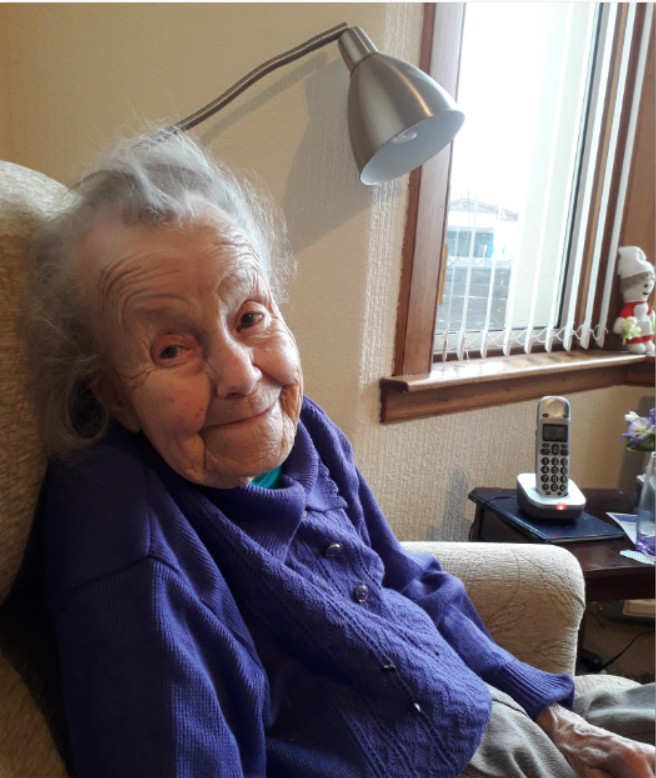
PRETTY AS HER PICTURE (Snapshot of a life)
‘… all the days ordained for me were written in your book …’ (Psalm 139.16)
The wispy hair, the lines of wisdom and of age,
(‘Ma face cream’s Pollyfilla’ she would joke!)
The eyes, still deep, still brown, still beautiful
And the smile whose sunshine solar-powered my every day.
The bonnie purple jumper loosely, but colourfully, don’t you think?
Covering the now much smaller frame.
The trousers that always had to have pockets – for hankies,
combs, nail files, sweeties and whatever else essential for her day.
The phone, oh, that phone – thank goodness Sky does ‘unlimited calls’!
So she could share her own unlimited love.
And you see that blue book underneath the phone?
Her life – inscribed in page after dated page.
No Samuel Pepys, Charles Darwin or Anne Frank, but – ‘up early this morning; Helen at school; prescription delivered, lovely lunch – cornbeef, tatties, beetroot; wee Suki let me scratch her’. And every birthday. And all the folk she’d phoned.
No, not Pepys, Darwin or Frank, but the Diary of one who knew life to be made of moments where every moment counted and the ordinary blossomed like the fairest flower.
The window – her watchtower on a village, that helped her be a part of its rich life. And, if the recliner was in place, angled just right, she could be seen as well as see and the folk passed by in … ‘waves’!
And from that watchtower, too, the Knipes* would be her weather map as a wall of rain, hail, snow or more burst over the hills and ambushed New Cumnock’s streets and neuks. Though sometimes there’d be sun, poking its head up like a jack-in-the-box: ‘Surprise! Surprise! See me, I live here, too!’
The nurse companion – skilfully made, thoughtfully given, a constant wish to ‘Get Well Soon’.
And there she was, in those remembered years, real and true and pretty as her picture.
And I thank God for the years, the real, the true, the pretty. And the picture.
*Hills to the south of New Cumnock
Helen Cuthbert © 2024
January 24, 2026
THERE ARE NO PENGUINS IN GREENLAND!
A wee bit light-hearted satire today in the form of a song in response to a picture released by the White house.

(Tune – ‘Yes, we have no bananas’ – first two lines repeated)
There are no penguins in Greenland,
in Greenland no penguins are there.
And no, not even in Iceland,
no penguins in Iceland there are.
Watch out, for that cunning wee penguin’s leading you to the wrong hemisphere.
The ‘poles’ once more they defeat you,
defeat you, the ‘poles’ do once more.
So how got that penguin to Greenland,
To Greenland, how’d that penguin go?
That penguin to Greenland it got there
straight from Minnesota Zoo. For ……
there are no penguins in Greenland,
in Greenland, no penguins are there.
Helen Cuthbert 2026
January 23, 2026
Distractions
Drinking hot chocolate, having a snack, scrolling through FaceBook, checking next week’s weather, cooking, on-line ‘window’ shopping, comparing car insurance (for next year!), sorting out photographs. What do they have in common? For me they can come into the category of – distractions. They’re all great things to do in their own right, but they can be used to do something you like when there’s something to do that you don’t like. It’s good to be able to recognise them and fine, do them for a little while until you muster the motivation to do what you really have to do.
Interestingly, the French word ‘distractions’ is used to mean ‘entertainment’ – a totally different and more positive take on the word, an acknowledgement that there are times when you need to be ‘taken away’ from being too serious, hard-working, focussed, intense all the time. Lighten up, change the activity and gain the energy and ‘change of activity’ that keeps you going.
In another realm, when other people are involved, distractions can be used to deflect attention from something they don’t want you to focus on. ‘A dead cat on the table’ is a phrase often used – if you say that, people’s attention will be turned from what you don’t want them to think about and we know in our political world distractions can abound.
The problem is, for them to continue to work, they often need to be ‘multiplied’ in terms of number and also in terms of ‘shock and awe’. We’ve been living in such a world for a while. Perhaps you have relationships with people who do the same to avoid talking about certain subjects.
I believe that distractions have their limits. It might take a while, but they will wear thin, people will see through them and then – the truth will out.
‘ … a woman named Martha opened her home to Jesus. She had a sister called Mary, who sat at the Lord’s feet listening to what he said. But Martha was distracted by all the preparations that had to be made…. “Martha, Martha,” the Lord answered, “you are worried and upset about many things, but few things are needed—or indeed only one. Mary has chosen what is better, and it will not be taken away from her.” (Luke 10.38-42 abridged NIV)
January 22, 2026
Normalisation
Normal is good, right? If all your ‘vital signs’ – temperature, blood pressure, heart rate etc are ‘normal’ – you’re doing fine. So,yes, normal is good. I’m not medically trained in any way (although I do have a First Aid certificate from 1976 – does that count), but I’m sure it must have taken years of careful research by a generations of scientits to establish what the ‘norms’ were for each of these vitals signs and more.
in the realm of everyday experience, special things like holidays, travels, special guests, house alterations make life interesting, but when they’re over, we often say that it’s good to get ‘back to normal’. No scientists required for that – you define normal for you. There is often a sense of peace and even purpose that comes when the ‘back to normal’ phase kicks in again. (Normal, of course, can be boring – but that’s for another blog!)
In the shared experience that is planet earth 2026, one of the many ‘buzz words’ that has arisen is ‘normalisation’ where normalisation can be defined as ‘a process whereby certain practices, behaviours, and ideas are made to appear natural and self-evident.’ (hhttps://easysociology.com/general-sociology/normalisation-an-overview/)
In other words, some idea, let’s say that was either not thought much about before or was thought to be unusual or even wrong moves into the category of ‘normal’ and, therefore the category of ‘acceptable’.
Imagine a tee-totaller none of whose family or friends touched alcohol, went to college, let’s say and became friendly with his roommates and classmates. She would probably be surprised or even appalled to see the drink flow free. There would be an initial time of feeling uneasy, that these people were very strange. Over time, when every social situation involved alcohol, the presence and consumption of alcohol would just be the norm. The surprise would disappear and then a decision would have to be made: to continue to see this ‘new normal’ as something to be avoided in terms of participation or, accepting it – for yourself.
‘Normal’ can be very persuasive. ‘Everybody does it’, ‘everybody thinks that’, ‘I don’t know what the fuss is about’ are stamps of approval for any idea of behaviour. And that’s OK – when the ‘normal’ is OK. But what if something harmful or immoral or unjust or violent or bigoted becomes normal? Then, we have a problem.
Many writers in many countries have spoken, for example, about the ‘normalisation’ of political violence. (See e.g. Benjamin Wallace-Wells in the New Yorker https://uk.video.search.yahoo.com/search/video?fr=mcafee&p=normalisaiton+of+political+violence+charlie+kirk&type=E210GB1067G0#id=7&vid=ea284341b657d0291d4b4613c0749516&action=click)
Normalisation can happen in sectors of a society e.g. right wing or left wing, rich or poor, educated or less educated or in a society as a whole. The danger is that, when the idea or behaviour is harmful in some way, that harm becomes permissible. Violence or a certain degree of violence is accepted and people do nothing to stand up against it.
I’ve noticed, for example, the use of swearing by both TV journalists and politicians on all sides. Once a word or a phrase is said often enough, it becomes normalised and people then use it making it even more ‘normal’.
So, yes, normalisation of what is harmful must be guarded against. It can happen so easily, so we must be aware of it. Once a ‘new and harmful normal’ is established, it means those who don’t participate or who speak out against it are seen as ‘abnormal,’ not worth listening to’ and their views rejected.
Most people take their ‘normal’ from their own moral compass informed by their own belief systems, religious or not. Normalisation has way, at times, of ‘re-calibrating’ that compass. To avoid that, we need to go back to the basics of our belief system and use to examine the ‘new normal’. (Though it is also true that the ‘new normal’ can be used to examine our belief system!)
Stop and look. Stop and re-calibrate. Stop and reverse the normalisation of things that are harmful and evil.
And, at the same time, do everything we can to ‘normalise’ what is good, what is healthy, helpful, hopeful, what builds up, what resists the destructive forces in our world – the normalisation of kindness, compassion, forgiveness, justice, peace, love. These are great normals for planet earth, 20026 to have.
Finally, brothers and sisters, whatever is true, whatever is noble, whatever is right, whatever is pure, whatever is lovely, whatever is admirable—if anything is excellent or praiseworthy—think about such things. (Philippians 4.8 NIV)
January 21, 2026
On the Edge
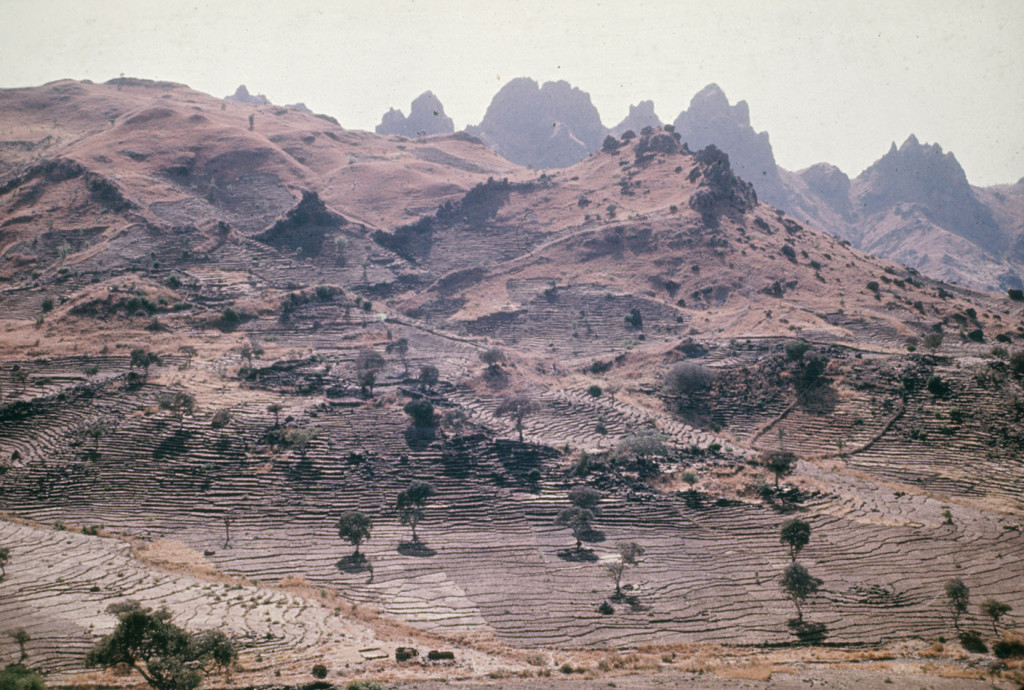
Jebel Marra, Darfur, Western Sudan
Just before Christmas, 1986, a group of us were climbing Jebel Marra in Western Sudan – the country’s highest mountain at just over 3,000 metres. It was, at that time a safe place to be and to travel and we ‘camped out’ in the big outdoors on our way up and down the mountain wary only of the chattering baboons who would have plagued us at night had we not kept the fire burning (and a good few rocks handy at our side!)
At one point, we were walking along quite a narrow ridge. There was just enough room on our right to jump to some kind of safety, but any slight movement to the left and we would have plunged to the bottom. Just one slight movement either way – one to complete safety, the other to certain death and we were on the dangerous ledge in between. Just one move.
It struck me then and I’ve often thought about it again over the years that we often walk along not really aware that we’re on the ridge and one small step would be all it takes to go hurtling down the mountain.
It is true of our own lives – in an instant, either because of a decision we make or something that happens to our health, wealth, family, faith, job our sure footing slips and down we go into a world of pain and upheaval sometimes facing the death of the life we once knew.
It is true, too, as we know in these days, of our world. One small step, a few short months and here we are, hurtling down the mountain.
It’s also true, though, that safety, sure and steadfast, is only a step away – on the other side. That’s good to know in those times when we are aware we are living ‘on the edge’. We don’t need to be afraid because a safe place is right beside us, ours for the taking. That ‘safety net’ helps us walk more firmly, more boldly even and certainly without any constant nagging fear.
So how do we walk? Aware, I think, that each small step counts, that each moment could be life-changing and therefore we need to remain alert, but also remembering that we have a safe haven we can go to when we think we might lose our footing. Life is always ‘on the edge’ we need to walk on carefully, but not fearfully.
‘Watch and pray so that you will not fall into temptation. ‘ (Matthew 26.41)
January 20, 2026
Speaking the Same Language: (Ain’t Technology wonderful?!
After a long and bruising battle with FaceBook in an attempt to set up a new page, I’m licking my wounds and pondering the great invention that is technology. Great that is, when it works. And when it doesn’t, it is a great teacher! It makes you patient, humble and in awe of its mysteries. Patient – when updates happen. Humble – when you realise you haven’t switched it on. In awe of its mysteries – most of the time.
I think one of the main problems is communication. It doesn’t speak our language or rather one programme, piece of software, system doesn’t speak the language or use the same words for the same thing: ‘page’ on Face Book is different from a ‘page’ in WordPress.
Not every programme puts the same items in the same ‘box’: the same editing feature is found under ‘file’ in one programme and ‘edit’ in another with no rhyme or reason. Then, of course, along comes that glorious intruder – ‘update’ and it’s all change again.
The way to win in this situation is, I suppose, to realise that each programme or piece of software or post-update programme will be in some and perhaps many ways new and different and be its ‘flexible friend’, learning to understand its language and become familiar with its cupboard spaces.
Maybe a good life lesson, too. Communication, putting things in the place you believe or have grown up believing they should be, give rise to the majority of our world’s problems – big and small. Technology (at the moment – AI might be different!) can’t be flexible – it says and does what it was programmed to say and do. It’s up to us to do the accommodating and the learning. We expect other humans, of course, to have flexibility built into them – as long as we don’t have to change, or learn or do things differently. A little flexibility all round would go a long way, I think.
‘…in humility value others above yourselves, not looking to your own interests but each of you to the interests of the others. (Philippians 2.3b-4 NIV)
January 19, 2026
The Madness of Kings
The Madness of King George – or Nebuchadnezzar or Nero, or Idi Amin or Gadaffi or ……… ‘Power corrupts, absolute power corrupts absolutely’. We often think of areas like finance or the laws of the land when we think of corruption. But sadly, I believe, corruption can go deeper than that into a person’s heart and mind and soul poisoning the deep wells of morality, human sensibility and, ultimately sanity, spiralling out of all control.
Daniel 4 has the story of Nebuchadnezzar’s ‘absolute power’, his descent into madness and his way out of the pit of deep despair. God, we read, was gracious to Nebuchadnezzar and when the King finally acknowledged that God was God and the ultimate King of the World, he was given back his kingdom and all was well.
What did it take? I suppose Nebuchadnezzar had a similiar experience to the Prodigal Son in Luke’s Gospel at the moment where he ‘came to himself’ or ‘came to his senses’ – realised he was on the wrong track and turned his life round. For both, humility was involved – for the Prodigal – going back home, tail bewteen his legs; for Nebuchadnezzar – repenting, doing the right thing instead of his own thing, helping the poor which meant acknowledging their existence (a does of good old-fashioned empathy)
There is, it would seem, in the madness of our days, the madness of not just one but many of our world leaders, hope. But choices have to be made, coming back from the brink of madness is not automatic. Self-destruction, too, sadly, is a possibility and when leaders are involved, it is not only they themselves who are destroyed. May they make that turnaround soon.
 Stepping Stones